

NASA delays Artemis II moon rocket mission as ‘rare arctic outbreak’ pushes as far south as Florida
NASA engineers battled cold weather across the two-day wet dress rehearsal which began on Saturday night.
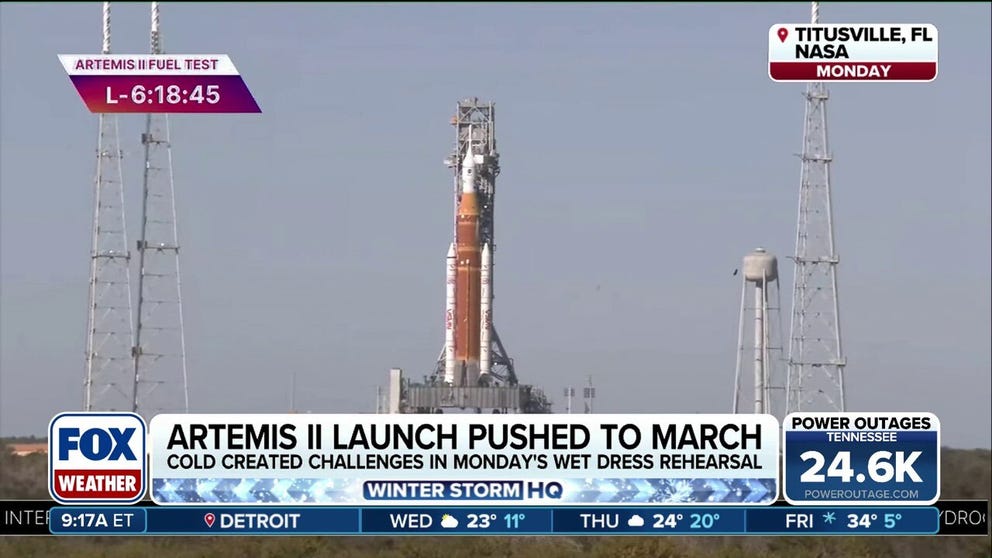
NASA delays Artemis II moon rocket mission as rare arctic outbreak pushes as far south as Florida
NASA has pushed back the February launch of Artemis 2 to March after ending a critical fuel test early Tuesday morning, which was complicated by a liquid hydrogen leak and cold temperatures due to the rare Arctic outbreak that has gripped Florida. Artemis 2 would be the first crewed mission to return to the Moon since Apollo 17 in 1972. The pre-launch test was designed to fuel the Space Launch System and identify technical issues before launch.
CAPE CANAVERAL, Fla. – NASA has pushed back the February launch of Artemis 2 to March after ending a critical fuel test early Tuesday morning, which was complicated by a liquid hydrogen leak and cold temperatures due to the rare Arctic outbreak that has gripped Florida.
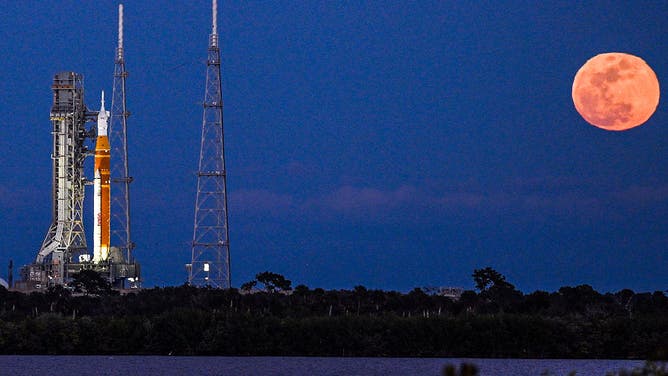
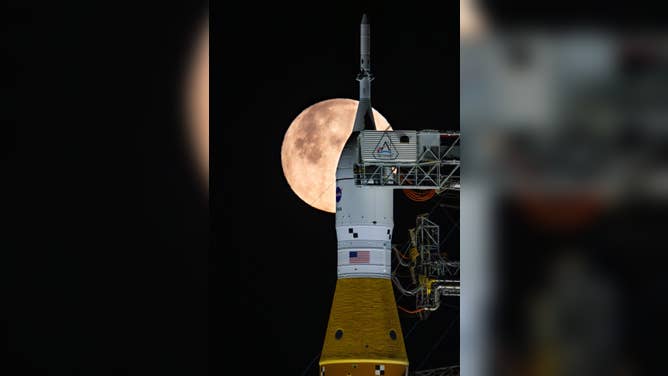
A full moon rises as the Space Launch System (SLS) rocket and the Orion spacecraft, integrated for the Artemis II mission, are seen at Launch Pad 39B at the Kennedy Space Center in Cape Canaveral, Florida, on February 1, 2026 ahead of the first crewed mission to the Moon in more than 50 years.
((Photo by Miguel J. Rodriguez Carrillo / AFP via Getty Images) / Getty Images)
Artemis 2 would be the first crewed mission to return to the Moon since Apollo 17 in 1972. The 10-day mission would see a crew of four test NASA's new Space Launch System (SLS) and Orion spacecraft in a trip around the Moon, a key step in the space agency's goal of safe and efficient exploration of the Moon and eventually Mars.
NASA engineers battled cold weather across the two-day wet dress rehearsal, which began on Saturday night.
NASA’S ARTEMIS II WILL TAKE ITS FIRST CREWED MISSION AROUND THE MOON IN OVER 50 YEARS
The pre-launch test was designed to fuel the Space Launch System and identify technical issues before launch.
![]() Image 1 of 3
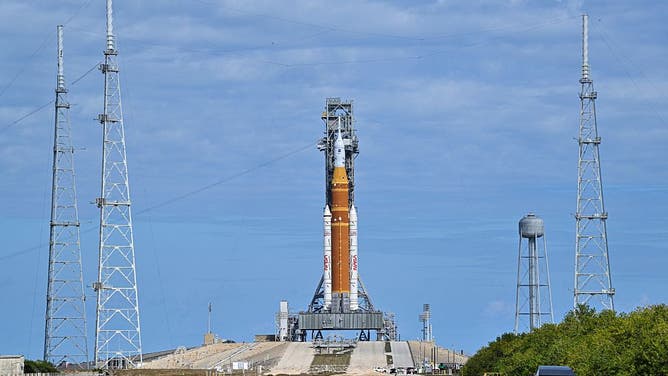
Image 1 of 3The Space Launch System (SLS) rocket and the Orion spacecraft, integrated for the Artemis II mission, are seen at Launch Pad 39B at the Kennedy Space Center in Cape Canaveral, Florida, on January 30, 2026 ahead of the first crewed mission to the Moon in more than 50 years. ((Photo by Miguel J. Rodriguez Carrillo / AFP via Getty Images))
![]() Image 2 of 3
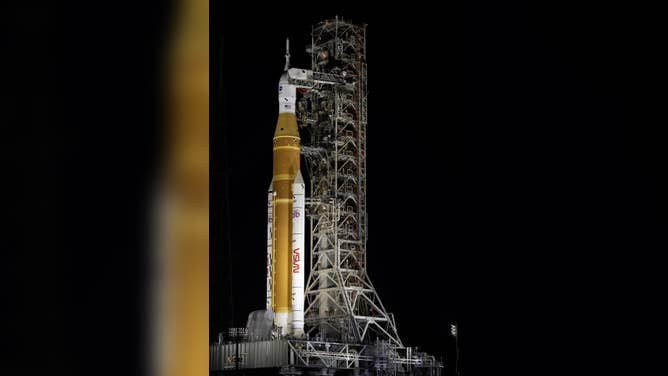
Image 2 of 3Spotlights illuminate NASA’s Artemis II SLS (Space Launch System) rocket with the Orion spacecraft atop a mobile launcher at Launch Complex 39B at NASA’s Kennedy Space Center in Florida on Thursday, Jan. 29, 2026. (NASA/Jim Ross)
![A full Moon is seen shining over NASA’s SLS (Space Launch System) and Orion spacecraft, atop the mobile launcher in the early hours of February 1, 2026.]() Image 3 of 3
Image 3 of 3A full Moon is seen shining over NASA’s SLS (Space Launch System) and Orion spacecraft, atop the mobile launcher in the early hours of February 1, 2026. (NASA/Sam Lott)
"Leading up to, and throughout tanking operations on Feb. 2, engineers monitored how cold weather at Kennedy impacted systems and put procedures in place to keep hardware safe," NASA said in a Tuesday news release.
NASA DELAYS ARTEMIS II MOON LAUNCH DUE TO RARE ARCTIC OUTBREAK IN FLORIDA
"Cold temperatures caused a late start to tanking operations, as it took time to bring some interfaces to acceptable temperatures before propellant loading operations began."
A displacement of the polar vortex combined with the wake of a historic nor'easter off the Carolina coast helped usher in record-breaking low temperatures across Florida over the weekend.
Both Miami and Fort Lauderdale plummeted to 35 degrees, while Orlando got down to 25 degrees Sunday.
Temperatures at the nearby NASA Shuttle Landing Facility in Titusville, Florida dipped below freezing overnight Monday.

NASA rover captures rare phenomenon on camera for first time
For the first time ever, the Perseverance Mars rover recorded electrical discharges and mini-sonic booms coming from dust devils, confirming decades-old theories that these occurrences could happen on the Red Planet.
NASA said cryogenic propellant was successfully loaded into the SLS, but engineers spent several hours troubleshooting a liquid hydrogen leak.
Eventually, the wet dress rehearsal was automatically cut short early Tuesday at five minutes and 15 seconds before the scheduled end of the test when computers detected "a spike in the liquid hydrogen leak rate."
NASA Administrator Jared Isaacman said early Tuesday that these kinds of complications are the exact purpose of the wet dress rehearsal.
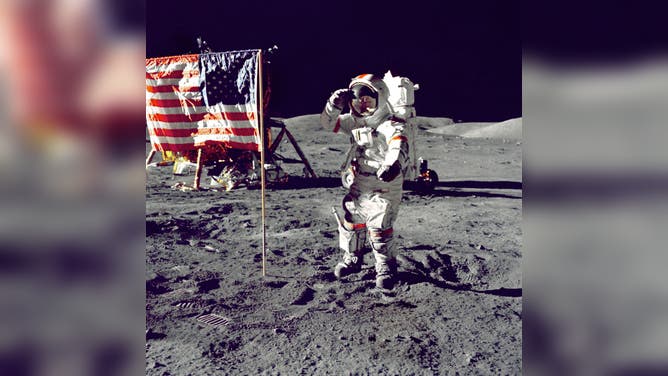
Apollo 17 - NASA, 1972. The Last Man on the Moon: Eugene Cernan poses by the American flag in his A7L spacesuit, December 1972. Artist NASA.
((Photo by Heritage Space/Heritage Images via Getty Images) / Getty Images)
"As always, safety remains our top priority, for our astronauts, our workforce, our systems, and the public," Isaacman said.
"Getting this mission right means returning to the Moon to stay and a future to Artemis 100 and beyond," Isaacman added.
The results of the test will be discussed at a news conference scheduled for Tuesday afternoon.
According to NASA, March is now the earliest possible launch day for the mission.