

6 planets to align in 'planetary parade' this weekend
Mercury, Venus, Jupiter, Saturn, Uranus and Neptune will all be visible in the evening sky on Saturday, but you might need help to see a few of them.
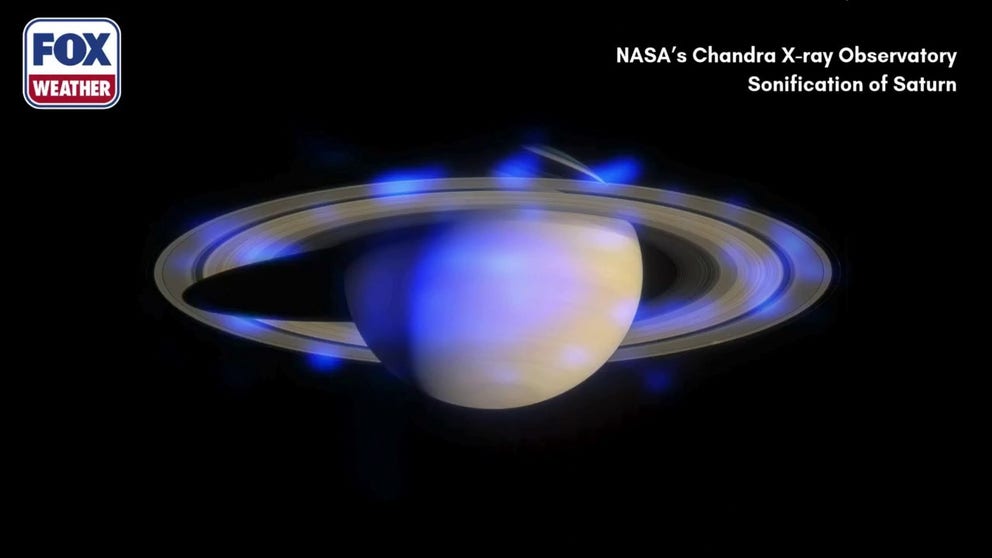
Listen: Chandra X-Ray Observatory turns planet data into sound
NASA's Chandra X-ray Observatory turns x-rays and data into sounds of planets around our solar system. These sonifications include x-rays from Chandra and data from Hubble, Cassini, and Keck telescopes.
February is ending with a bang as six planets align in the night sky on Saturday.
The planets are always actually lined up, but we just can't see them all at once. The planets are in a line called an ecliptic – the plane where they orbit the sun.
As the planets race around the sun at different speeds, sometimes they line up on the same side of the sun, appearing closely together in the night sky.
NASA'S JAMES WEBB SPACE TELESCOPE UNCOVERS FORMER STAR THAT EXPLODED INTO A SUPERNOVA
According to NASA, Mercury, Venus, Jupiter, Saturn, Uranus and Neptune will all be visible in the evening sky on Saturday, but you might need help to see a few of them.

BIG PINE, CALIFORNIA - OCTOBER 12: People watch for the appearance of Comet Tsuchinshan-ATLAS over the Eastern Sierra mountains as it transitions into the evening sky shortly after sunset, as seen from the Ancient Bristlecone Pine Forest area, on October 12, 2024 near Big Pine, California.
(David McNew / Getty Images)
Saturn, Mercury and Venus have had time to shine since the middle of the month and Jupiter joined in toward the end of February.
Mercury and Venus will be visible close to the horizon in the West right around twilight, roughly 30 to 40 minutes after sunset, EarthSky said.
Saturn will join them in the West as soon as darkness falls.
NEW DATA FROM NASA’S CURIOSITY ROVER HINTS AT HISTORY OF WATER ON MARS
Weather permitting, all four planets should be visible without any additional help.
In order to see Uranus and Neptune, you'll need an optical aid like a telescope.
In honor of the planet parade on Saturday, NASA's Chandra Observatory released three new sonifications of Jupiter, Uranus and Saturn.
A sonification is created by turning astronomical data into sound.
In 2025, a rare seven-planet alignment also happened on Feb. 28.
That alignment included Mars, as well as the six planets that will be visible on Saturday.
Heading into March, Mercury will disappear from view, while Venus becomes a little easier to see in the sky. Saturn will slip from the horizon around mid-month and no longer be visible, according to EarthSky.org.