

Antarctic ozone hole expands to largest size in a decade as powerful polar vortex intensifies
This year, the ozone hole ranked as the seventh largest in 48 years of monitoring, fueled by an unusually powerful polar vortex.

Earth’s ozone layer recovering from depletion
NOAA Chemical Sciences Lab director Dr. David Fahey joined FOX Weather on Sunday morning to explain how decades of banning harmful chemicals is helping to restore Earth's ozone layer.
THE TAKEAWAY:
- NOAA and NASA reported that the ozone hole grew to an unusually large size in 2026.
- It is the seventh largest in 48 years.
- But the ozone layer is on track for recovery by the end of the century.
The Antarctic ozone hole grew to an unusually large size in 2026 due to atypical atmospheric conditions, according to NOAA and NASA scientists. However, researchers say the protective ozone layer remains on track for recovery by the end of the century.
COULD SUPER EL NIÑO PUT A DAMPER ON LAKE-EFFECT SNOW THIS WINTER?
This year, the ozone hole ranked as the seventh largest in 48 years of monitoring, fueled by an unusually powerful polar vortex.
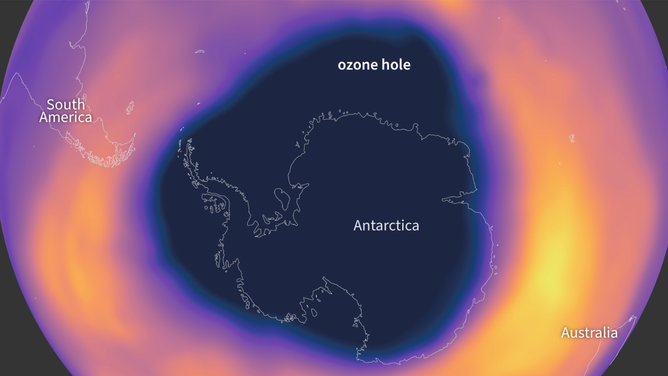
Ozone hole over Antarctica
(NOAA)
"The annual ozone hole has been forming later in the season in recent years, which tells us the ozone layer is healing," Paul Newman, a senior scientist at the University of Maryland and longtime leader of NASA’s ozone research team at the agency’s Goddard Space Flight Center, said. "But an unusually powerful polar vortex has extended ozone depletion in the Antarctic this season, allowing the hole to grow to proportions we haven’t seen in a decade."
During the peak ozone depletion season, which runs from Sept. 7 to Oct. 13, the hole covered approximately 9.6 million square miles, more than twice the size of the U.S.
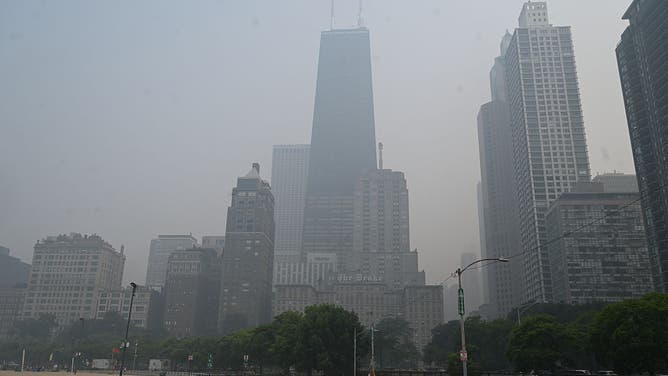
CHICAGO, ILLINOIS - JULY 16: Smoke hangs over Lake Michigan on July 16, 2026 in Chicago, Illinois, United States.
((Photo by Jacek Boczarski/Anadolu via Getty Images) / Getty Images)
The ozone hole reached its largest size of the year on Sept. 18, spanning approximately 10.5 million square miles. That’s about 90% of the size of the largest ozone hole ever recorded, which occurred on Sept. 9, 2000.
HOW DOES THE POLAR VORTEX INFLUENCE WEATHER?
Ozone depletion occurs when human-made compounds containing chlorine and bromine are released into the atmosphere.
Air currents carry these gases into the stratosphere, where they are broken down by ultraviolet radiation, releasing chemicals that contribute to ozone destruction.
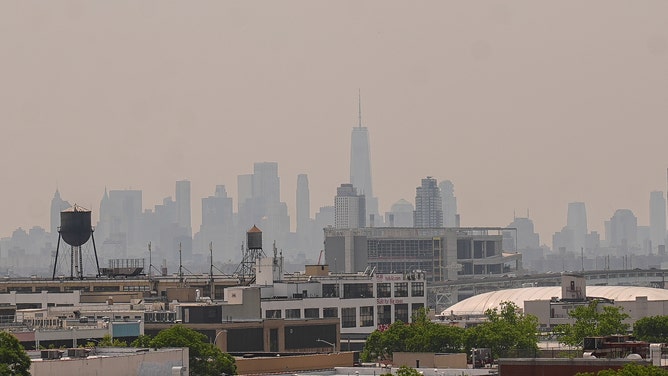
NEW YORK CITY, UNITED STATES - JUNE 5: An air quality health advisory has been issued for New York City and the tri-state area due to high ozone levels, the National Weather Service announced on June 5, 2025, in United States.
(Selcuk Acar/Anadolu / Getty Images)
These chemicals then interact with particles in polar stratospheric clouds, accelerating the depletion of the ozone layer.
"The polar vortex was unusually large this year," Amy Butler, a research scientist at the NOAA Chemical Sciences Laboratory, said. She explained that weak atmospheric wave activity kept the strongest polar vortex winds farther from the South Pole, creating a larger area where conditions were favorable for ozone depletion.

NEW YORK, UNITED STATES - NOVEMBER 09: Wildfires in New Jersey are leading to smoky skies and diminished air quality around the tri-state area of the East Coast in the United States.
(Getty Images)
NOAA scientists noted that ozone depletion this year was not as severe as during record-breaking ozone hole seasons observed 10 to 20 years ago.
Researchers also found that ozone concentrations reached their lowest levels of the year on Oct. 17.
Ongoing monitoring shows that international efforts to replace ozone-depleting substances, such as chlorofluorocarbons, with less harmful alternatives are helping the ozone layer recover.