

The secret behind the disproportionate limbs of the prehistoric T. rex revealed in new evolutionary study
The evolutionary trends suggest that as skulls became the primary weapon for subduing prey, energy and resources were diverted away from forelimb development, according to the study.
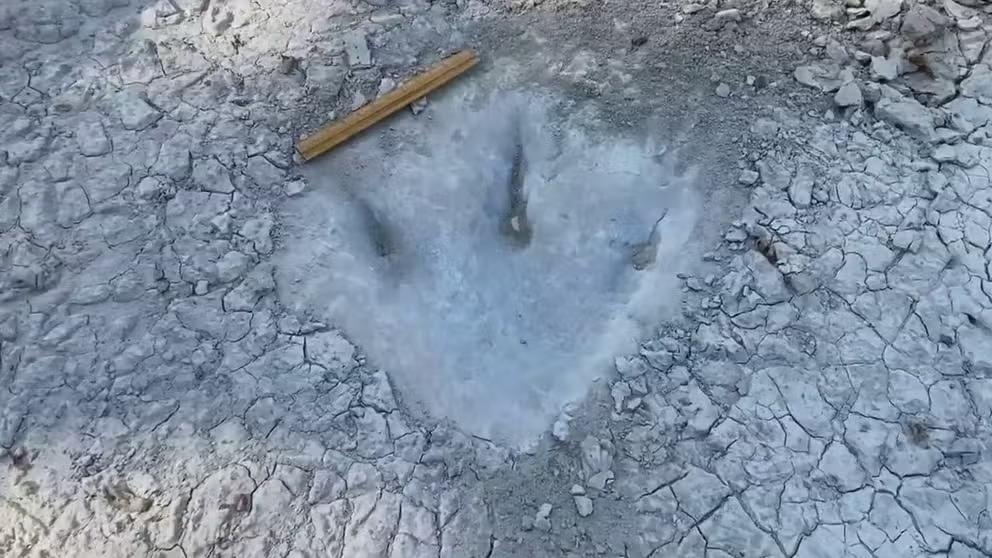
FILE: Dinosaur tracks uncovered in Texas amid drought
Amid a drought, the Dinosaur Valley State Park has discovered dinosaur footprints that have been historically covered by water and sediment. They date back more than 113 million years ago.
Among all the different types of dinosaurs, the Tyrannosaurus Rex (T.rex) remains the most recognizable — with its comically short arms serving as a dead giveaway. But why are they so tiny? A new study published by The Royal Society reveals it can be linked directly to evolution.
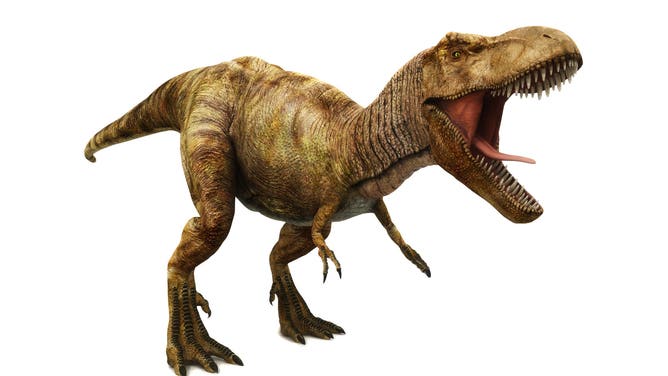
Tyrannosaurus rex on white with a little shadow around the claws.
(Getty Images/JoeLena / Getty Images)
After closely analyzing five distinct families of two-legged, meat-eating dinosaurs — around 84 in total—, the study concluded that each separate group evolved in its own unique biological pattern.
Of the dinosaurs studied in the tyrannosaurid family, which includes the Tyrannosaurus rex, it was discovered that larger skull size and durability correlate to smaller forelimbs.
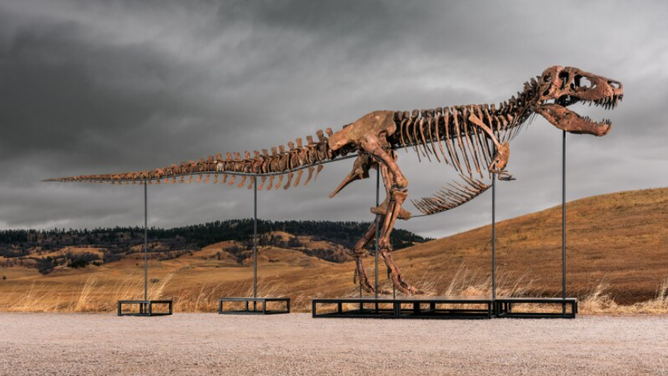
(Matthew Sherman/Sotheby's)
"Forelimb size relative to the skull is significantly correlated with cranial robusticity and body mass, whereas body mass and skull size alone are not, suggesting that high cranial robusticity was the primary driver of forelimb reduction," The Royal Society said.
‘Robusticity’ refers to the physical strength, thickness, and massiveness of a living thing's bones or skeletal elements relative to its overall size.
This was the case throughout at least five theropod lineages — the groups of two-legged, carnivorous dinosaurs.
DINOSAUR FOSSIL REVEALED AFTER HEAVY RAINS IN BRAZIL
While all dependent on the individual specimen, for perspective, the T. rex typically averaged 40 feet in length from head to tail, weighed around 7 to 9 tons, and carried a skull around 5 feet long.
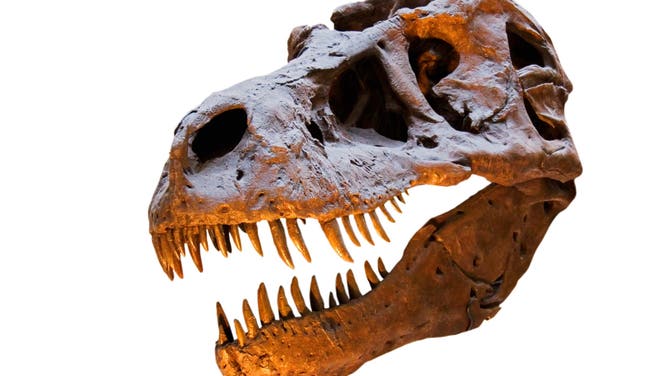
Tyrannosaurus Rex skull isolated on white background with copy space
(Getty Images/dndavis / Getty Images)
Tack on the 3-foot forelimbs and the size of its skull is just 1 foot shy of both of its arms combined.
For comparison, the University of California said a 45-foot-long T. rex, with a 5-foot skull and its disproportionate 3-foot arms, is equivalent to a 6-foot human with 5-inch arms.
JURASSIC GIANT: WORLD’S MOST COMPLETE T-REX FOSSIL COULD SELL FOR $30 MILLION AT AUCTION
Simple routines like hitting snooze would be a disaster. In fact, you'd probably skip the snooze entirely after falling out of bed just trying to reach the clock or phone.
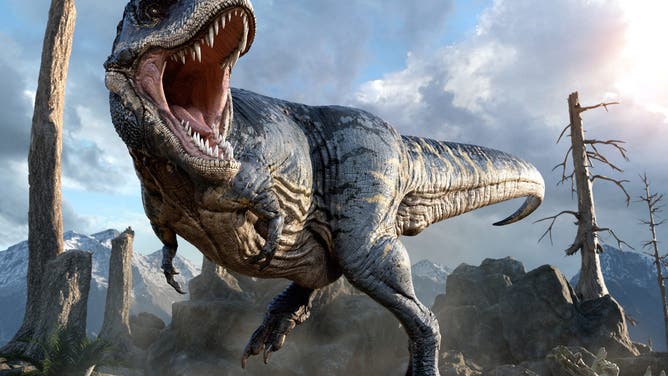
Tyrannosaurus from the Cretaceous era 3D illustration
(Getty Images/Warpaintcobra / Getty Images)
That said, the arms of a T. rex are not even 10% of their body.
The evolutionary trends suggest that as skulls became the primary weapon for subduing prey, energy and resources were diverted away from forelimb development, according to the study.