

Lyrid meteor shower expected to dazzle the night sky Tuesday night
The peak of the meteor shower will occur after midnight and before dawn on April 22.
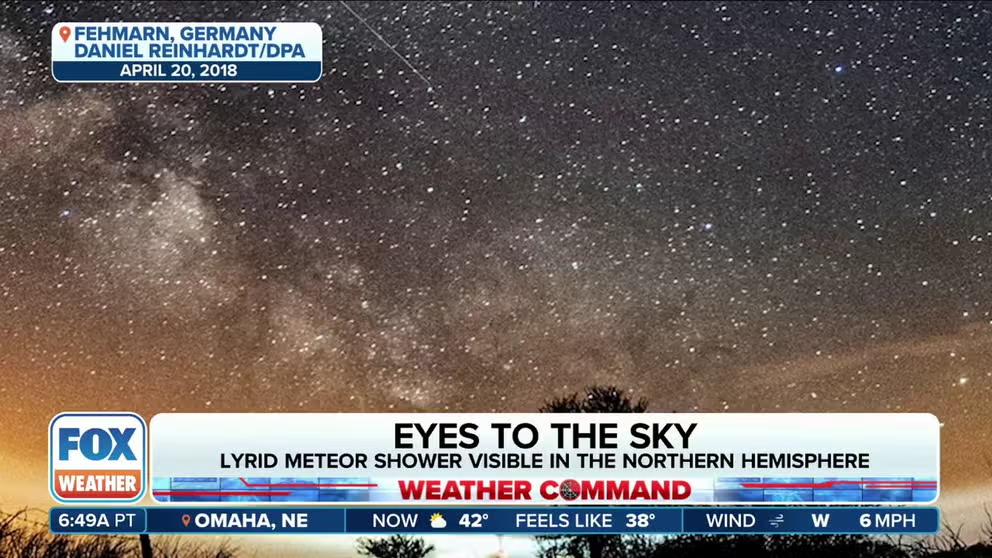
FILE: Lyrid meteor shower peaks Sunday into Monday
NASA Ambassador Tony Rice explains why the Lyrid meteor shower might be difficult to see this year because of the nearly full Moon.
Space lovers and skywatchers have much to look forward to this month, with a plethora of activity already occurring in April.
Beginning on April 21 and 22, the annual Lyrid meteor shower will occur and reach its peak on the first night of the space storm.
Observers will be able to view around 18 meteors per hour dazzling the night sky.
THE BEST CELESTIAL EVENTS IN 2026 YOU WON'T WANT TO MISS
According to NASA, this meteor shower comes from the debris left behind by Comet Thatcher, which was first discovered on April 5, 1861, by A.E. Thatcher.
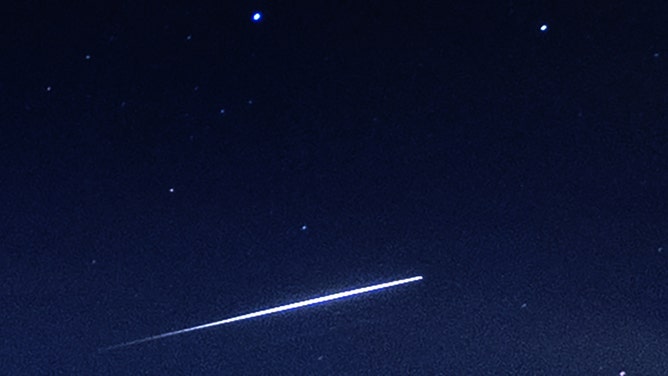
A Lyrid meteor is seen in the sky above Lee Park in Liverpool, Merseyside, on April 22, 2025.
(Peter Byrne/PA Images via Getty Images / Getty Images)
It takes about 415.5 years for the comet to orbit the sun once, and it last came closest to the sun in 1861.
THIS RARE INTERSTELLAR COMET IS SPEWING MASSIVE AMOUNTS OF WATER INTO SPACE
When comets orbit around the sun, the debris they emit gradually spreads into a dusty trail, according to NASA.
The dust or debris left behind by Comet Thatcher will eventually hit the atmosphere and burn up, creating the "shooting stars" type of dazzling sky show that people love.
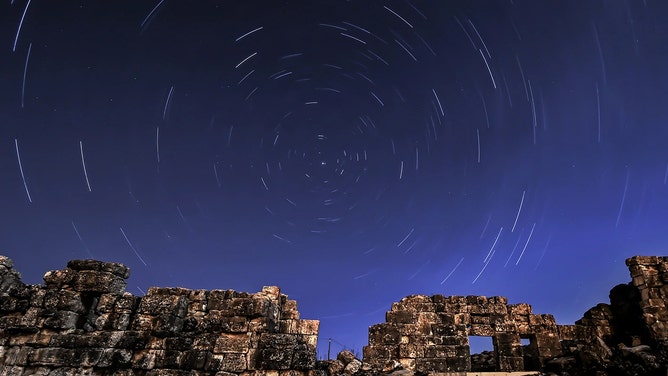
The April Lyrids, a meteor shower lasting from April 16 to April 26 each year, is seen over the ancient city of Aizanoi in Kutahya, Turkey on April 23, 2014.
(Fatma Selma Kocabas Aydin / Anadolu Agency / Getty Images)
The meteor shower will take place near a star called Vega, the fifth-brightest star in the night sky.
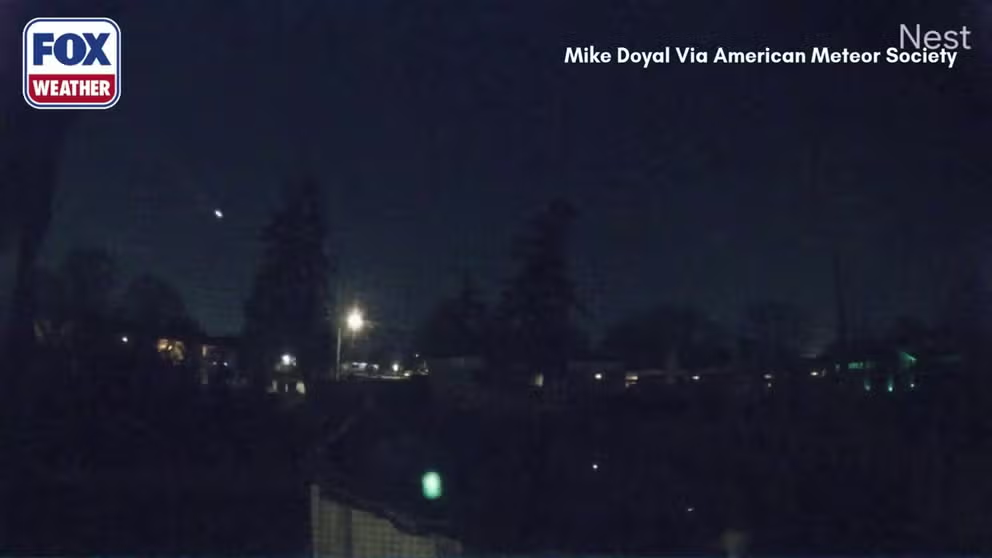
Fourth meteor in one week streaks across Michigan sky
The fourth meteor in one week was spotted streaking across the night sky from Warren, Michigan, on Monday night.
Most of the U.S. will experience little cloud coverage by the end of the night, near the peak of the meteor shower, except for the West Coast and parts of the South.
The peak of the meteor shower will occur after midnight and before dawn on April 22.