

Look up: Planetary parade featuring Venus, Jupiter and Mercury set to dazzle the sky tonight
Jupiter and Mercury will be visible for roughly 30 to 45 minutes, before the two planets follow the Sun's steps below the western horizon.
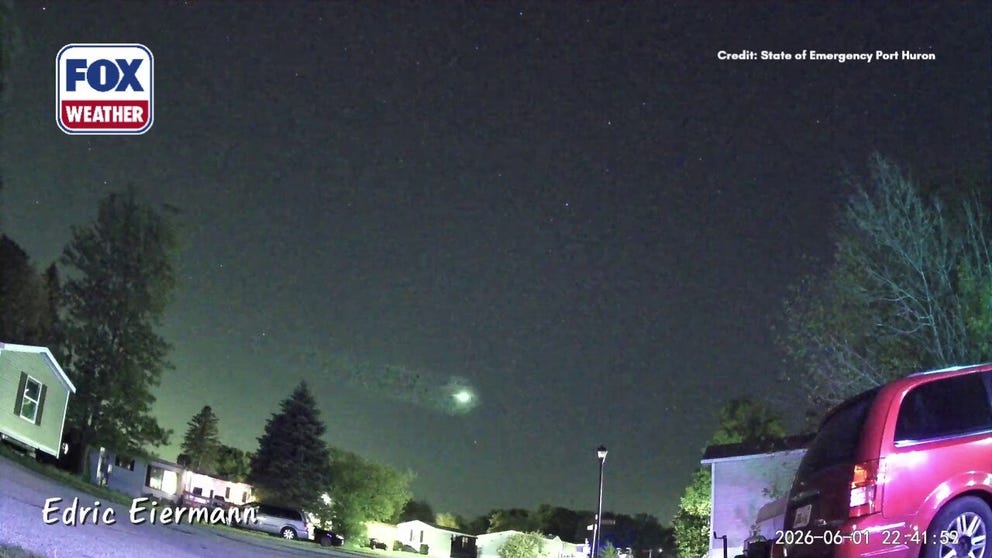
FILE: Midwest meteor captured by Michigan home camera
A stationary camera captured a meteor over Lakeport, Michigan, that blazed roughly 40 times brighter than Venus. Witness reports from across multiple Midwestern states poured in during the late evening of June 1, ushering in the new month with a spectacular celestial display.
When the lovely couple on the street tells you that Venus, Jupiter and Mercury are visible in the night sky just after sunset on the evening of June 12, they won't be lying.
The three planets will gather above the western horizon for a dazzling celestial display, giving skywatchers across the U.S. the perfect excuse to look up after sunset.
You'll have to act fast, because this stunning planetary showcase won't linger in the evening sky for long.
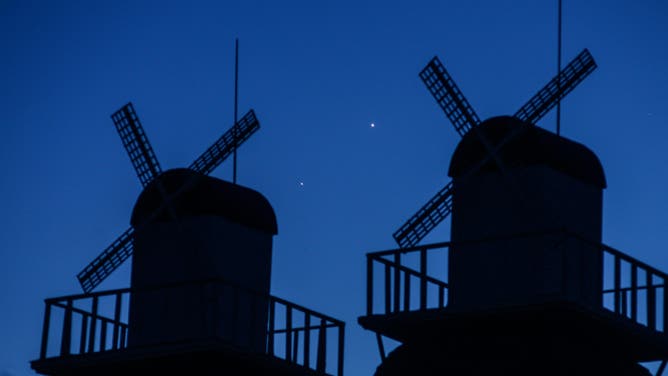
This photo taken on June 9, 2026 shows the conjunction of Jupiter and Venus in the sky over the Yabuli Ski Resort in Yabuli, northeast China's Heilongjiang Province.
(Zeng Dong/Xinhua via Getty Images / Getty Images)
According to Space.com, the optimal viewing window to gaze at the three-planet space show will be 30 minutes after sunset.
So don't let the Sun catch you slacking. If you're interested in peeping the planetary parade, you better finish up dinner and the dishes around sunset.
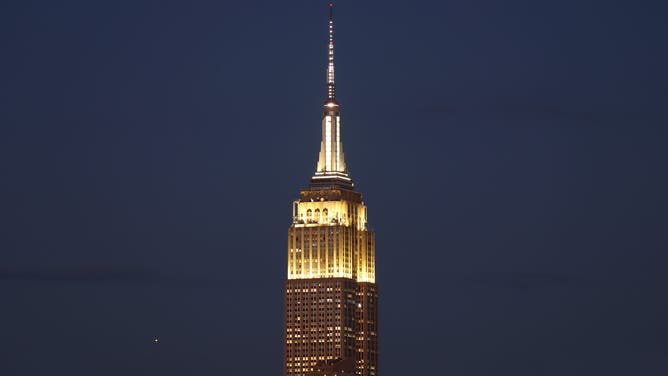
Jupiter rises behind the Empire State Building in New York City in opposition to the sun as it makes its closest approach to the Earth since 1963 at a distance of 367 million miles on September 26, 2022, as seen from Hoboken, New Jersey.
(Gary Hershorn/Getty Images / Getty Images)
Jupiter and Mercury will be visible for roughly 30 to 45 minutes, before the two planets follow the Sun's steps below the western horizon, according to Space.com.
Skywatchers have been treated to a memorable week. The planetary parade comes just days after Venus and Jupiter spent the evening as neighbors in the night sky on June 9.
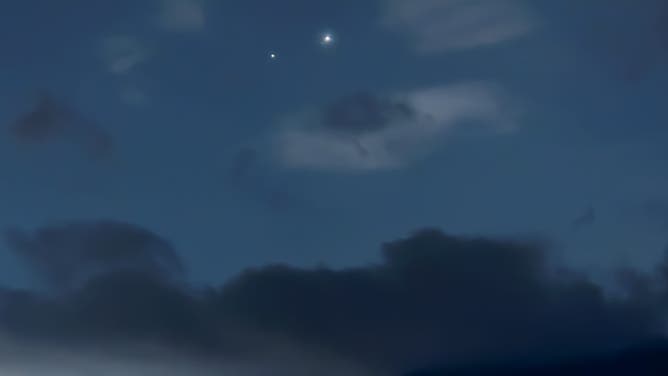
Venus and Jupiter appear close together above clouds and mountain ridges in the evening sky in Shenzhen, Guangdong Province, China, on June 9, 2026. The Venus-Jupiter conjunction reached its peak visibility on June 8 and 9, with the two brightest planets in the night sky appearing only about 1.5 degrees apart, making it one of the most notable astronomical events visible to the naked eye in 2026.
(Cheng Xin/Getty Images / Getty Images)
While Jupiter and Mercury will call it quits on the heels of the Sun, Venus will steal the show, appearing low in the western sky even before twilight fades. Mercury will be the toughest of the trio to catch, hugging the horizon as it quickly follows the Sun below it.
If you find yourself on a sunset cruise, in transit to dinner and Friday night plans, look up – you might just get lucky and see the planetary parade.