

Look up: 'Kissing planets' set to light up the night sky this week
Starting on June 8, Venus and Jupiter will appear to be very close to each other, shining together low in the western sky during twilight.
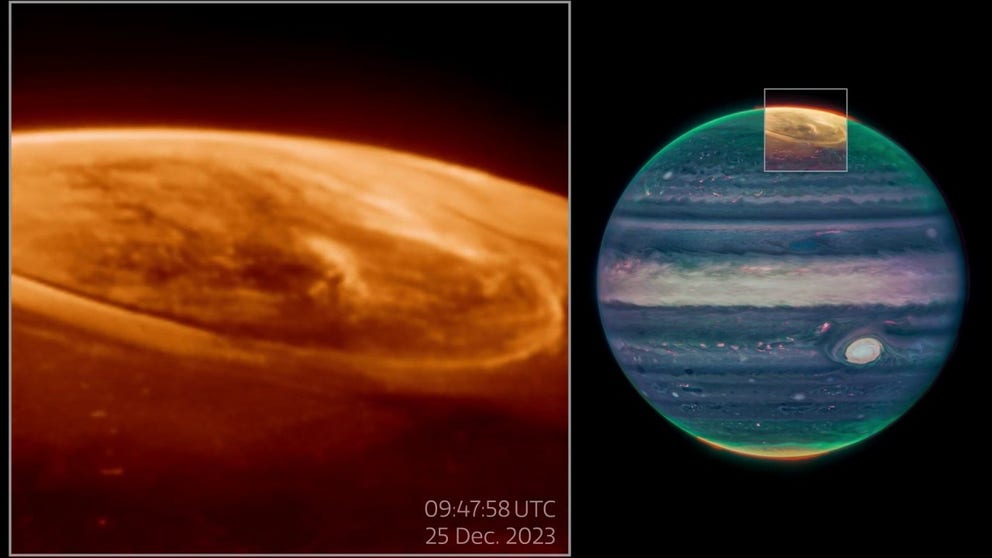
FILE: NASA's Webb telescope captured vibrant dancing aurora on Jupiter
Images captured in 2023 by NASA's James Webb Space Telescope of the massive aurora lights on Jupiter reveal unexpected activity in the gas giant's atmosphere. (Video: NASA, ESA, CSA, STScI)
Skywatchers, get ready — the two brightest planets in the night sky will be visible to the naked eye over the course of several evenings this week.
JUNE SKYWATCHING GUIDE: FROM PLANET CONJUNCTIONS TO NEW MOONS, HERE IS WHAT TO LOOK UP FOR
Starting on June 8, Venus and Jupiter will appear to be very close to each other, shining together low in the western sky during twilight.
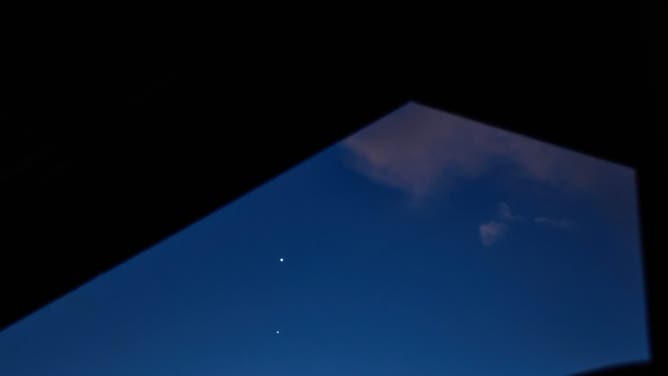
Venus and Jupiter are seen during a rare Venus-Jupiter conjunction in India.
(Saqib Majeed/SOPA Images/LightRocket via Getty Images / Getty Images)
Venus, often referred to as the "evening star," will be the brighter of the two planets and should be easy to spot shortly after sunset.
The conjunction of Venus and Jupiter will continue through June 9, when the two planets will appear about 1.5 degrees apart. That's about three times the width of a full moon, and a pinky finger held at arm's length will fit between them.
THE BEST CELESTIAL EVENTS IN 2026 YOU WON'T WANT TO MISS
However, even though these planets will appear extremely close together, this phenomenon is an optical illusion.
In reality, Venus and Jupiter will remain millions of miles apart.
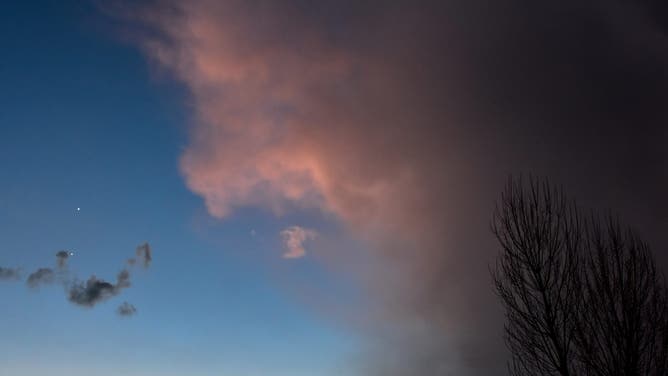
Venus and Jupiter are seen in the sky with pink-clouds.
(Saqib Majeed/SOPA Images/LightRocket via Getty Images / Getty Images)
During this time, Jupiter is gradually receding while Venus is rising higher in Earth's sky, causing the planets to appear close together from our perspective.
According to Sky & Telescope, a Venus-Jupiter conjunction is a relatively rare event that occurs every few years. The last conjunction took place in August 2025 during the early morning hours when many people were asleep.
The next conjunction will occur in August 2027, but the planets will be too close to the sun for viewing.
Skywatchers will not have another good opportunity to view a Venus-Jupiter conjunction until November 2028.
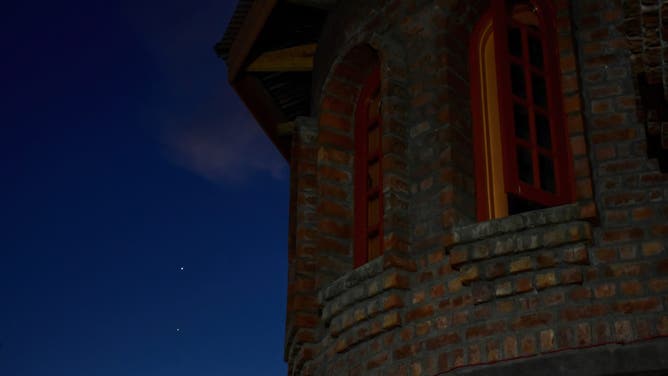
A rare Venus-Jupiter conjunction is seen in India.
(Saqib Majeed/SOPA Images/LightRocket via Getty Images / Getty Images)
While a telescope is not required to enjoy the event, binoculars can provide an even better view and allow both planets to be seen together.
NASA'S NEW NANCY GRACE ROMAN SPACE TELESCOPE SET TO LAUNCH MONTHS AHEAD OF SCHEDULE
Experts recommend finding a location with an unobstructed view of the western horizon that is far away from a city or streetlights. Look toward the west about 45 minutes to two hours after sunset.
The planets will remain visible for roughly an hour before they move below the horizon, giving skygazers a chance to witness this rare celestial spectacle.