

Watch your step: Tarantula season is underway at Grand Canyon National Park
Grand Canyon black tarantulas emerge from their burrows each fall as males roam the national park in search of a mate.
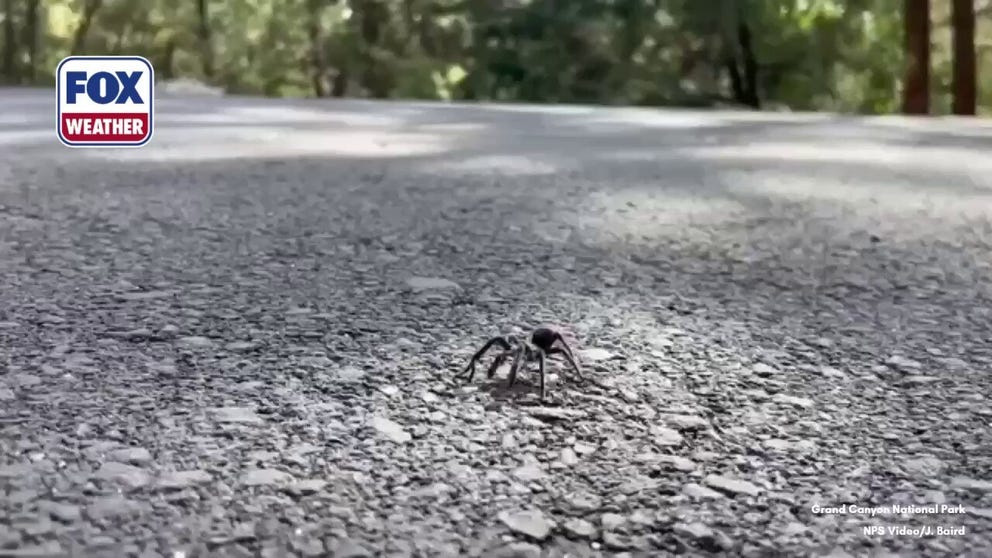
Watch Your Step: Grand Canyon’s tarantula season is underway
Tarantula season is underway at Grand Canyon National Park, where the impressive arachnids may be spotted crossing the landscape in September and October.
THE TAKEAWAY
- Tarantula season is underway at Grand Canyon National Park.
- Male tarantulas emerge in the fall to search for mates.
- Visitors should admire the spiders from a safe distance.
GRAND CANYON –As fall brings cooler temperatures to Grand Canyon National Park, it also sends one of the canyon’s most feared eight-legged residents out for a stroll: the tarantula.
September and October mark tarantula season at the popular national park, when these spooky yet impressive spiders can be spotted crossing the landscape.
The Grand Canyon black tarantula can grow up to 4 inches from leg tip to leg tip and is covered in thick, dark hair, with reddish-orange coloring on its abdomen.
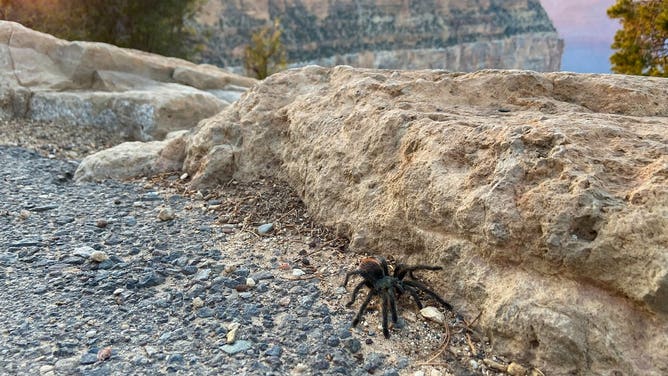
A black tarantula with a reddish-orange abdomen, walks along a paved path.
(NPS Photo/B. Cherry / FOX Weather)
These eight-legged residents can be found throughout Grand Canyon National Park, either strolling across roads or tucked inside underground burrows.
During the fall, male tarantulas emerge from their burrows and wander across the national park in search of a mate, according to the National Park Service.
HURRICANE SWELLS REVEAL FORGOTTEN HISTORY BENEATH ICONIC CALIFORNIA BEACH
While tarantulas may be out and about, visitors don’t need to fear a surprise attack.
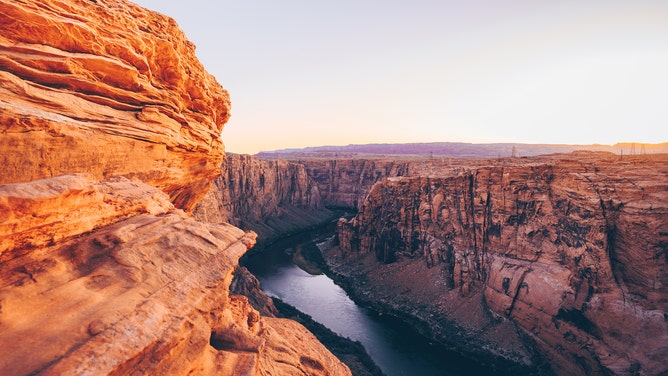
According to the National Park Service, Grand Canyon black tarantulas living inside the canyon tend to grow slightly larger than those found along the rim.
(tobiasjo / Getty Images)
These impressive arachnids are generally not dangerous, though their bite can be painful — often compared to a wasp sting.
Tarantulas typically bite only when they feel seriously threatened, so the best approach is to admire them from a distance and let them go about their business.
THE RACE TO SAVE THE WORLD'S MOST ENDANGERED MARINE MAMMAL ISN'T OVER YET
Grand Canyon black tarantulas are not aggressive by nature and would rather retreat than confront a human.
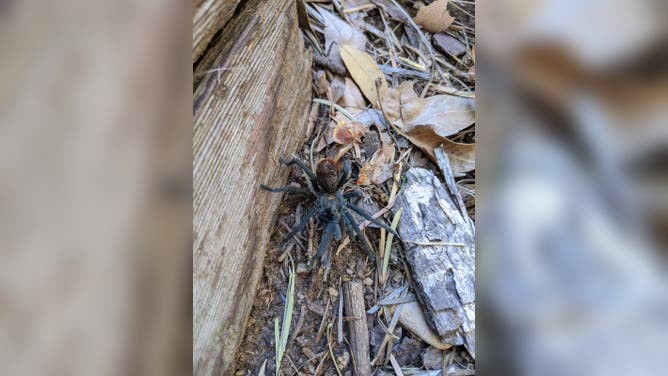
Grand Canyon black tarantulas can grow up to 4 inches from leg tip to leg tip.
(National Park Service)
While these spiders are large, they can be easily harmed if dropped or stepped on.
The National Park Service recommends admiring these incredible arachnids from a safe distance.
MASSIVE 900-POUND OCEAN SUNFISH FOUND DEAD ON CAPE COD BEACH
After all, they’re probably more afraid of you than you are of them.