

Can thunderstorms trigger asthma attacks? The hidden health threat behind severe weather
Medical experts say severe thunderstorms can trigger a sudden surge in asthma attacks, even among people who don’t typically suffer from the condition.
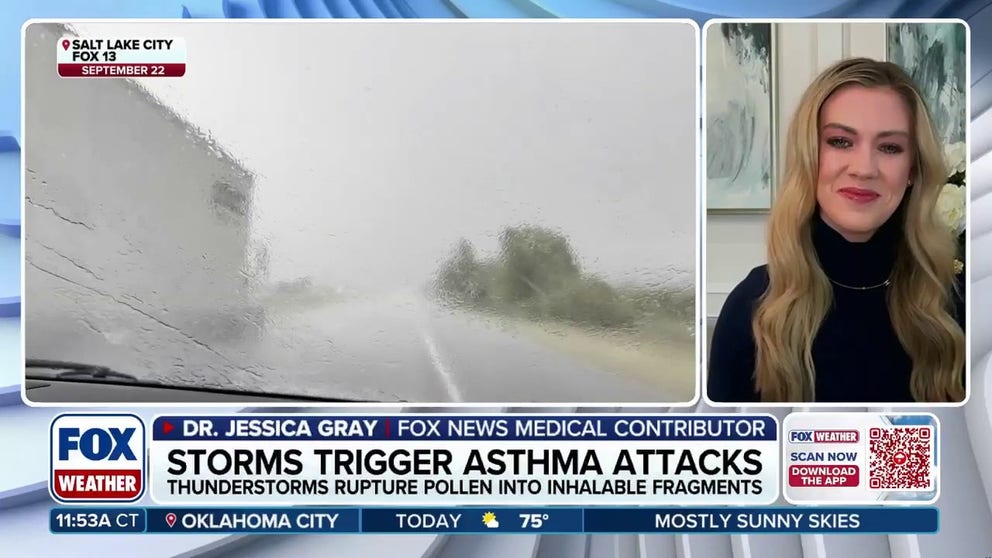
Thunderstorms linked to a rapid surge of asthma attacks
Did you know thunderstorms can trigger asthma attacks? Changes in humidity, temperature and air pressure can worsen asthma symptoms, while storms may also spread airborne allergens. FOX News medical contributor Dr. Jessica Gray breaks down the science and shares real-world examples of storm-triggered asthma incidents.
THE TAKEAWAY
- Thunderstorms can break pollen into tiny particles that penetrate deep into the lungs.
- People with asthma, hay fever and seasonal allergies face the greatest risk.
- Specific storm conditions can trigger sudden asthma episodes.
Thunderstorms often cast a dangerous yet beautiful display of natural weather patterns across the sky — one that can literally take your breath away in a "perfect storm" scenario.
Medical experts say severe thunderstorms can trigger a sudden surge in asthma attacks, even among people who don’t typically suffer from the condition.
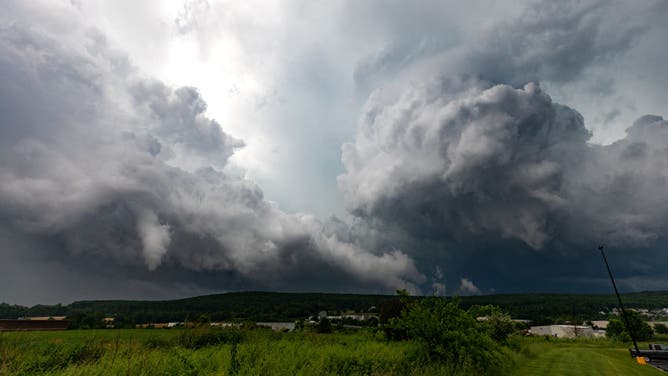
Clouds are pictured from the Morgantown Walmart parking lot minutes after a tornado touches down in Morgantown.
(Natalie Kolb/MediaNews Group/Reading Eagle via Getty Images / Getty Images)
"It's actually one of the most interesting phenomenons where medicine and weather come together," FOX News Medical Contributor Dr. Jessica Gray said.
FALL ALLERGIES OR A COLD? HERE’S HOW TO TELL WHAT’S MAKING YOU MISERABLE
Within minutes to hours after a thunderstorm passes through an area, especially during the high-pollen or mold seasons of spring and fall, people can experience a phenomenon known as "thunderstorm asthma."
It takes what Dr. Gray called a "perfect storm."
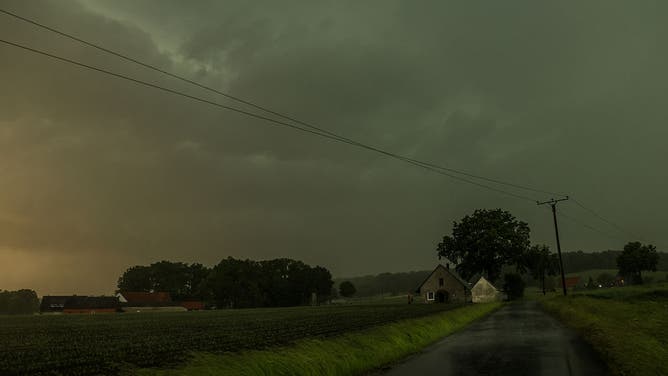
Thunderstorms with heavy rain.
(David-Wolfgang Ebener/picture alliance via Getty Images / Getty Images)
THE PERFECT STORM
Thunderstorm asthma requires a specific combination of conditions: high airborne pollen levels, a strong storm with heavy rain, high humidity and powerful winds, and people who are sensitive to those allergens.
The storm’s updrafts can carry pollen into moisture-filled clouds, causing the grains to rupture into tiny fragments.
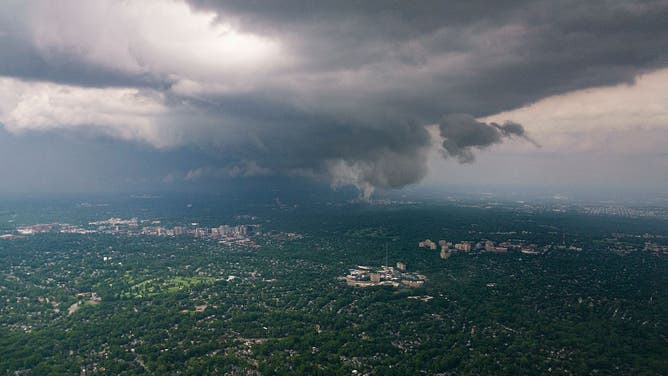
In an aerial view, severe thunderstorms move through the Washington, D.C. metropolitan area causing widespread damage on May 16, 2025 in Bethesda, Maryland.
(Kevin Carter/Getty Images / Getty Images)
Downdrafts and gusty outflow winds can then push those particles toward the ground, where they can be inhaled deep into the lungs.
A sharp temperature drop and falling air pressure may accompany these storms, but the key risk comes from the combination of high pollen levels and strong, humid storm conditions.
HERE ARE THE 10 WORST ALLERGY CAPITALS IN THE US FOR 2026
It’s not just people diagnosed with asthma who may be vulnerable to thunderstorm asthma.
Those with seasonal allergies, hay fever or a sensitivity to airborne pollen can also experience sudden breathing problems even if they have never been diagnosed with asthma.

Hazelnut pollen buzz through a park in the Mitte.
(Wolfgang Kumm/picture alliance via Getty Images / Getty Images)
THE SCIENCE BEHIND IT
Like Dr. Gray said, thunderstorm asthma isn’t triggered by every rumble of thunder. It takes a very specific combination of pollen, humidity, wind and storm timing to create the right conditions.
During a thunderstorm, updrafts can loft large amounts of pollen into the cloud base, where moisture causes the grains to swell and rupture.
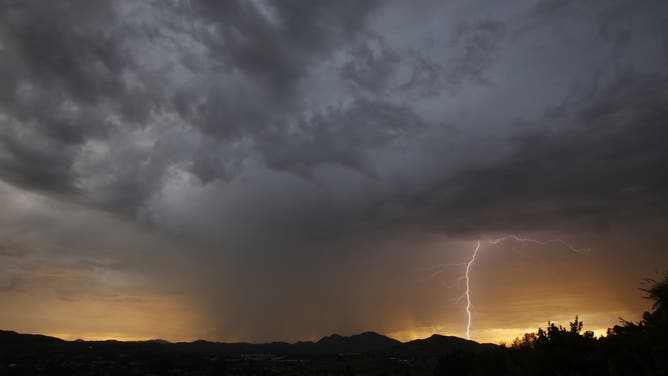
Lighting strikes to the West over the Oxnard plain as seen from Thousand Oaks as rain, thunder and lightning hit the southland by surprise Monday October 4, 2021.
(Al Seib / Los Angeles Times via Getty Images / Getty Images)
Cold downdrafts and gusty outflow winds can then carry the tiny pollen fragments back toward the ground, where they can be inhaled deep into the lungs and trigger asthma symptoms.
This isn’t the case with every storm, as steady rain can actually wash pollen out of the air and reduce allergy exposure.
FLORIDA BATTLES ITS LARGEST DENGUE OUTBREAK IN DECADES AS CASES SURGE ACROSS THE STATE
"It's these very specific combinations, that perfect storm, that can create the bursting of these pollen fragments just to be small enough that they can actually affect people more severely," Dr. Gray said.
A SERIOUS PUBLIC HEALTH THREAT
While thunderstorm asthma events are rare, they can pose a serious public health threat.
That became clear on Nov. 21, 2016, when Melbourne, Australia, experienced what health officials called the world’s largest and most catastrophic recorded epidemic of thunderstorm asthma, sending thousands of people to emergency departments in a matter of hours.

Thunderstorm asthma attacks inudate hospitals across Melboure. Jaxon Dowal with father Chris Dowal in the emergency at Sunshine Hospital on Nov. 22, 2016. Jaxon had never suffered asthma before until last night when he suffered an attack.
(Justin McManus / Getty Images)
In the 30 hours after severe thunderstorms swept through Melbourne on Nov. 21, 2016, the city recorded nearly 500 more asthma-related hospital admissions than expected, including 30 excess ICU admissions.
The event was also associated with at least nine additional deaths, according to the Victoria State Government.
WHY DO DOGS PANIC DURING STORMS? HERE'S HOW TO HELP YOUR BEST FRIEND WEATHER THEIR FEAR
STAY SAFE DURING STORMS
For people with asthma or seasonal allergies, Dr. Gray warned that watching a storm from the back porch may not be a good idea during peak pollen season.
"If you have allergies, be aware that you may need to stay indoors during a strong thunderstorm. Close your windows and take steps to protect yourself," Dr. Gray said.

Illustration of the silhouette of a woman holding a Ventolin inhaler during a simulated asthma emergency in Paris, France, on May 11, 2026.
(Joao Luiz Bulcao / Hans Lucas / AFP via Getty Images / Getty Images)
So, if you’re among the nearly 28 million people in the U.S. with asthma, monitoring the forecast and keeping prescribed medications close at hand may help reduce the risk of an asthma episode.
"You want to have your asthma inhaler in hand and think about these things a little bit more ahead of time," Dr. Gray said.