

Bryan Norcross: No further tropical development is likely this hurricane season
The Atlantic's official June-to-November designation of hurricane season just means that tropical development is most likely during those months.
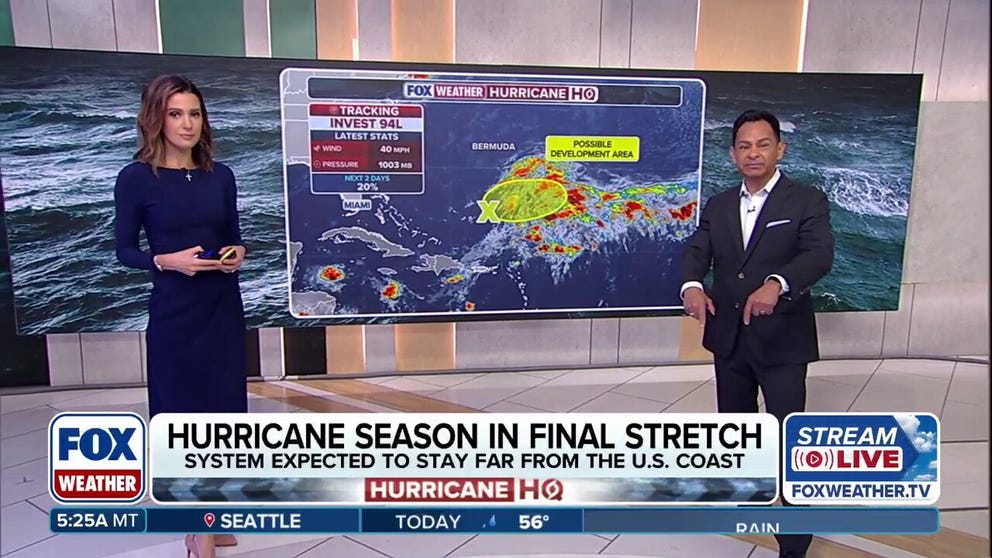
FILE: Under-active Atlantic hurricane season in final stretch
Hurricane season is winding down, but we continue to monitor an area of activity in the Atlantic with low chances of development. Odds keep decreasing that the system will be named, but time will tell.
Updated at 10:30 a.m. on Sunday, Nov. 8, 2026.
The weather pattern over the Gulf, the Caribbean, and the Atlantic is in a wintertime mode. The jet stream is being energized this year by the super El Niño, so it's even more hostile to development than normal.
Tropical development is unlikely for the rest of this month. Hurricane season officially ends, of course, on November 30.
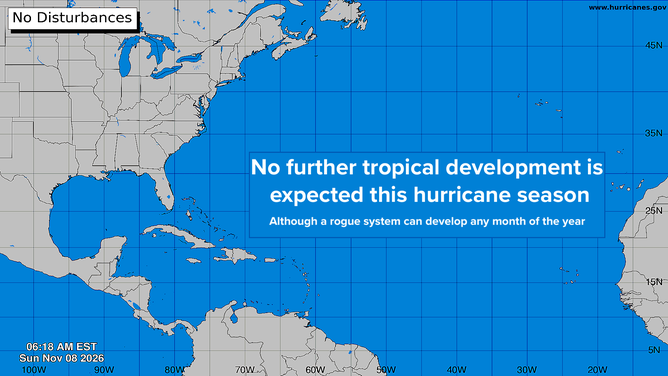
The Atlantic basin
LATEST FROM FOX WEATHER HURRICANE SPECIALIST BRYAN NORCROSS
Tropical systems can form and have formed every month of the year, however. The Atlantic's official June-to-November designation of hurricane season just means that tropical development is most likely during those months.
Historically, most out-of-season tropical storms have not impacted the U.S., although there are a couple of exceptions.
In 1925, a large tropical storm swept across Southwest Florida on November 30 and December 1. The storm dumped over 15 inches of rain on Miami on the 30th, which set a record for the month of November that stands today. Strong winds impacted a swath across the state, including Fort Myers, Tampa, and Jacksonville. The storm went on to hit eastern North Carolina at near-hurricane strength, although it had morphed into a non-tropical nor'easter-type system by that time.
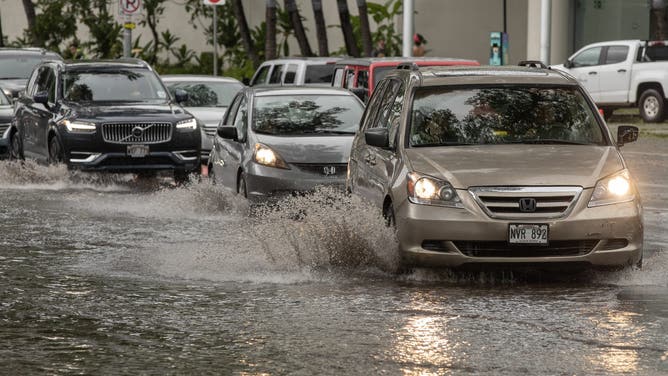
Vehicles make their way through a flooded intersection in front of the Hawaii Convention Center in Honolulu, Hawaii, on August 16, 2026. Hurricane Lala was pulling away from Hawaii's Big Island early Sunday, as heavy rain and strong winds struck the US Pacific state and officials warned of potentially dangerous flooding. The heavy rain and flood risk will then spread westward across the island chain on Sunday, according to the NHC.
(Eugene Tanner / AFP / Getty Images)
On February 2, 1952, a disturbance organized in the extreme northwest Caribbean and moved north toward South Florida. It strengthened over the warm waters south of the Keys and plowed across Greater Miami early on February 3. Winds gusted over hurricane strength on Miami Beach, power was knocked out, and there was scattered damage and flooding across the city. That storm went on to be a nor'easter along the coast from North Carolina to New England.
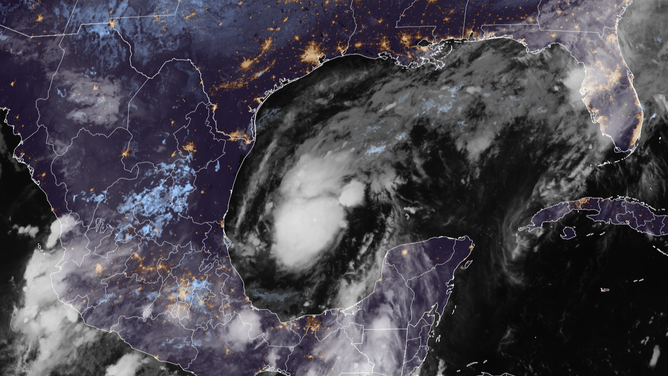
Satellite imagery of Tropical Storm Isaias on Oct. 7, 2026.
(CIRA CSU / FOX Weather)
The lesson is that weird stuff can happen any time, but the odds are very low and certainly not worth worrying about.
Enjoy the tropical break. Although this year, no doubt, the powerful El Niño will energize disruptive weather across the U.S., including in the hurricane zone, through this winter season.