

Atlantic’s largest male great white Contender likely heading toward this popular summer getaway
While Z-pings do not provide enough data to pinpoint an exact location, they indicate that a shark has briefly broken the surface and is on the move.

FILE: Top 'Contender': nonprofit OCEARCH tags largest great white shark on record in Atlantic
Contender, a 14-foot, 1,600 pound adult male great white shark was tagged by OCEARCH in January near the Florida/Georgia line. The nonproft works to research ocean life by tracking their locations throughout their lives.
MASSACHUSETTS - The largest male great white shark ever tagged by OCEARCH in the Atlantic could be making his way toward a popular summer hotspot: the coast of Cape Cod.
Weighing in at nearly 1,700 pounds and measuring almost 14 feet, Contender triggered a Z-ping on July 10, continuing a series of Z-pings that followed his latest tracked location off the Outer Banks of North Carolina in late April.
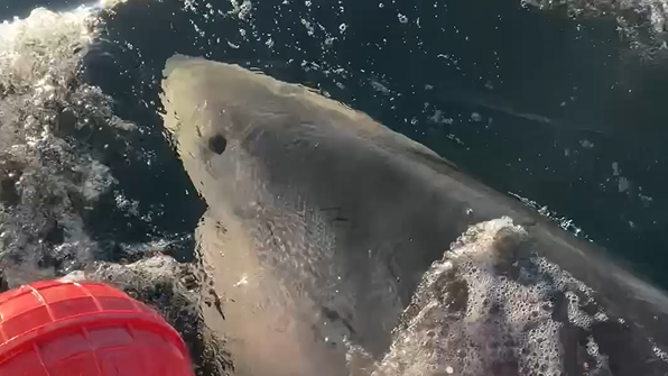
Contender, the 14-foot, 1600 pound great white shark on the day he was tagged by OCEARCH in January 2025.
(OCEARCH / FOX Weather)
While Z-pings do not provide enough data to pinpoint an exact location, they indicate that a shark has briefly broken the surface and is on the move.
Since first tagged in January 2025 off the Florida-Georgia coast, he’s traveled over 7,000 miles up and down the North Atlantic Ocean.
According to a statement on the shark’s recent movements from OCEARCH, "White sharks in the western North Atlantic typically migrate north and spend the summer and early fall foraging in the waters of Cape Cod or Atlantic Canada."
"These two regions offer comfortable water temperatures and an abundant food supply, in particular abundant seals and large fish species," OCEARCH continued.
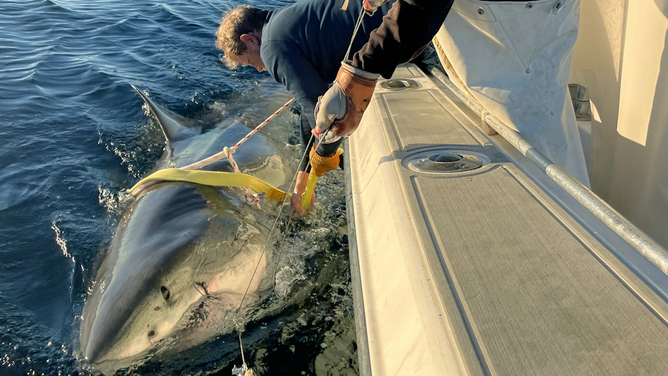
Contender the great white shark being tagged in the Atlantic Ocean.
(OCEARCH / FOX Weather)
Not only does Cape Cod draw millions of visitors each summer, but dangerous heat is also currently gripping the Northeast, meaning plenty of beachgoers are likely to flock to the Massachusetts shore for relief.
While these apex predators do not typically target humans, they can mistake swimmers for prey like seals when seen from below.
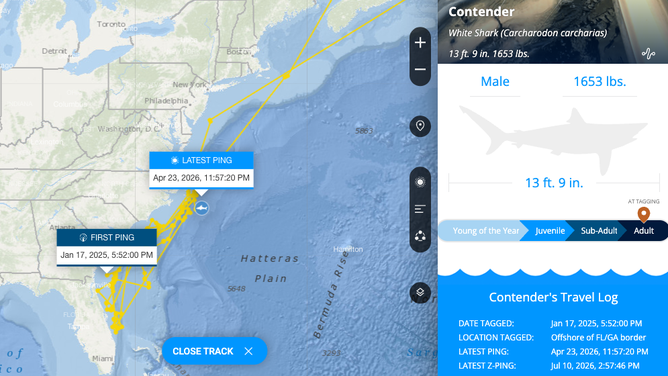
Contender's latest tracking
(OCEARCH)
Because this is the time of year sharks begin heading toward the Cape, it's best to be on the lookout.
'MOST FOLLOWED' SHARK PINGS OFF SOUTH CAROLINA COAST AS TAG CONTINUES TO DEFY LIFESPAN
If you are heading to the beach, here are a few simple ways to stay safe in the water:
- Stick together: Sharks are more likely to target one swimmer than a group.
- Watch the clock: Avoid swimming at dusk or night when visibility is low and sharks are actively hunting.
- Don't wander: Stay close to the shore where help is easily accessible.
- Read the signs: Pay close attention to posted beach signs and follow lifeguard instructions.