

40,000-year-old frog fossils unearthed in Southern California reveal a species lost to time
The tar pit has witnessed all kinds of life in Southern California for the last 40,000 years.
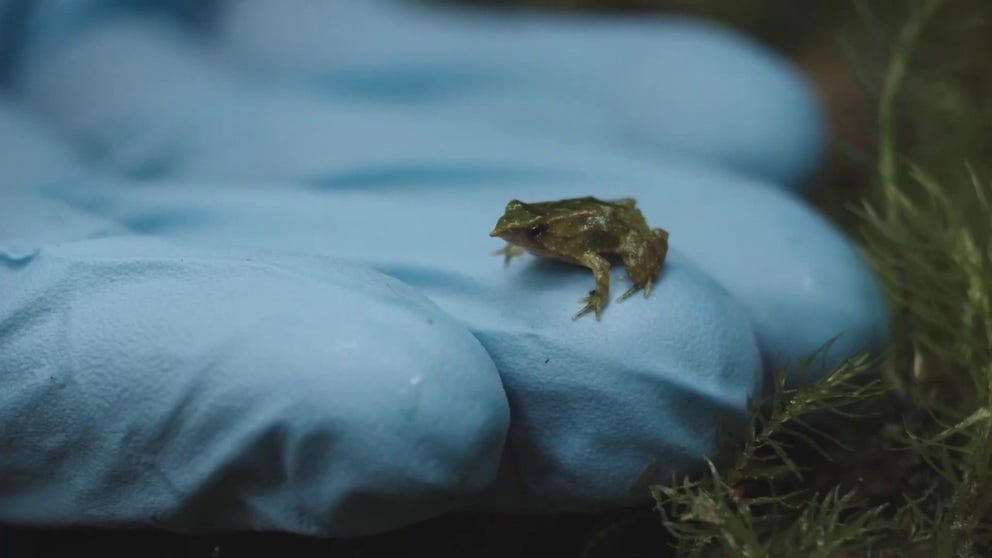
FILE: Endangered male frogs 'give birth' to 33 froglets after 7,000-mile journey to London
The tiny froglets are carried in the vocal sacs of male Darwin's frogs until they're metamorphosed. A deadly fungus is causing the frog species to near extinction, prompting the frogs' relocation to London.
THE TAKEAWAY
- A new extinct species of spadefoot frog has been identified.
- Fossils of the extinct spadefoot frog have been found in tar pits in Los Angeles.
- The tar pit has witnessed all kinds of life in Southern California for the last 40,000 years.
LOS ANGELES, Calif. – Researchers have stumbled upon a new species of the spadefoot toad in California after digging up the rare fossil, offering the opportunity to study these creatures from thousands of years ago.
Paleontologists researching at Rancho La Brea in Los Angeles discovered fossils of a newly identified spadefoot toad species in the region's tar pits.
The tar pit has witnessed all kinds of life in Southern California for the last 40,000 years.
SEE IT: MASSIVE, PREHISTORIC DISCOVERY FOUND BY FAMILY SEARCHING FOR SEASHELLS ON THE JERSEY SHORE
The animals that lived here were present through the Holocene period, also known as the age of man, following the last major ice age and extending back about 11,700 years.
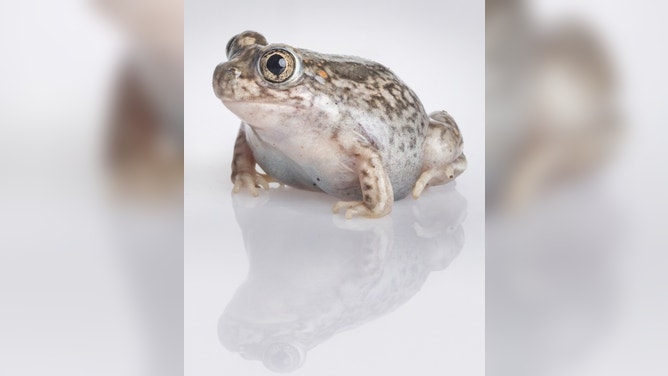
Photo of spadefoot frog.
The discovery of this new fossil offers a chance to enhance paleoecological, paleoclimatological and biogeographic studies because amphibians are extremely sensitive to certain environmental conditions.
The new extinct species, Spea labreae, is larger than the modern-day spadefoot toad.
INVASIVE CRAYFISH CLAW THEIR WAY ACROSS AMERICA AND TAKE OVER US LAKES
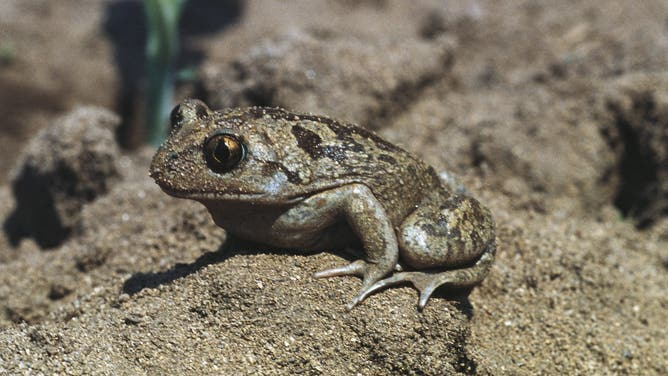
OCTOBER 28: Common Spadefoot (Pelobates fuscus) on sand.
(DEA / E. VIGO/De Agostini / Getty Images)
Using osteological comparison material, experts from the Journal of Vertebrate Paleontology analyzed the current distribution and fossil record to estimate the size of the new species.
PENNSYLVANIA FAMILY MAKES PREHISTORIC DISCOVERY WHILE SEARCHING FOR SEASHELLS ON THE JERSEY SHORE
Experts can hopefully discover how climate and other geological changes shaped this extinct creature and its modern-day relatives.