

Video: Oceanic manta ray spotted off Long Island coast in rare New York sighting
Oceanic manta rays typically call tropical and subtropical seas home, not the cooler waters of New York.
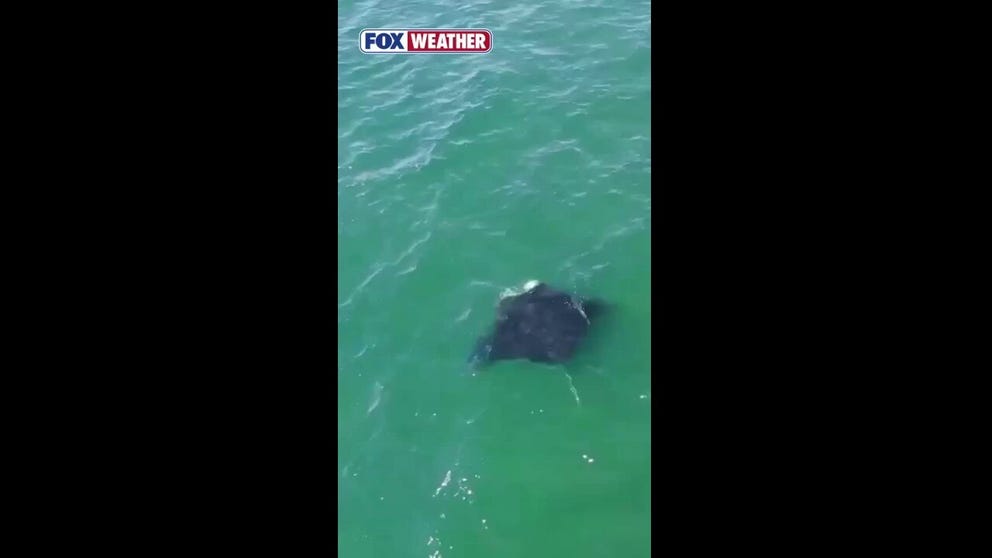
See it: Oceanic manta ray spotted off Long Island in rare sighting
RARE VISITOR : An oceanic manta ray was recently spotted feeding off the coast of Long Island — an extraordinary sight for the area, as these creatures typically call tropical and subtropical seas home. 📷: NYS Parks
THE TAKEAWAY
- Oceanic manta rays normally live in warm, tropical and subtropical seas.
- Oceanic manta can occasionally be spotted in New York waters during warm summer months.
- The oceanic manta ray is the largest species of ray in the world and isn't considered a threat to humans.
LONG ISLAND, N.Y.- An unusual visitor made a splash off Long Island when an oceanic manta ray was spotted feeding in the waters near Jones Beach State Park last week.
Video captured shows the massive marine animal swimming close to shore, bringing attention to a species that is not commonly seen in New York waters.
SEE IT: STINGRAYS MAKE SURPRISE APPEARANCE IN POLLUTED NEW YORK CITY WATERWAY
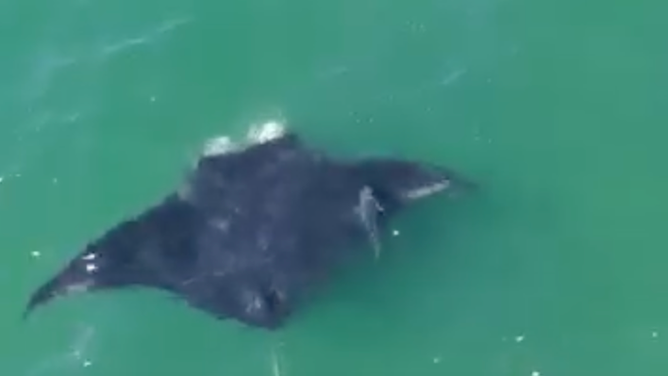
Rare oceanic manta ray sighting off Long Island coast
(NYS Parks)
According to the New York State Department of Environmental Conservation (DEC), these creatures typically call tropical and subtropical seas home.
The department added in a Facebook post regarding the extraordinary sighting that this species can sometimes be spotted in New York waters during the warm summer months.
Manta rays are filter feeders, using their large mouths to consume significant amounts of zooplankton. According to the DEC, the rays can also venture into deeper water to search for medium-sized fish.
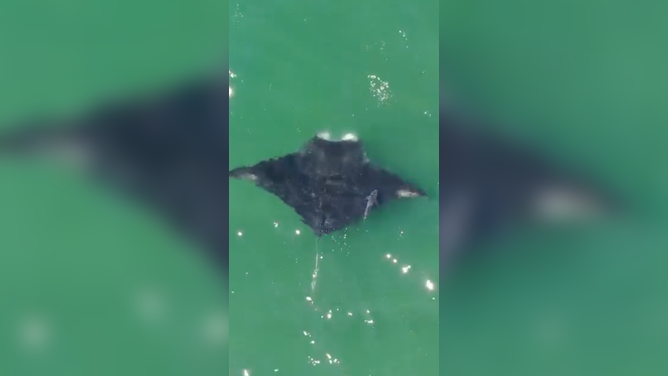
Aerial view of the oceanic manta ray emphasizes its massive size compared to what looks like some sort of fish riding on its back.
(NYS Parks)
The oceanic manta ray is the largest species of ray in the world and can reach enormous sizes.
Officials with the DEC said these animals can weigh more than 4,000 pounds and live as long as 40 years.
Despite their massive size, these rays aren't considered a threat to humans.