

Endangered red wolf pups make incredible journey from Saint Louis Zoo to wild North Carolina pack
It's the first time in history the Saint Louis Zoo has been able to participate in the species recovery effort.
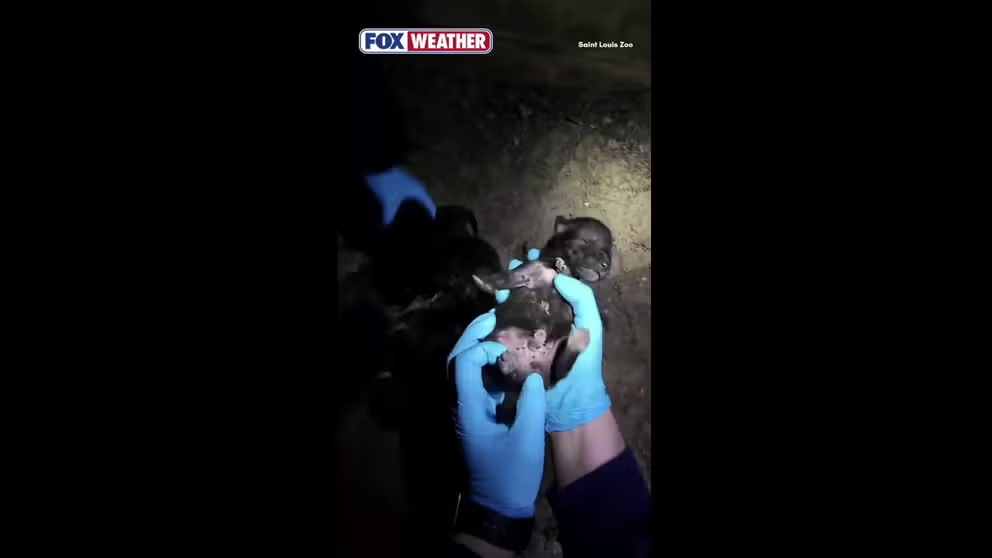
Three critically endangered American red wolf puppies relocated from Saint Louis Zoo to North Carolina
hree American red wolf puppies born at the Saint Louis Zoo were fostered into a wild wolf family in North Carolina to help the species recovery efforts by the U.S. Fish and Wildlife Service. Video shows Saint Louis Zoo vet and animal care staff entering the wildlife reserve where the pups were born and taking three for the foster effort.
ST. LOUIS– Three newborn critically endangered American red wolf pups were fostered into a wild wolf family in North Carolina this spring as part of an effort to save the species from extinction.
On April 20, Saint Louis Zoo Animal Care and Veterinary staff ventured into the area within the wildlife reserve where the wolf pups were stowed away in a den and collected three of the week-old pups from their litter of seven.
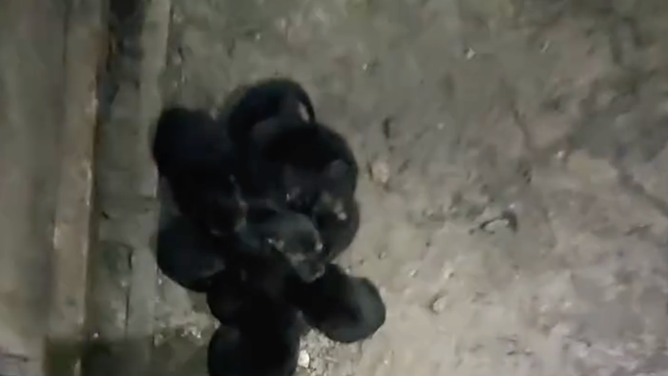
The litter of American red wolf pups at Saint Louis Zoo.
(Saint Louis Zoo / FOX Weather)
Video showed the zoo teams entering the Saint Louis Zoo Sears Lehmann, Jr. Wildlife Reserve and finding the wolf den with the pups.
The pups were evaluated medically and given hour-by-hour care as they traveled with Saint Louis Zoo staff to the Alligator River National Wildlife Refuge in northeastern North Carolina.
WATCH: HORDE OF HUNGRY SPINNER SHARKS RIPS THROUGH MASSIVE BAIT BALL OFF NEW YORK COAST
This process is known as fostering, and it introduces crucial genetic diversity into a wild population on the brink of extinction.
American red wolves are critically endangered in the wild, with roughly 40 wolves left, according to U.S. Fish and Wildlife data.
"Every pup matters," said Regina Mossotti, vice president of Animal Care at the Saint Louis Zoo and program leader for the AZA SAFE American Red Wolf Program. "With less than 40 American Red Wolves left in the wild, fostering is an important tool for the species. These pups now have the chance to support a future for one of the world’s most endangered animals."
MYSTERIOUS ANIMAL GOES ON THE ATTACK, INJURING 3 PEOPLE IN NEW HAMPSHIRE CITY
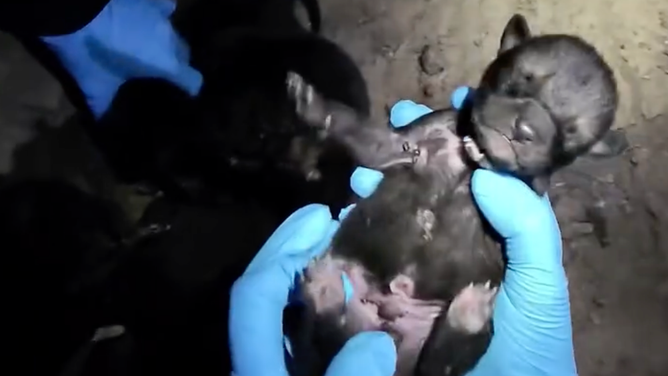
A Saint Louis Zoo animal care staff holding one of the red wolf puppies.
(Saint Louis Zoo / FOX Weather)
In captivity, numbers are much higher, so U.S. Fish and Wildlife and the Association of Zoos and Aquariums (AZA) Saving Animals from Extinction (SAFE) Program monitor American red wolf breeding behaviors and coordinates breeding recommendations for wolves in care like the Saint Louis Zoo.
"When a wild litter is born, SAFE works quickly to identify pups born at zoological institutions within a narrow, two-week window," Saint Louis Zoo said. "Pup fosters must take place within the first 14 days of life. This is when wolf mothers bond with their pups and are the most likely to accept new pups in their litter."
ICONIC GATEWAY ARCH GOES DARK TO HELP MILLIONS OF MIGRATING BIRDS NAVIGATE THE NIGHT
In 2026, the litter born at the Saint Louis Zoo was the only litter whose timing lined up perfectly to support the species recovery effort, the Zoo said.
Once they arrived at Alligator River National Wildlife Refuge, FWS biologists received the pups and placed them into a wild den.
"Several vital recovery actions for Red Wolves rely on our close partnership and collaboration with the SAFE American Red Wolf Program," said Emily Weller, U.S. Fish and Wildlife Service Red Wolf Recovery Program Coordinator. "The pup fostering this past spring with the Saint Louis Zoo is a perfect example of how that partnership directly benefits the species and their recovery in the wild."
LOUISIANA IS EXPANDING ITS RECREATIONAL GATOR HUNT — WITH 10,000 ALLIGATORS IN THE CROSSHAIRS
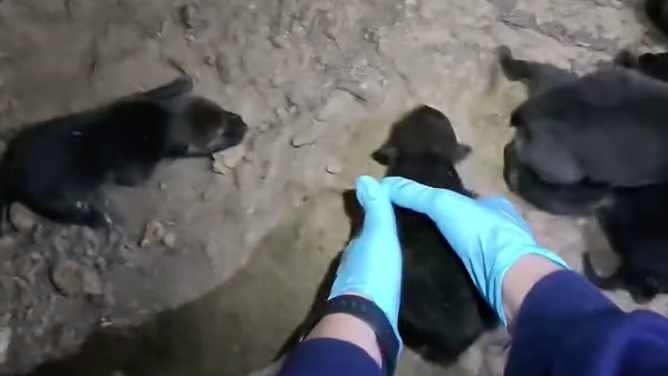
The Zoo team took three of the pups to North Carolina.
(Saint Louis Zoo / FOX Weather)
After their placement, biologists monitored the wolves to see how they integrated into the pack.
Months later, when the pups started exploring outside the den, it was confirmed via trail cameras that all three Saint Louis Zoo-born pups were alive and thriving and the wild wolf mother had accepted them into her litter, where they continue to grow along with their wild wolf family, the Zoo said.
"It’s hard to describe the joy that comes from being part of this foster," said Saint Louis Zoo Keeper Nicole Becker, who traveled with Mossotti and the Zoo-born pups to North Carolina. "Groundbreaking conservation efforts like this are the backbone of why we do what we do, caring for Red Wolves in our own backyard and protecting their wild counterparts for future generations."
Additionally, the zoo said the wild wolf mother had a very large litter when they did the foster, so a few of her pups were brought back to the Saint Louis Zoo litter at Sears Lehmann, Jr. Wildlife Reserve for a process called cross-fostering, the zoo said. This helps ensure the wild mother can appropriately care for each pup she has.
It's the first time in history the Saint Louis Zoo has been able to participate in the species recovery effort.