

Tiny piping plover shorebird population makes comeback after decades of conservation efforts
The U.S. Department of the Interior said when visiting public beaches, watch out for nesting signs and avoid stepping near posted areas. Keep dogs on leashes to prevent nest disturbance.

FILE: North Carolina artist creates ‘Bluebirds of Hope’ from glass shattered by Helene
An artist in western North Carolina is creating beauty from the devastation of Helene, as her community continues to recover one year after the historic storm.
A small, adorable shorebird called the piping plover has been a threatened species since the 1980s, but U.S. officials said their population numbers are on the rise after dedicated conservation.
Since 1985, conservation plans have been in place to help recover and protect the piping plover population in the U.S.
SPIDERS THE SIZE OF A HUMAN HAND ARE SPREADING THROUGHOUT THE US
In a post to X on Friday, the Department of the Interior announced piping plover populations are increasing, but help is still needed.
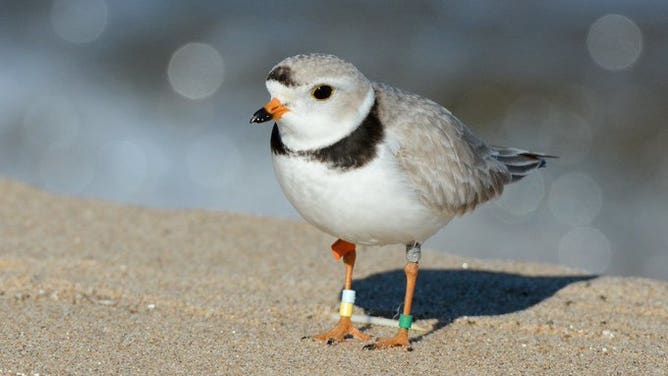
A piping plover bird
(US Fish and Wildlife Service / FOX Weather)
Piping plovers are small birds that nest and feed along coastal sand and gravel beaches in North America, according to U.S. Fish & Wildlife Service (USFWS).
There are three populations of piping plover that live in the U.S.: One in the Great Lakes, another in the northern Great Plains and a third along the Atlantic Coast.
Piping plovers are small, growing to be 7 inches long on average.
GREAT WHITE SHARK BELLA PINGS OFF LOUISIANA COAST IN POSSIBLE 'NEW SHARK HOTSPOT'
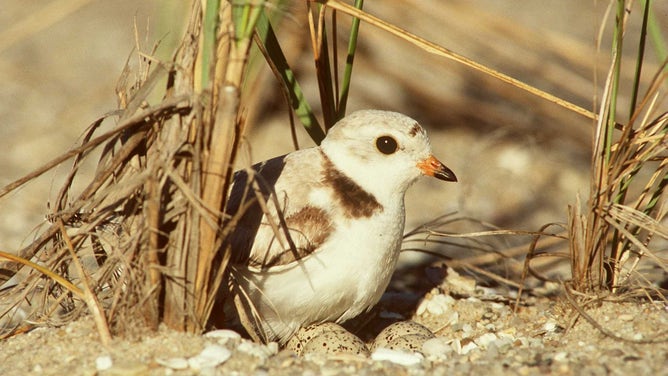
NANTUCKET, MA - SEPTEMBER 1: A female Piping Plover prepares to settle over her four eggs to brood them at her Nantucket nest.
(Mark Wilson/The Boston Globe / Getty Images)
They are very light, weighing 1.4 to 2.3 ounces, according to USFWS.
The birds' bodies are sandy brown, with white bellies and underparts.
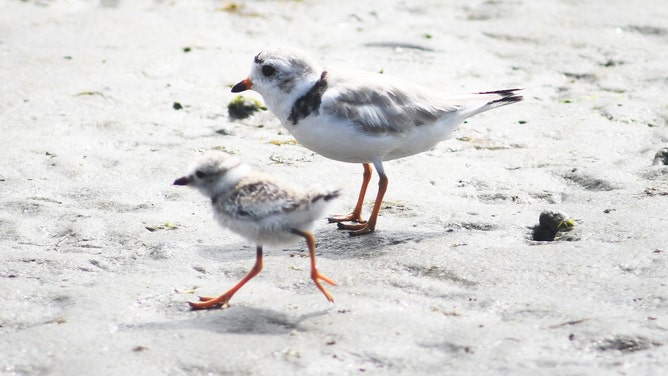
MILFORD, CT - JULY 16: An adult Piping Plover and recently hatched chick on a tidal flat near the Connecticut Audubon Society's Coastal Center at Milford Point, in Milford, Conn. July 16, 2025.
(Ned Gerard/Connecticut Post / Getty Images)
Piping plovers have a melodic call, USFWS said.
The latest 5-year review of the status of the piping plover conducted in 2024 listed the Great Lakes population as endangered, and the Atlantic and Great Plains populations as threatened.
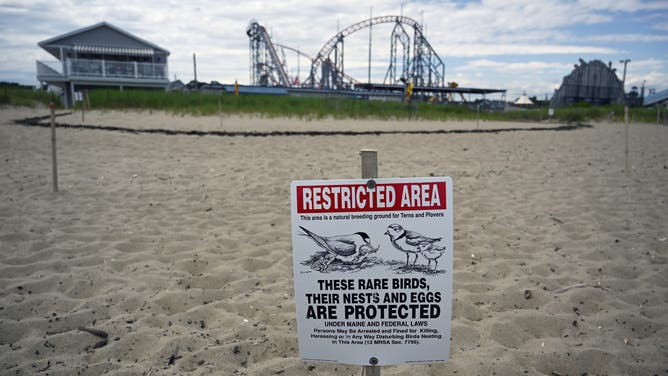
OLD ORCHARD BEACH, ME - June 29: A restricted area near Piping Plover nests on the Beach in Old Orchard Beach Saturday, June 29, 2019.
(Shawn Patrick Ouellette/Portland Portland Press Herald / Getty Images)
Many of piping plovers' nesting areas are subject to disturbance by humans and other animals.
The U.S. Department of the Interior said when visiting public beaches, watch out for nesting signs and avoid stepping near posted areas. Keep dogs on leashes to prevent nest disturbance.