

Millions across 20+ states could see Northern Lights tonight due to geomagnetic storm
A G3 geomagnetic storm watch was issued for Thursday and Friday, with the highest possibility of seeing auroras in the U.S. potentially as far south as Seattle, Chicago and Boston.
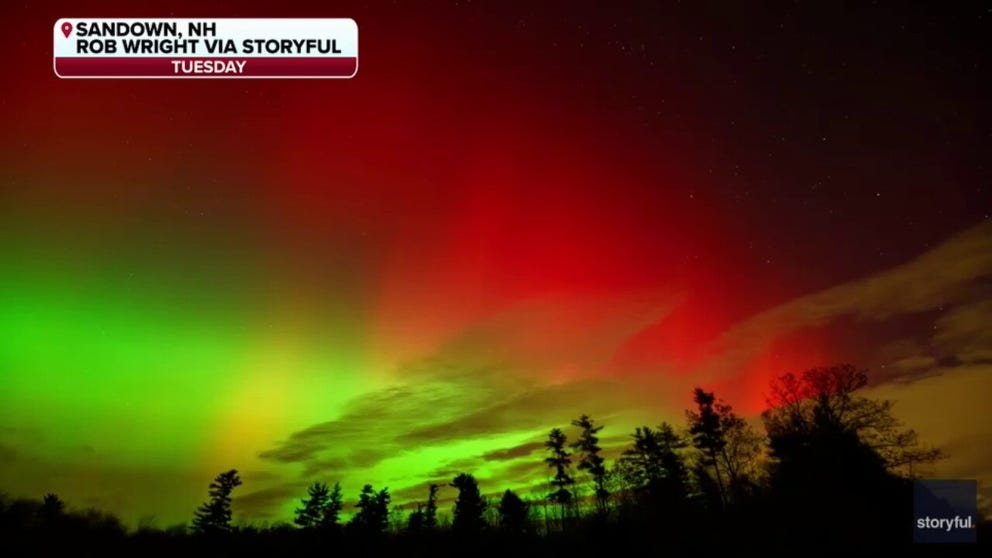
FILE: Northern Lights over Sandown, NH
A dazzling display of Northern Lights over Sandown, NH
The Northern Lights are expected to be visible in at least 20 states across the northern U.S. on Thursday and possibly early Friday after a strong geomagnetic storm watch was issued.
The sun has produced three different solar flares in recent days, creating a coronal mass ejection (CME) directed at Earth.
SEE IT: STRONG SOLAR FLARE CAUGHT ON CAMERA ERUPTING FROM THE SUN
CMEs will launch a stream of solar particles into space along the solar wind. If the stream is directed at the Earth, those charged particles will interact with our magnetic field, transferring energy into our upper atmosphere and causing variations in our magnetic field.
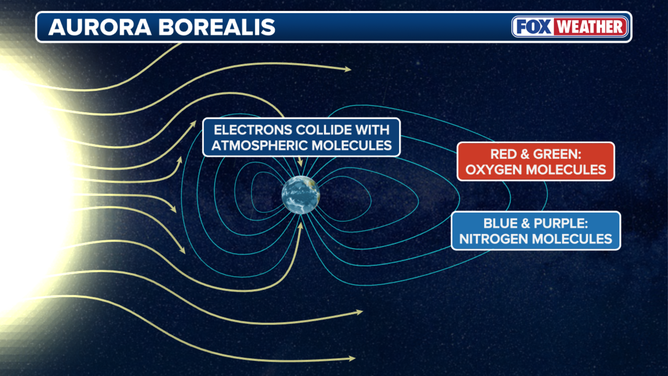
Aurora borealis explainer
(FOX Weather)
The charged particles of a CME create the beautiful dancing lights known as the aurora borealis, or the Northern Lights.
These lights are typically only seen near the North Pole, but during more intense solar storms, they can be seen as far south as the southern U.S.
JUNE SKYWATCHING GUIDE: FROM PLANET CONJUNCTIONS TO NEW MOONS, HERE IS WHAT TO LOOK UP FOR
The NOAA Space Weather Prediction Center issued a G3 or "strong" geomagnetic storm watch for today and tomorrow, with the highest possibility of seeing auroras in the U.S. potentially as far south as Seattle, Chicago and Boston.
Millions of people in at least 20 states will have their chance to see the dazzling spectacle.
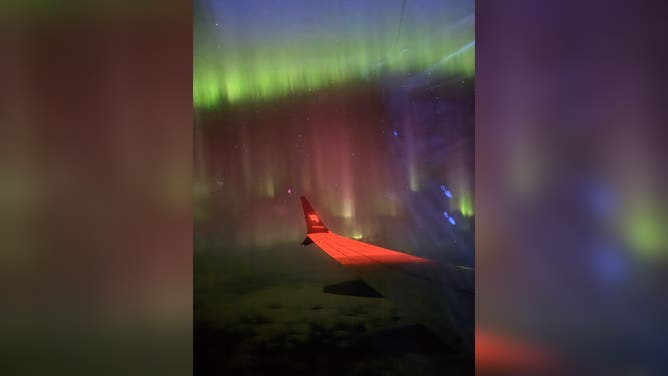
![Northern lights spotted Monday night on a flight to Iceland.]() Image 1 of 7
Image 1 of 7Northern lights spotted Monday night on a flight to Iceland. (Nicole Morrison)
![]() Image 2 of 7
Image 2 of 7The aurora borealis were out in Floyd County, KY. The northern lights red tint was visible with the naked eye. (@_keitharnett / X)
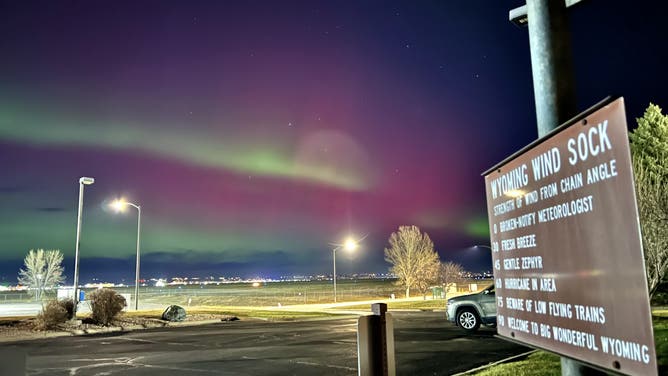
![Northern Lights over Cheyenne, WY]() Image 3 of 7
Image 3 of 7Northern Lights over Cheyenne, WY (@nwscheynne/X)
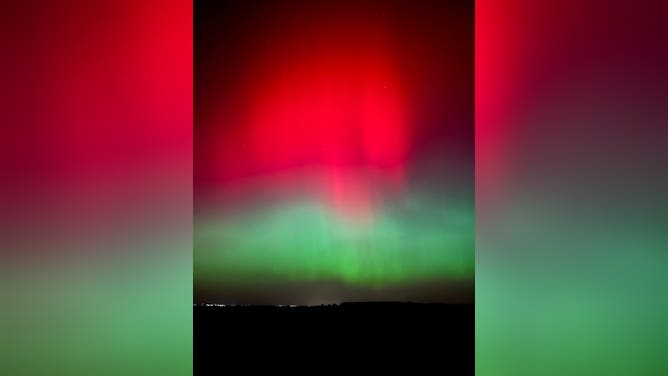
![Northern Lights over Blair, NE]() Image 4 of 7
Image 4 of 7Northern Lights over Blair, NE (Amy Thallas)
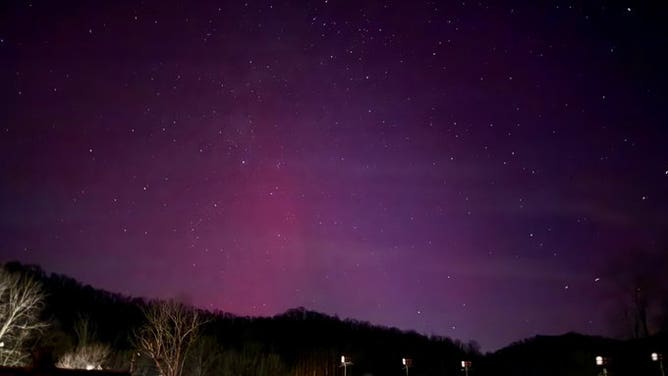
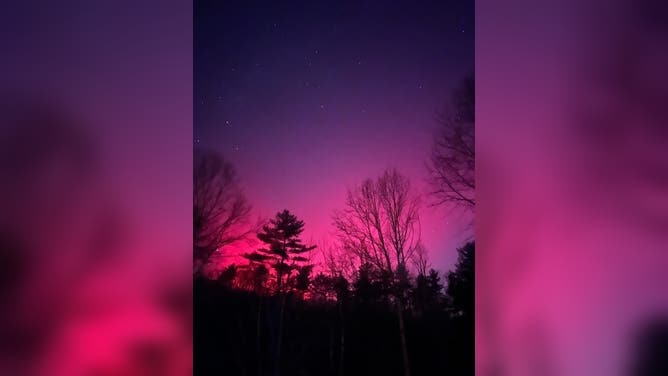
![Northern Lights over Spruce Pine, NC]() Image 5 of 7
Image 5 of 7Northern Lights over Spruce Pine, NC ( )
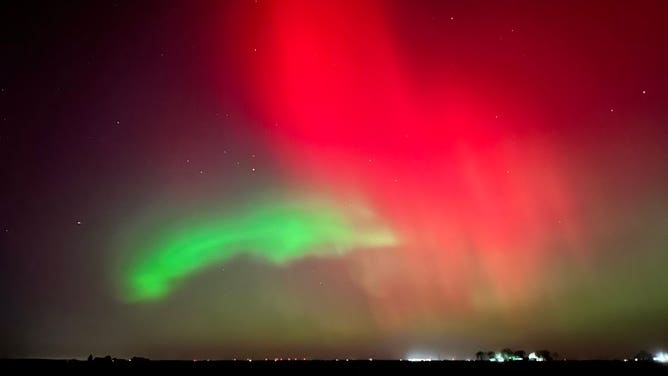
![Northern Lights over Champaign, IL]() Image 6 of 7
Image 6 of 7Northern Lights over Champaign, IL on November 11, 2025 (@wxkaitlynj/X)
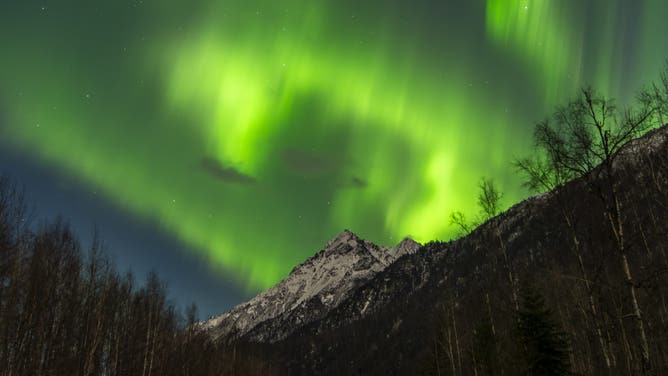
![FILE: Northern lights (Aurora Borealis) illuminate the sky in Alaska's Eklutna Tailrace, United States on March 09, 2025.]() Image 7 of 7
Image 7 of 7FILE: Northern lights (Aurora Borealis) illuminate the sky in Alaska's Eklutna Tailrace, United States on March 09, 2025. (Hasan Akbas / Anadolu)
Geomagnetic storms can affect power grids, satellite operations and be a danger for astronauts in space.
The exact timing and intensity of the CME is still uncertain, and their arrivals could overlap, according to the FOX Forecast Center.
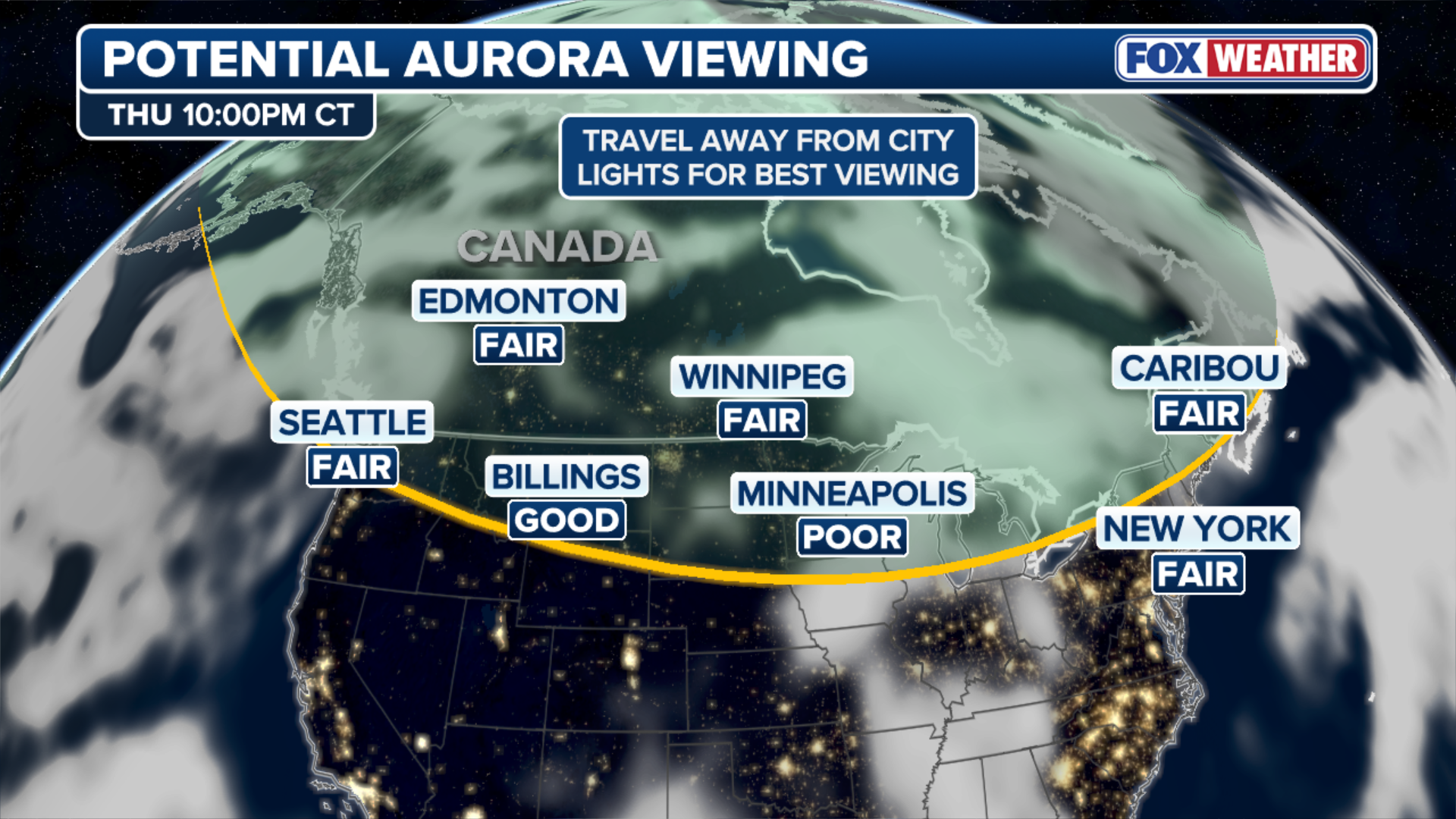
(FOX Weather)
The FOX Forecast Center said the possible area for auroras overlaps with the same regions expected to see severe storms the next few days.
7 THINGS TO KNOW ABOUT THE NORTHERN LIGHTS
For the best chances of seeing the Northern Lights, travel away from city lights into an open area when searching for them.