

See it: NASA astronaut grows otherworldly crystals aboard International Space Station
In microgravity, these crystals, which on Earth would typically grow in an even, solid structure, actually grow faster on their outer edges than in the center, creating a step-like structure.
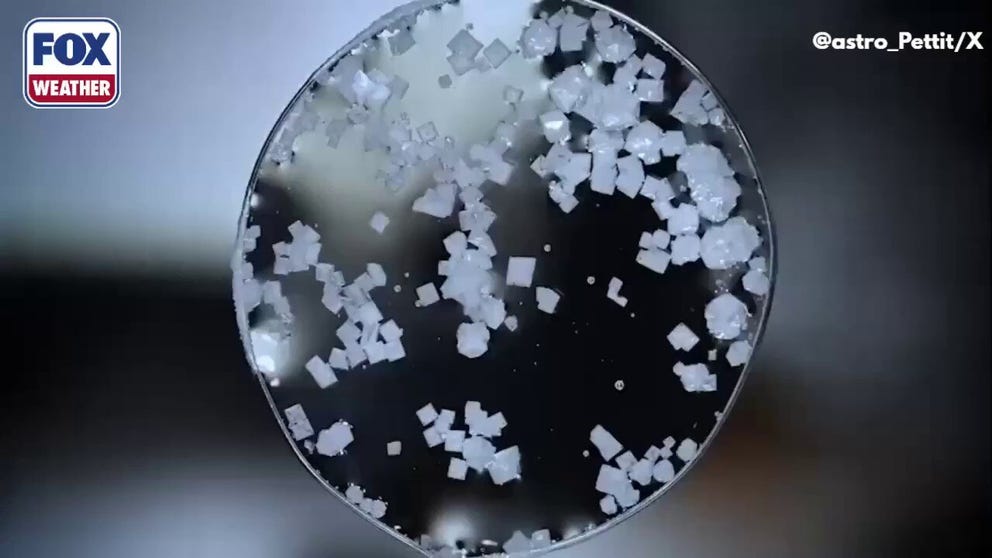
Watch: Crystals exhibit unusual growth pattern on International Space Station
Don Pettit, a NASA astronaut aboard the International Space Station, conducted a science experiment growing potassium chloride crystals. The crystals developed an unusual structure not seen on Earth typically called "hopper growth".
Being in space means cool science experiments, and one such experiment conducted by a NASA astronaut while he was aboard the International Space Station yielded interesting results.
NASA astronaut Don Pettit shared photos and a video on his social media showing crystals made from potassium chloride, exhibiting "hopper growth," which is a phenomenon that happens when in microgravity.
NASA SAYS LONGTIME HIDDEN COMET MISTAKEN FOR ASTEROID COULD UNLOCK NEW METHODS FOR PLANETARY DEFENSE
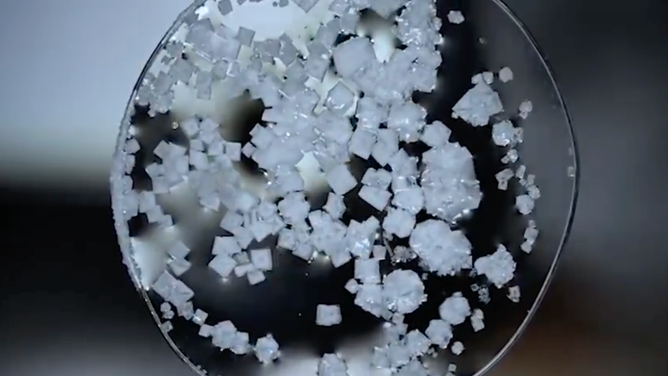
The hopper crystals gaining their unique appearance.
(@astro_Pettit/X / FOX Weather)
Potassium chloride is often used as a substitute for salt in foods and drinks.
In microgravity, these crystals, which on Earth would typically grow in an even, solid structure, actually grow faster on their outer edges than in the center, creating a step-like structure.
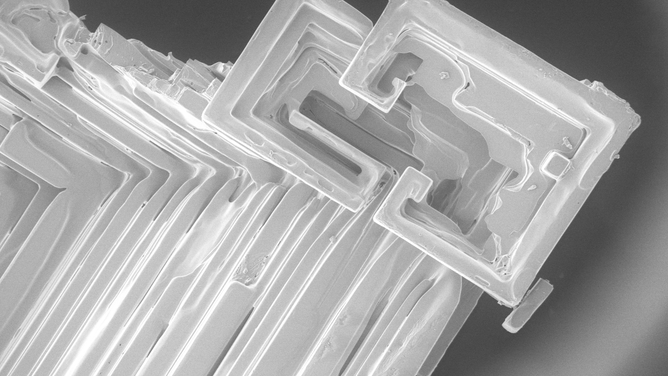
A look at the hopper crystals under an electron microscope.
(@astro_Pettit / FOX Weather)
Electron microscope photos of the crystals give a close-up view of their ornate formation, creating a C-shape in stepped crystals.
Hopper growth can be seen in multiple different materials, not just potassium chloride. Other substances that can experience hopper growth include gold, bismuth, quartz and more.
BUSY JULY KEEPS US COMMERCIAL SPACE LAUNCHES ON A RAPID PACE
Timelapse footage of the crystals in a water solution shows them gaining their unique structure.
Pettit said that the crystalline structure reminded him of an inverted Mesoamerican pyramid.
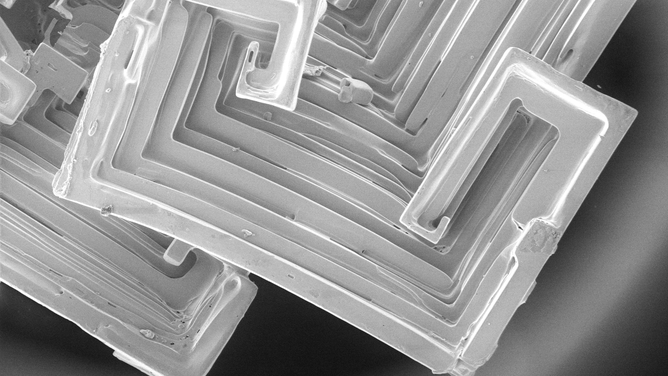
A look at the hopper crystals under an electron microscope.
(@astro_Pettit / FOX Weather)
Pettit returned to Earth in April 2025 after a seven-month mission on the International Space Station.
NASA said during his time aboard the space station, Pettit did a lot of helpful work for NASA's future missions.
He also used his surroundings aboard the station to conduct unique experiments in his spare time and captivate the public with his photography, NASA said.
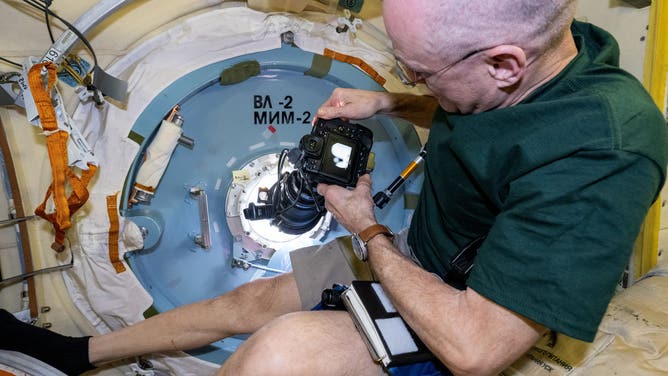
iss072e350835 (Dec. 7, 2024) --- NASA astronaut and Expedition 72 Flight Engineer Don Pettit points a camera outside a window on the International Space Station's Poisk module for a sun photography session.
Science experiments are a crucial part of the research astronauts do on the International Space Station. NASA itself calls ISS Earth's "state-of-the-art orbiting laboratory."
One of the main points of research for astronauts aboard ISS was growing protein crystals and studying how their structure varied on Earth and in space.