

Iconic cottonwood tree in White Sands National Park topples after intense monsoon storms
Recent monsoon storms were the likely cause of the collapse.

FILE: See how to explore the country's vast National Parks
FOX Nation's Abby Hornacek shares inside look on how to explore some the country's vast wilderness.
The legendary Rio Grande Cottonwood tree in White Sands National Park in New Mexico has collapsed after recent monsoon storms.
The U.S. Department of the Interior posted about the iconic cottonwood tree that welcomed visitors to the Dune Life Nature Trail in White Sands National Park on Thursday.
OVER 150 INVASIVE LIONFISH SPEARED FROM GULF CORAL REEF DURING DIVING RESEARCH EXPEDITION
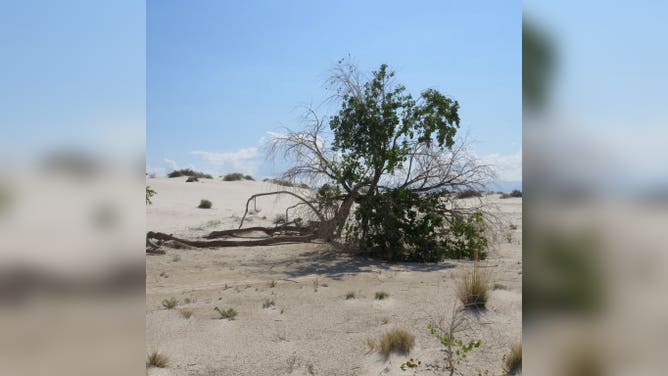
The Rio Grande Cottonwood tree after its collapse.
(White Sands National Park / FOX Weather)
"Sad news everyone. Some icons may fall, but legends live on," the Department of the Interior said.
Photos of the tree before its collapse in recent years, as well as a photo taken back in 1959, were shared with the announcement of the tree's downfall.
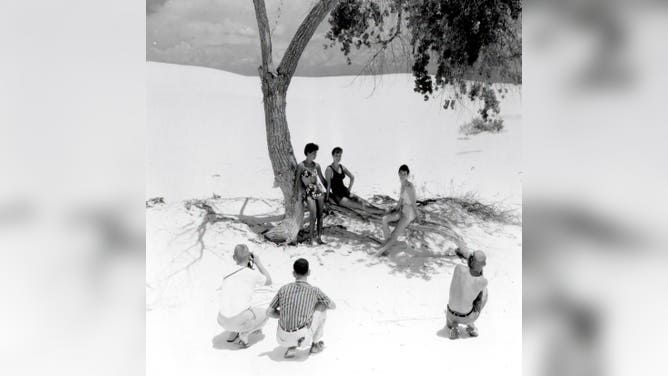
The Rio Grande Cottonwood tree in White Sands National Park back in 1959.
(White Sands National Park / FOX Weather)
Recent monsoon storms were the likely cause of the collapse, the department said.
The FOX Forecast Center said wind associated with nearby monsoon storms could certainly have been attributed to the fall of the tree, as the area has seen less than average rainfall over this summer.
SCIENTISTS MAKE RARE DISCOVERY IN ONE OF EARTH'S MOST EXTREME OCEANS
According to White Sands National Park, much of the tree's trunk was buried into the sand.
The Rio Grande Cottonwood is a member of the willow family, and its presence indicated a dependable water source, the national park said.
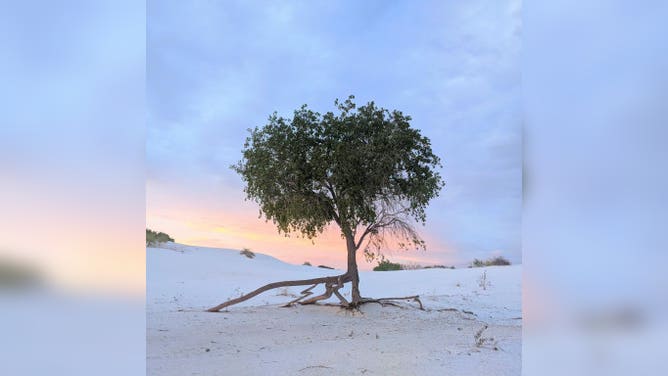
The Rio Grande Cottonwood Tree in White Sands National Park with a pretty view in the background.
(White Sands National Park)
This type of cottonwood tree has had many uses in the past, with its soft bark being used for masks and cylinders for drums by American Indians.
Its buds and flowers are edible, and its bark has curative properties, the national park said.
"Though it no longer stands, the tree will continue supporting wildlife while remaining a cherished part of White Sands history," the Department of the Interior said.