

Extremely rare 1776 printing of the Declaration of Independence discovered in stack of papers in England
This copy of the Declaration of Independence is one of just 11 copies printed in 1776 to survive today.
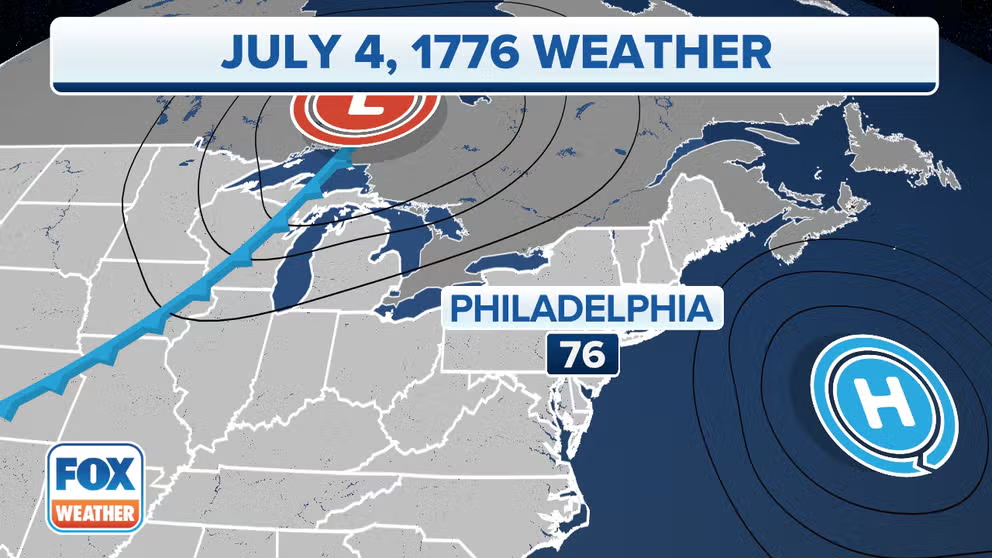
How was the weather when the US declared independence on July 4, 1776?
The U.S. declared independence from Great Britain on July 4, 1776. Independence Day gatherings were a little different in those days, and so was the weather.
LONDON–The only known copy of the Declaration of Independence printed in 1776 to exist outside the United States has been found in the National Archives in England.
It was found while cataloging Royal Navy captains' papers from the Revolutionary War in honor of America's 250th birthday on July Fourth.
This copy of the Declaration of Independence is one of just 11 copies printed in 1776 to survive today, and is known as an "Exeter Declaration."
WHAT WAS THE WEATHER LIKE ON THE FIRST EVER INDEPENDENCE DAY IN 1776?
The Archives said the paper was seized by the Royal Navy from the American privateer ship known as "Dalton."
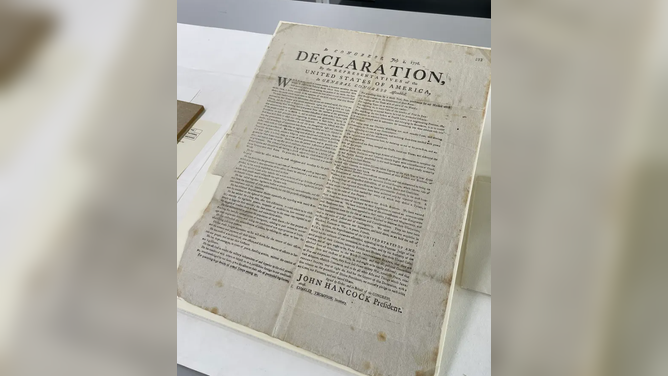
The copy of the 'Exeter Declaration' found at The National Archives.
(The National Archives / FOX Weather)
At the time, the Declaration was determined as just "another paper" by the ship captain, with researchers unaware of its significance until now, 250 years later.
The ship was pursued for seven hours off the coast of Portugal by a Royal Navy ship before being captured and brought back to Britain, the Archives said.
The Declaration was in one of 104 boxes of correspondence from the captain of the Royal Navy ship that took the Dalton, according to the Archives.
THE MOST PATRIOTIC FRONT LAWN IN AMERICA CELEBRATES THE NATION'S 250TH WITH A BALD EAGLE MURAL
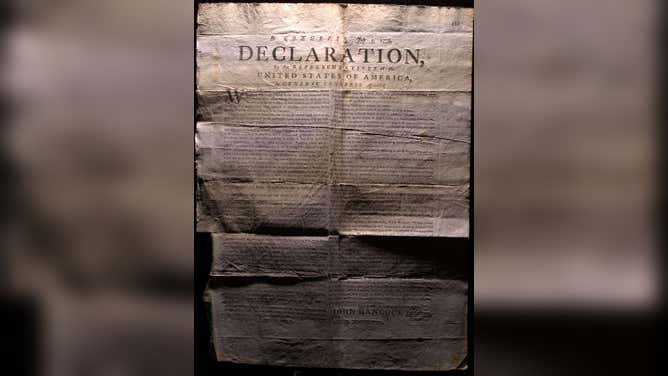
Raking light imaging revealed the network of original folds in the document.
(The National Archives)
The National Archives said the document was printed in Exeter, New Hampshire, between July 16 and 19, 1776, and was used for spreading the word of America's independence from England throughout the colonies, often carried on ships to gain support for the revolution.
"This is one of the rarest forms of the Declaration we know about. It wasn’t meant to be preserved – it was printed quickly and distributed widely," said Dr. Graham Moore, "Revolution 250" curator at The National Archives. "What makes this discovery even more exceptional is that, as the only known copy taken by military action, we know much more about it – thanks to the bureaucratic processes of war."
NOT EVERY FOURTH OF JULY WILL END WITH A BANG: WILDFIRE DANGER SPURS FIREWORKS BANS ACROSS THE US
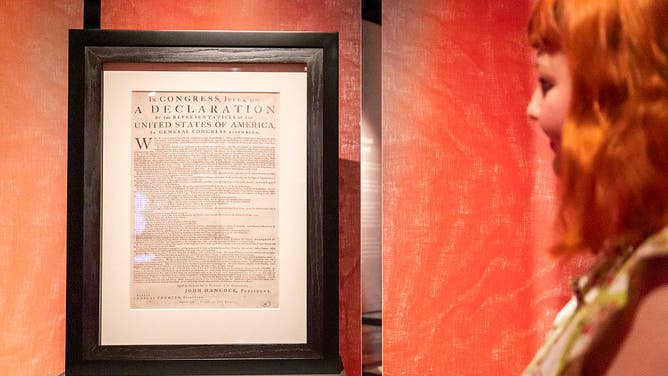
A member of staff views the United States of America Declaration of Independence, printed by John Dunlap in Philadelphia on the night of 4 July, 1776, at a photocall ahead of the exhibition: Revolution 250: America's Independence Story 1763-1783 at The National Archives in Kew, west London on June 22, 2026. (Photo byvia Getty Images)
( Brook Mitchell / AFP / Getty Images)
The Archives said the Declaration was in good shape except for a long tear across the left-hand middle area, which was repaired with fine Japanese paper and wheat starch paste.
‘"his is an extraordinary discovery. It's a vanishingly rare surviving copy of the Declaration of Independence, found not in America, but here in the UK," said Saul Nassé, chief executive of The National Archives and keeper of Public Records. "Preserved in our state records, it's a powerful reminder that the history of the American Revolution is fundamentally transatlantic."