

E. coli outbreak linked to California pumpkin farm leaves 1 dead, officials say no ongoing threat
The death follows confirmation of five cases of Shiga toxin-producing E. coli infection, potentially originating from Brookshire Farms in San Luis Obispo.

FILE VIDEO: Giant inflatable pumpkin breaks free during thunderstorms in Ohio
FILE VIDEO: Police in Bay Village, Ohio literally had their hands full trying to clear a giant inflatable pumpkin that had broken free during stormy weather. (Video: Bay Village Police Dept. /TMX)
THE TAKEAWAY
- One person associated with the outbreak has died.
- Five infections were confirmed, and another 10 visitors who developed symptoms were classified as suspected cases.
- Investigators could not identify the specific source, but county health officials said the exposure risk had passed.
SAN LUIS OBISPO, Calif. – An E. Coli outbreak linked to a California pumpkin farm killed one person, as health officials announce there is no longer a threat to the public, though an official investigation did not identify the source of the deadly outbreak.
Brookshire Farms in San Luis Obispo was subjected to a health investigation after an outbreak of Shiga toxin-producing E. coli (STEC) was linked to the fall seasonal hotspot.
One person associated with the outbreak has died, FOX News reported, citing county officials. The person’s age and identity were not released.
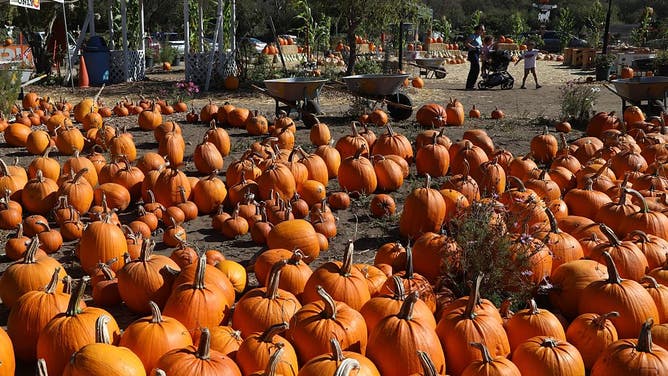
People view pumpkins at a pumpkin orchard in Half Moon Bay in San Francisco Bay Area of California, the United States, Oct. 5, 2026.
(Liu Yilin/Xinhua via Getty Images / Getty Images)
This comes after five people with laboratory-confirmed Shiga toxin-producing E. coli O157 infections visited Brookshire Farms on Oct. 17 or 18, according to the San Luis Obispo County Department of Public Health.
HURRICANE HARVEY FRAUDSTER WHO THREATENED TO KILL A WITNESS SENTENCED TO NEARLY 6 YEARS IN PRISON
Another 10 people who visited between Oct. 16 and 26 and developed symptoms were classified as suspected cases, officials said.
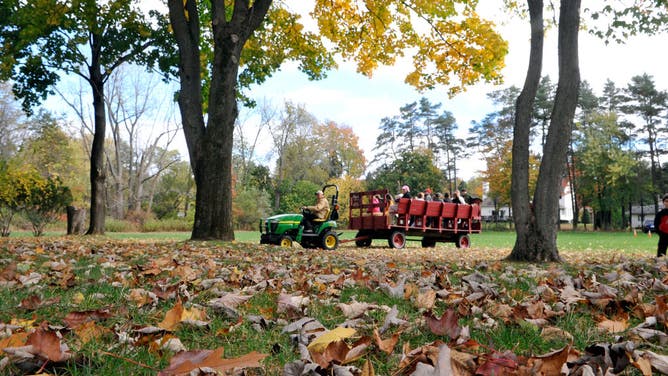
Families take a hay ride during the Fall Festival at the Pruyn House on Sunday, Oct. 19, 2014, in Latham, N.Y.
(Paul Buckowski/Albany Times Union via Getty Images / Getty Images)
Located on Los Osos Valley Road in San Luis Obispo, Brookshire Farms offers seasonal fall attractions, including a pumpkin patch, corn maze and hayrides.
Testing of food, water and other environmental samples collected at the farm did not detect E. coli, leaving the outbreak’s specific source unidentified.
GLACIER NATIONAL PARK REPORTS FIRST CASE EVER OF DEADLY BAT FUNGAL DISEASE
Officials identified edible corn cups, pumpkins, hay and nonpotable water sources as potential exposures shared by infected visitors, but none was confirmed as the source.
"Although it’s frustrating to not be able to pinpoint the exact source of the infection through environmental lab testing, this is not unexpected, and bacterial contamination is often temporary and difficult to detect through available sampling methods," County Health Officer Dr. Christy Mulkerin said.

Maple leaves lie on the ground by trees with colorful leaves during the autumn season in Scarborough, Ontario, Canada, on November 1, 2025.
(Creative Touch Imaging Ltd./NurPhoto via Getty Images / Getty Images)
Officials said farm animals or petting zoos, both common sources of STEC, were not available to the public or operating on the premises.
According to the California Department of Public Health, STEC infections can spread when people swallow bacteria through contaminated food or water, or accidentally transfer germs from their hands to their mouths after contact with infected animals, contaminated environments or infected people.
VANDALS CARVE THEIR NAMES ONTO PREHISTORIC ROCK PAINTINGS IN UTAH, PROMPTING OFFICIAL INVESTIGATION
In its Nov. 6 update, the county said investigators believed the exposure risk associated with the outbreak had passed.

A woman walks through a pumpkin patch at the Cal Poly Pomona PumpkinFest in Pomona, California, on October 25, 2026.
(Caroline Brehman / AFP via Getty Image / Getty Images)
"Based on the findings of our investigation, we believe the risk of additional exposure associated with this incident has passed, and there is no longer an ongoing public health threat," Mulkerin said. "Our hearts go out to the families affected by this outbreak."
FROM CALM TO CHAOS: SNEAKER WAVES TURN BEACH VISITS INTO LIFE-OR-DEATH STRUGGLES IN SECONDS
STEC infections can cause stomach cramps and diarrhea, which may be bloody. Severe cases can lead to kidney failure, and children younger than 5 face a greater risk of serious complications. Health officials urge anyone experiencing these symptoms to seek medical care.