

Ancient secrets unlocked of hidden underground from exceptionally preserved snake fossil with skull intact
The recent discovery of the snake fossil known as Tametara mirim is among the best-preserved snake skeletons in the world.
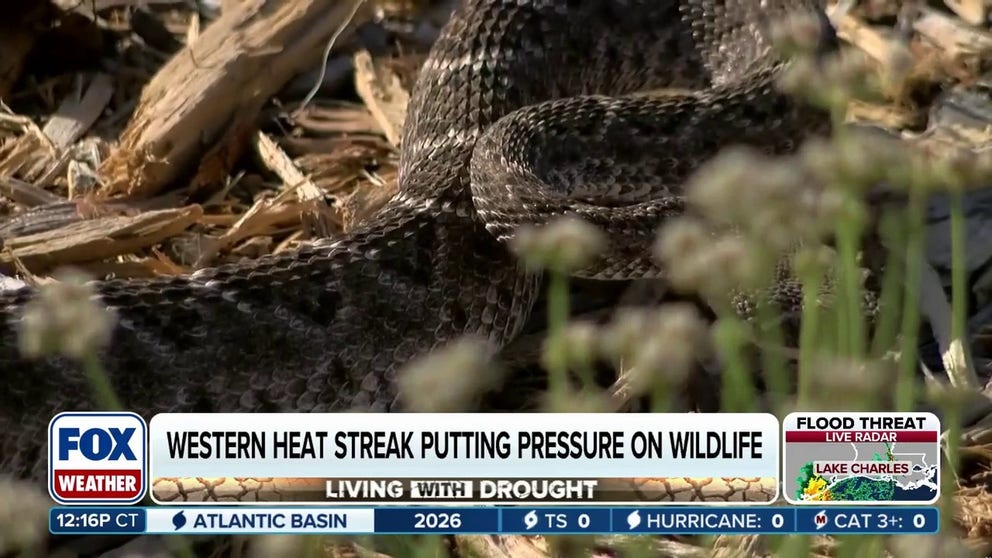
Western heat streak putting pressure on wildlife leading to increased snake encounters
As the West continues to feel the heat, some animals are pushing into human residences for resources. Dr. Ole Alcumbrac, the Director of Wildlife Health Services, joins FOX Weather Meteorologist Bob Van Dillen to talk about how a warm spring has led to snakes having an early rise from dormancy.
Paleontologists are raving over a recent discovery of a well-preserved snake fossil from the Cretaceous Period, about 75 to 85 million years ago.
The recent discovery of the snake fossil known as Tametara mirim is among the best-preserved snake skeletons in the world.
It was broken down using state-of-the-art techniques that combined morphological and molecular data to infer that this species is the earliest-evolving snake in the fossil record, according to research from Princeton University.
The skull was the best-preserved portion of the entire fossil.
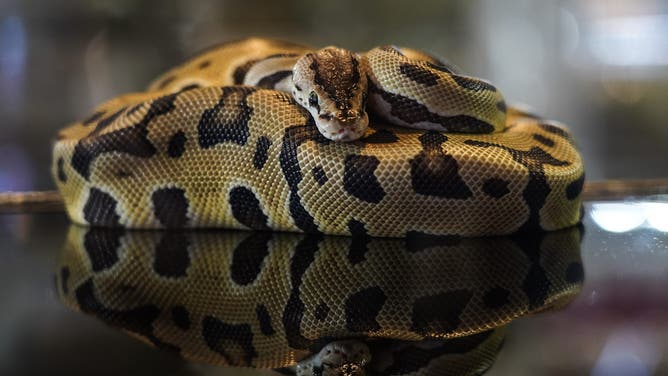
Ball Pythons are displayed at The Grand Exotic Pet & Ball Python International 2026 in Bangkok, Thailand. The event exhibits hundreds of exotic animals from breeders for sale as pets to enthusiasts.
(Anusak Laowilas/NurPhoto / Getty Images)
Researchers at the University of Helsinki in Poland digitally reconstructed the fossil skeleton using high-resolution computed tomography (CT) scanning, which provided the skull anatomy.
This includes the digital reconstruction of the snake’s brain, cranial nerves, and inner ear anatomy.
This offers new insight into the evolution of early snakes over millions of years.
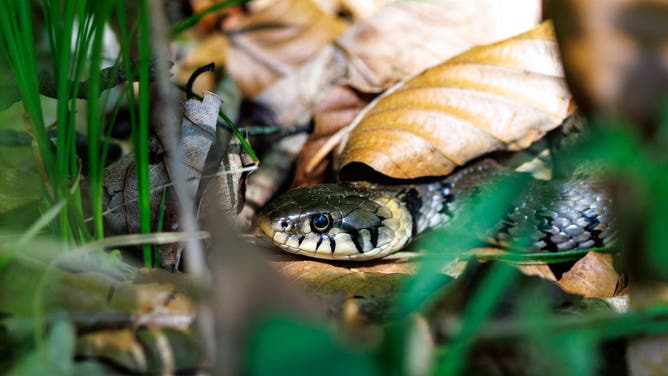
13 May 2026, Bavaria, Walchensee: A grass snake (Natrix natrix) slithers through the grass and leaves at the edge of a hiking trail at Walchensee in Bavaria (Germany). The snake is easily recognizable by the distinctive yellow or white spots on its neck behind its head. Grass snakes live primarily near water sources, are harmless to humans, and bite only very rarely when they feel strongly threatened.
(Matthias Balk/picture alliance / Getty Images)
Through further research, experts discovered that the snake was not adapted to a single habitat but instead resided in various ground-dwelling environments.
The shape of the brain and the microstructure of the skull bones provide evidence that the species lived a burrowing lifestyle, as many present-day snakes do.,
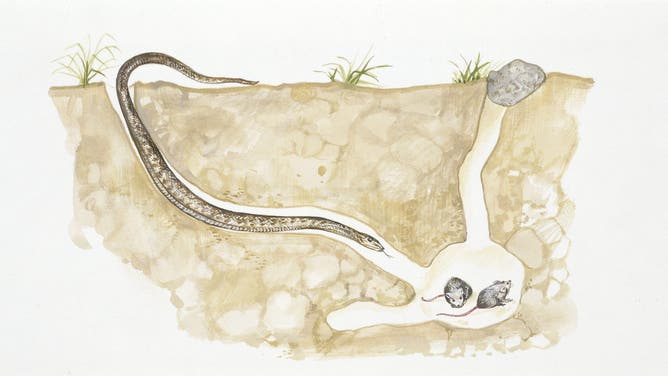
UNSPECIFIED - DECEMBER 10: Smooth snake (Coronella austriaca) slithering into cave with two mice, illustration.
(De Agostini via Getty Images/De Agostini / Getty Images)
"By combining CT-based brain reconstructions with comparative data from living snakes, we could show that early snakes were not simply progressing toward a single modern condition," said Nicolas Di-Poï, Research Director at the Institute of Biotechnology for the University of Helsinki. "They were already experimenting with different sensory and ecological strategies."
This provides a boost in confidence when researching the brains of other well-preserved fossils, offering a new opportunity to understand better the daily lives of prehistoric creatures, such as their diets, behaviors, hunting practices, and how some modern-day animals became what they are today.