

Unusual space rock near the Earth sparks research about its identity following unusual movement
Asteroid 1998 KY26's next close approach to Earth is in May 2039, when it will pass about 10.1 million miles away.
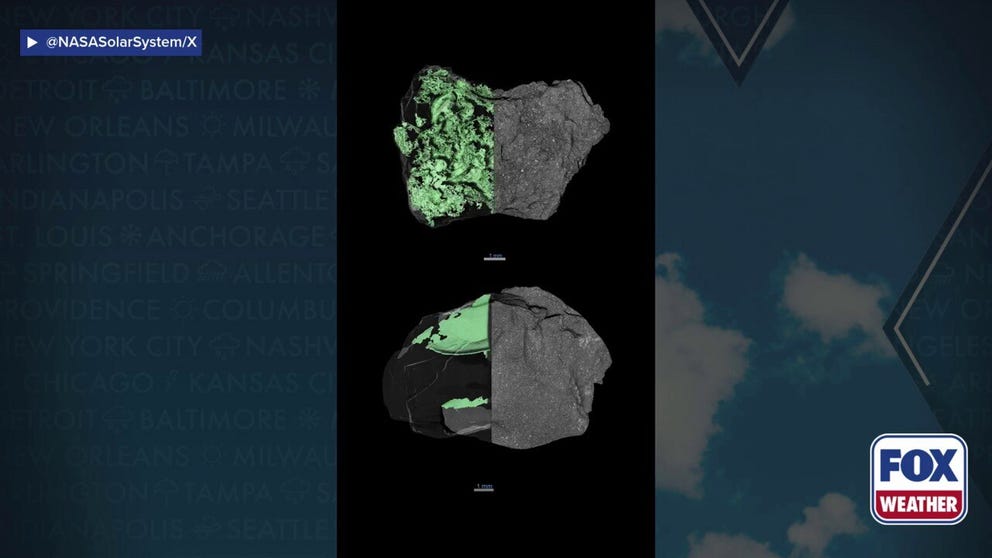
FILE: X-ray CT scan reveals interior structure of samples from asteroid Bennu
Images from NASA show the exterior and interior scan of samples taken from the asteroid Bennu on a mission in 2020.
New research published in the journal Icarus discusses 1998 KY26, a near-Earth asteroid that orbits the Sun, and what's behind the unusual movement of the space rock.
1998 KY26 has been proposed as a dark comet, an object in space that looks like an asteroid, but moves through space like a comet, according to NASA.
But the study, conducted by researchers at Georgia Institute of Technology, challenges that possible distinction, saying it is likely a dehydrated asteroid.
SCIENTISTS DISCOVER MASSIVE DWARF PLANET LURKING IN THE OUTER SOLAR SYSTEM
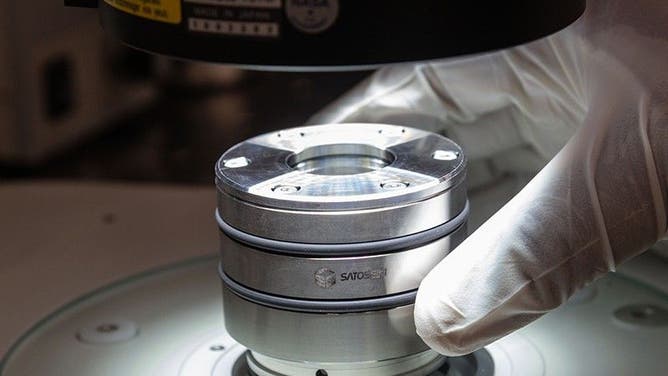
A canister containing a sample of asteroid Ryugu is transferred from JAXA to NASA.
(NASA/Robert Markowitz / NASA)
Past research thought the asteroid could be a dark comet that could contain ice, buried deep within the rock, which as it melted would give the asteroid that push to explain its unusual movement.
These scientists, however, theorize the asteroid's surface and interior are too warm to preserve buried ice, which would turn into vapor and escape too quickly to survive over time.
Instead, their findings support earlier research suggesting pressure from sunlight and heat radiating from the asteroid could explain its unusual movement.
END OF AN ERA AS NASA TELESCOPE THAT DETECTED THOUSANDS OF GAMMA-RAY BURSTS NEARS ITS FINAL DAYS

FILE: A 120-second exposure showing asteroid 2025 QD8 about 1.8 million km from Earth.
(The Virtual Telescope Project / FOX Weather)
Asteroid 1998 KY26 is estimated to be about 36 feet across, but could be as large as 43 feet, according to size estimates within the study.
Additionally, the asteroid spins incredibly fast, the study shows, completing one rotation every 5.35 minutes.
Every 498 days on Earth, it makes a full orbit around the sun, according to the European Space Agency's (ESA) asteroid database.
ESA lists its next close approach to Earth in May 2039, when it will pass about 10.1 million miles away.
It's not ever expected to interfere with Earth.
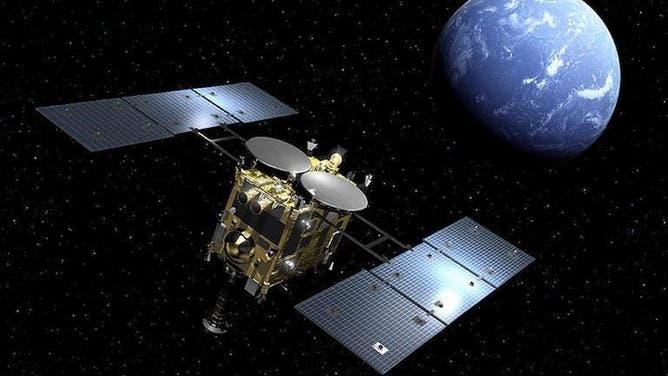
An artist's depiction of the Hayabusa2 spacecraft passing near Earth.
(JAXA / FOX Weather)
Japanese spacecraft Hayabusa2, which launched in 2014 and has completed multiple asteroid flybys and collected samples in the time since, could offer more information about 1998 KY26 in the next few years.
Hayabusa2 is expected to rendezvous with the asteroid in July 2031 as its final target, according to Japan Aeronaturic Exploration Agency (JAXA) approximations.