

Recap: Artemis II successfully splashes down on Earth following historic Moon mission
Recap: Artemis II successfully splashes down on Earth following historic Moon mission
Download the AppMission accomplished: A new chapter in lunar history
View postCoverage for this event has ended.
The "splash" heard 'round the world has officially transitioned into a celebration at NASA Mission Control.
With the Artemis II crew now safely out of Integrity and headed to the recovery ship, we are officially closing the book on a mission that has redefined humanity’s reach.
For the first time in over 50 years, a crewed spacecraft has journeyed 685,000 miles to the lunar neighborhood and back, proving that the Orion capsule and the SLS rocket aren't just engineering marvels—they are our new bridge to the stars.
The road home: From the Pacific to the Bayou City
The journey doesn't end at the waterline. After a night of rest and comprehensive medical evaluations aboard the USS John P. Murtha, the crew will be flown to San Diego before making their highly anticipated return to Houston this weekend.
At Ellington Field, they will be met by families, colleagues, and a world that has been holding its breath for ten days. The coming weeks will be a whirlwind of debriefs—the essential process where Wiseman, Glover, Koch, and Hansen provide the granular data that only human eyes and ears can capture.
They’ll discuss everything from the cabin acoustics during the TLI burn to the taste of the food in deep space, ensuring the next crew has an even smoother ride.
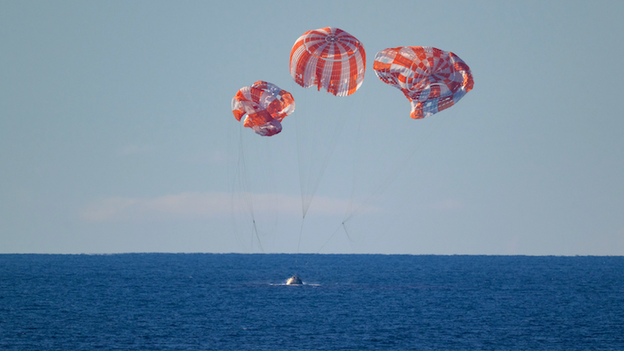
NASA’s Orion spacecraft with Artemis II crewmembers NASA astronauts Reid Wiseman, commander; Victor Glover, pilot; Christina Koch, mission specialist; and CSA (Canadian Space Agency) astronaut Jeremy Hansen, mission specialist aboard is seen as it lands in the Pacific Ocean off the coast of California, Friday, April 10, 2026. (NASA/Bill Ingalls)
The horizon: Artemis III and the Lunar South Pole
With the "Integrity" of the spacecraft and crew now proven, NASA's gaze shifts immediately to Artemis III. This successful homecoming is the final green light for the most ambitious mission yet: the return of humans to the lunar surface.
The goal: Landing the first woman and first person of color on the Moon.
The destination: The unexplored, treacherous, and ice-rich Lunar South Pole.
The mission: Transitioning from visiting the Moon to establishing a long-term presence via the Gateway station.
As the sun sets over the Pacific recovery site, it rises on a new era. We didn't just go to the Moon and back; we went there to stay. Thank you for following along with our live coverage of this historic return. The path to the Moon is officially open.
The historic success of Artemis II has reached the highest level of government, with President Trump placing a personal call to the NASA Administrator tonight to offer his congratulations.
NASA
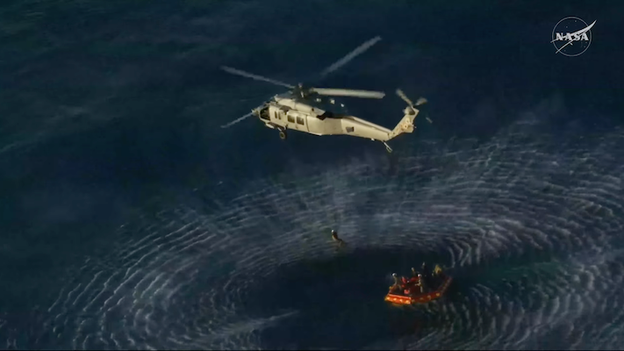
The final ascent has begun, but this time it’s vertical rather than orbital, as the recovery team is currently hoisting the astronauts from the "front porch" into two separate MH-60S Sea Hawk helicopters.
By splitting the crew into two aircraft—Koch and Glover into "Helo A," and Hansen and Wiseman into "Helo B"—the team ensures maximum safety and provides more space for medical personnel to continue monitoring the crew during the brief transit.
NASA
The extraction is complete. One by one, the Artemis II crew has successfully transitioned from the cabin of Integrity onto the inflated "front porch" platform.
Reid Wiseman, Victor Glover, Christina Koch, and Jeremy Hansen are now all gathered outside their spacecraft, safely supported by Navy divers and medical personnel as they take in the Pacific sunset.

NASA
The side hatch has served as the threshold for a momentous return as the first crew member of Artemis II—Mission Specialist Christina Koch—slowly emerged from the capsule onto the "front porch." Assisted by Navy divers, Koch took her first breath of fresh ocean air in over ten days, marking the symbolic end of humanity's long-awaited return to the lunar vicinity.
NASA
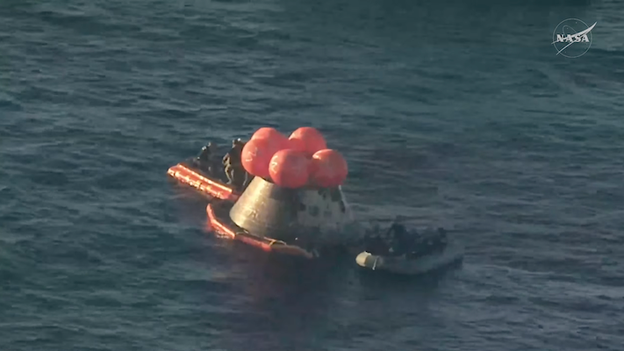
The recovery operation has reached a visible milestone as Navy divers successfully inflate the "Front Porch," a large, stable flotation collar that wraps around the base of the Integrity capsule.
This specialized inflatable platform provides the recovery teams with a steady workspace and serves as the literal doorstep for the astronauts as they prepare to exit the spacecraft and transition into the waiting life rafts.
The Navy medical team has just completed their initial face-to-face evaluations inside the capsule, confirming that all four astronauts—Wiseman, Glover, Koch, and Hansen—remain in "green" status. This official medical clearance signifies that despite the choppy seas and the physical toll of re-entry, the crew is stable, alert, and ready to begin the egress process.

NASA
Despite the initial attempts to secure the spacecraft, rising swells and choppy surface conditions are slowing the Navy recovery team's inflation of the front porch platform. The increased wave action is making it difficult for the divers to maintain a stable seal around the capsule's base, requiring a tactical adjustment to ensure the inflatable collar isn't damaged by the tossing motion of the sea.
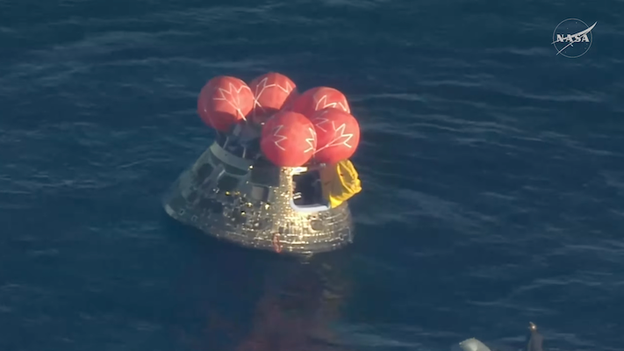
NASA
With the side hatch now wide open, a specialized Navy medical team—including flight surgeons and senior corpsmen—has entered the capsule to conduct the first formal health evaluations of the Artemis II crew. These initial at-sea exams are critical for assessing how the four astronauts are readapting to gravity after ten days in deep space, ensuring they are stable and ready for the physical transition to the recovery raft.
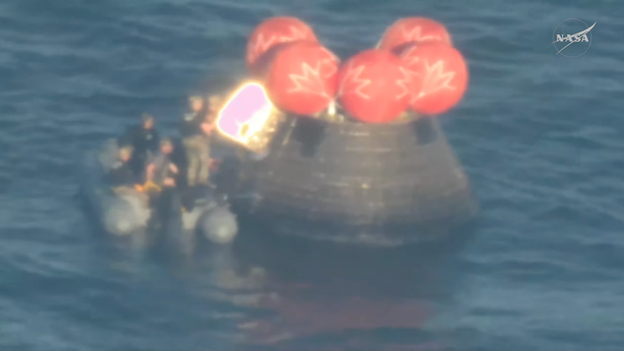
NASA
The recovery team has officially equalized the cabin pressure and swung open the side hatch of the Orion capsule, marking the first time the four astronauts have breathed Earth’s atmosphere in ten days.
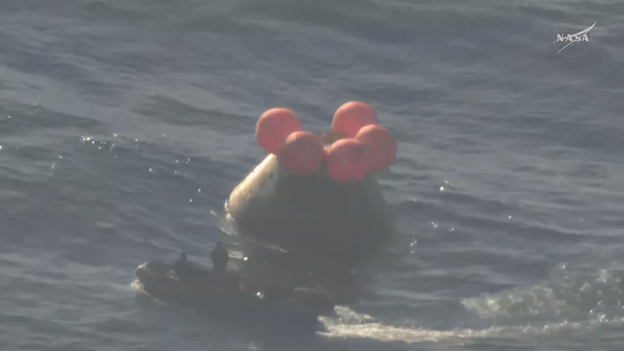
NASA
With the vehicle successfully powered down, specialized Navy recovery teams and NASA ground crews are now closing the final gap to the bobbing Integrity capsule. Small boats and divers are maneuvering into their final positions to begin the multi-stage process of securing the spacecraft and preparing the "front porch" raft for the crew's extraction.
The Orion spacecraft, Integrity, has officially begun its final power-down sequence, a critical step that marks the end of its active flight operations. Following a series of post-splashdown health checks, flight controllers in Houston have systematically deactivated the capsule’s high-power systems and flight computers, transitioning the vehicle into a "safe" recovery configuration.
With the power down complete, authority over the spacecraft is officially being handed from the Flight Director in Mission Control to the NASA Recovery Director aboard the USS John P. Murtha.
This transition clears the way for the Navy divers and recovery specialists to complete the final extraction phase, ensuring that the spacecraft is stable and electronically dormant as the Artemis II crew prepares to step out into the fresh Pacific air.
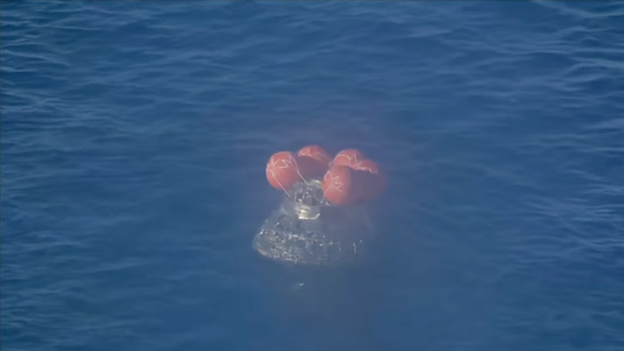
NASA
A persistent communication hurdle is currently affecting the final stages of the recovery. While the astronauts are safe and in good spirits, they are currently unable to establish a direct voice link with the Navy’s master diver, who is stationed on the raft just outside the capsule’s main hatch.
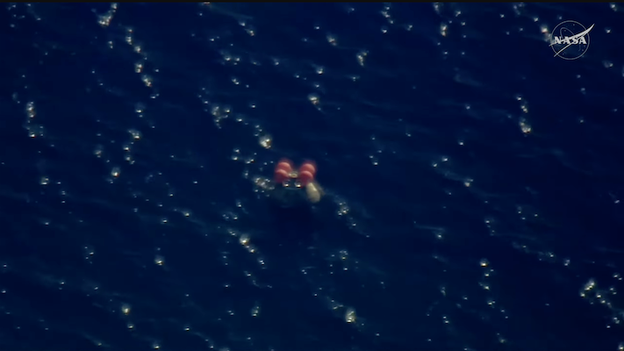
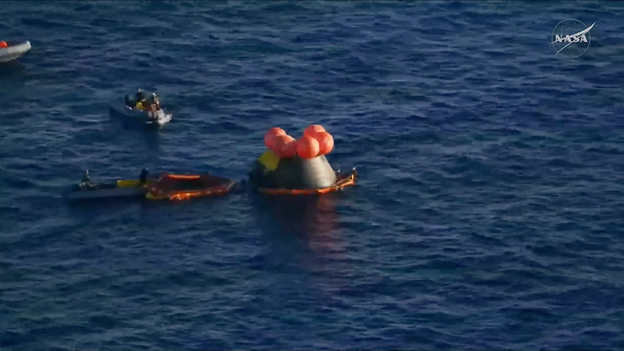
Integrity bobbing in the waves of the Pacific Ocean. (NASA)
The recovery teams have just relayed the best possible news from the water: we have "four green crew members" aboard the bobbing Integrity capsule. In NASA and Navy parlance, this indicates that Commander Reid Wiseman, Victor Glover, Christina Koch, and Jeremy Hansen are all in excellent health and have successfully completed their initial post-landing wellness checks.
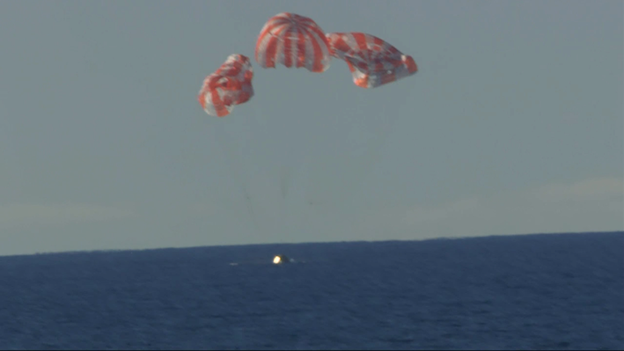
Integrity successfully splashes down in the Pacific Ocean following a historic 10-day mission to the Moon. (NASA)
The historic journey of 685,000 miles has reached its spectacular conclusion.
At exactly 8:07 p.m. ET, the Orion spacecraft, Integrity, successfully splashed down in the Pacific Ocean off the coast of San Diego.
The sight of the three massive orange-and-white parachutes collapsing into the water marked the final seconds of the Artemis II mission, bringing astronauts Reid Wiseman, Victor Glover, Christina Koch, and Jeremy Hansen safely back to Earth after 10 days in the lunar neighborhood.
From riding the fireball at 24,661 mph to the gentle 20 mph touchdown, every milestone was hit with surgical precision.
The recovery teams on the USS John P. Murtha are already in motion, with small boats and divers approaching the bobbing capsule to begin the safe extraction of the crew.
This isn't just the end of a mission; it’s the beginning of a new era, proving that humanity is ready to head back to the Moon to stay.
NASA
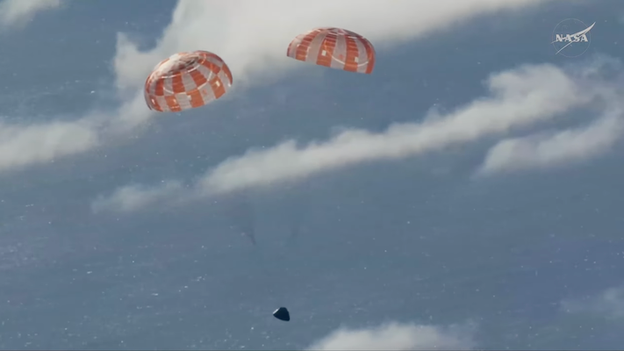
The ultimate symbol of a safe homecoming has just appeared over the Pacific: the three massive, orange-and-white main parachutes have successfully unfurled at 6,000 feet. These 116-foot-wide canopies have slowed the Integrity capsule from over 130 mph to a gentle descent speed, ensuring the crew will hit the water with minimal impact.
NASA
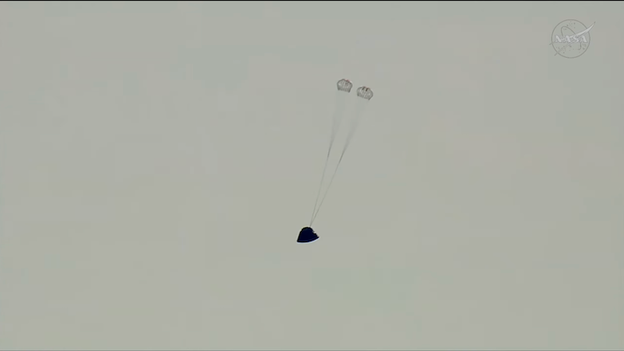
The first stage of the landing sequence has been executed perfectly, with two drogue parachutes unfurling into the sky to stabilize the Integrity capsule. These smaller, high-strength chutes have already begun the critical work of orienting the spacecraft for its final descent and slowing its vertical speed from several hundred miles per hour.
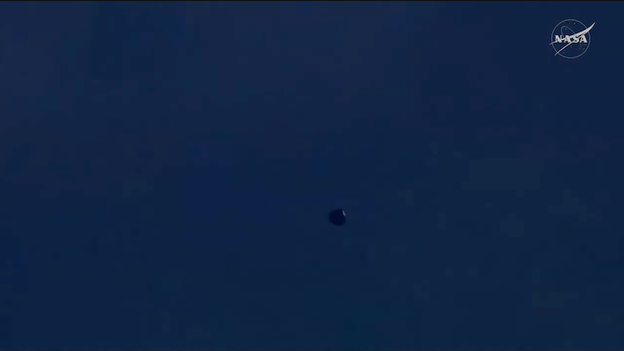
NASA
The recovery team aboard the USS John P. Murtha has officially made visual contact. High-powered infrared and long-range optical cameras on the ship’s deck have picked up the glowing trail of the Orion spacecraft as it streaks across the twilight sky. Even from miles away, the friction-induced fireball is visible as a brilliant point of light, confirming that Integrity is exactly where it needs to be for the final descent.
The final layer of the recovery net is now being cast as several highly specialized small boats are speeding toward the predicted splashdown coordinates. These rigid-hull inflatable boats (RHIBs), launched from the well deck of the USS John P. Murtha, are carrying Navy divers and recovery specialists who will be the first humans to touch the Integrity capsule after it hits the water.

View inside Mission Control as communications were restored with Integrity. (NASA)
The silence in Mission Control has been broken by a successful voice check as the Orion spacecraft emerged from the six-minute plasma blackout right on schedule. Commander Reid Wiseman’s voice was the first to return to the airwaves, confirming that the crew is doing well and that Integrity has safely navigated the peak heating phase of re-entry.

Inside Mission Control as teams await restoration of communication with the Artemis II crew. (NASA)
Inside the Mission Control Center, a heavy silence has taken over as flight controllers stare at flatline data displays, waiting for the superheated plasma to dissipate and the first signal to return. While the room is hushed, the team remains in high gear, monitoring the precise countdown clocks and pre-positioning recovery assets for the exact moment the capsule emerges from its fiery veil.
At 7:54 p.m. ET, Integrity officially hit the Entry Interface, the point where the capsule first touches the upper wisps of Earth's atmosphere.
Traveling at a staggering 24,661 mph, the friction against the heat shield has instantly turned the air around Integrity into a glowing sheath of superheated plasma.
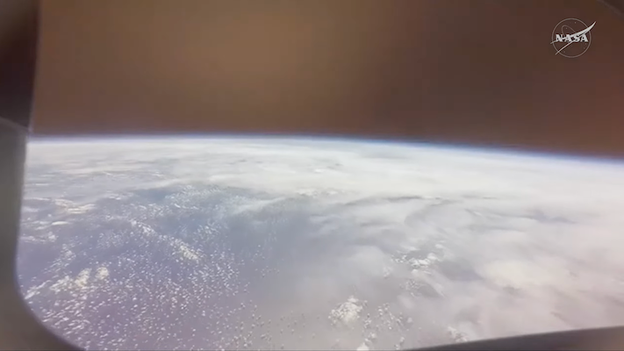
Camera aboard Integrity moments before communication blackout window. (NASA)
As expected, this has triggered the 6-minute communications blackout, as the plasma acts as a physical shield that blocks all radio and data signals from reaching Mission Control.
During these six minutes, the crew is experiencing the most physically demanding part of the entire 10-day mission. As the capsule uses its unique skip re-entry maneuver—dipping into the atmosphere, popping back up, and then descending again—the astronauts will feel up to 3.9 Gs of force. This is nearly four times the weight of their own bodies pressing them into their seats.
In Houston, the room has gone quiet; everyone is now watching the clocks and waiting for the first "voice check" expected at 8:00 p.m. ET.

Camera pointed out the window of the Orion spacecraft. (NASA)
As the Orion spacecraft, Integrity, accelerates toward the edge of the atmosphere, onboard cameras are providing a hauntingly beautiful view from the crew cabin windows.
The Orion spacecraft is now a literal blur in the sky as its velocity has officially climbed past 21,500 mph. This represents a massive gain in kinetic energy over the last 30 minutes, with the spacecraft now covering nearly six miles every single second.
Mission Control has confirmed that with the Raise Burn successfully behind them, there are no further trajectory corrections.
The Orion spacecraft is now a true ballistic vehicle, committed to its final flight path as it hurtles toward the Pacific. All steering is done; the physics of gravity and orbital mechanics are now the sole pilots guiding the crew toward their 8:07 p.m. ET target.

Camera inside NASA's Mission Control Center as Integrity completed its Raise Burn. (NASA)
Just four minutes after parting ways with the Service Module, Integrity has successfully completed its final propulsive maneuver of the mission.
At 7:37 p.m. ET, the capsule’s onboard thrusters fired for exactly 19 seconds in what is known as the Crew Module Raise Burn. While brief, this firing was essential for adjusting the spacecraft’s trajectory one last time to ensure it hits the entry interface at the perfect angle.
A massive milestone has just been reached: separation is confirmed.
At 7:33 p.m. ET, the Orion Crew Module officially parted ways with the European Service Module that has powered, cooled, and propelled the four astronauts for the last 10 days.
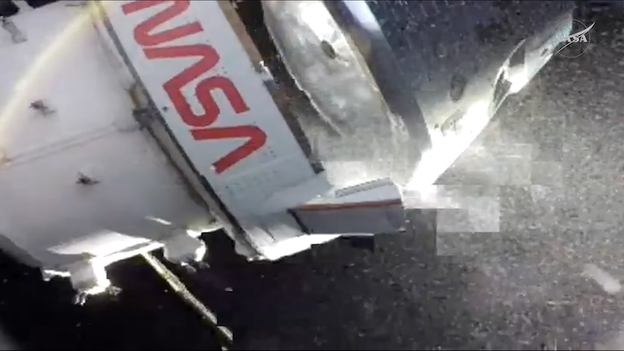
Orion spacecraft separates from the European Service Module. (NASA)
The separation was triggered by four explosive bolts shattering simultaneously, effectively cutting the cord and leaving the capsule, Integrity, to complete the final 34 minutes of the mission alone.
With the service module now trailing behind (destined to burn up harmlessly over the Pacific), the crew's focus has shifted to the Raise Burn scheduled for 7:37 p.m. ET.
This brief, 19-second firing of the capsule’s own thrusters will slightly adjust their trajectory, ensuring they hit the atmosphere at the precise angle needed to protect the heat shield and stay on target for the 8:07 p.m. splashdown.
The astronauts are now operating on internal battery power, truly in the home stretch of their 685,000-mile journey.
The historic Artemis II mission around the Moon is now on the cusp of its final—and most dangerous—phase: reentry into Earth’s atmosphere. Orion will hurtle toward Earth at nearly 25,000 miles per hour, enduring temperatures of up to 5,000°F.
FOX News Multimedia Reporter Chelsea Torres is LIVE from Johnson Space Center in Houston, Texas, as mission control prepares for splashdown.
As the Orion spacecraft, Integrity, rapidly approaches the edge of Earth's atmosphere, it has just hit another critical navigational milestone.
At 7:15 p.m. ET, NASA’s Deep Space Network (DSN)—the global array of massive radio antennas that has tracked the crew for over 600,000 miles—officially handed off communications to the Tracking and Data Relay Satellite System (TDRSS).
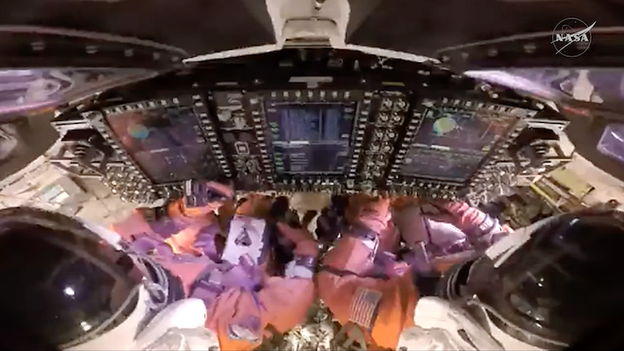
Camera showing the flight crew of Artemis II on the flight deck of the Orion spacecraft, Integrity. (NASA)
This near-Earth satellite constellation will now be the primary link between Mission Control and the astronauts as they navigate the final 52 minutes of the mission.
This handoff is more than just a change in antennas; it signals Orion’s transition from a deep-space explorer back to a local visitor.
While the DSN was built to hear faint whispers from across the solar system, TDRSS is designed for high-speed, high-bandwidth communication with vehicles in low-Earth orbit.
This switch ensures that flight controllers have the most reliable, constant stream of data possible as the capsule prepares for the 7:33 p.m. ET separation of the Service Module and the fiery re-entry that follows.
With less an hour until the expected splashdown, the USS John P. Murtha has just launched a weather balloon to gather real-time data on the local atmospheric conditions.
This "just-in-time" measurement provides the recovery team and Mission Control with hyper-local wind speeds, humidity, and temperature profiles from the surface up to the altitudes where Orion’s parachutes will first unfurl.
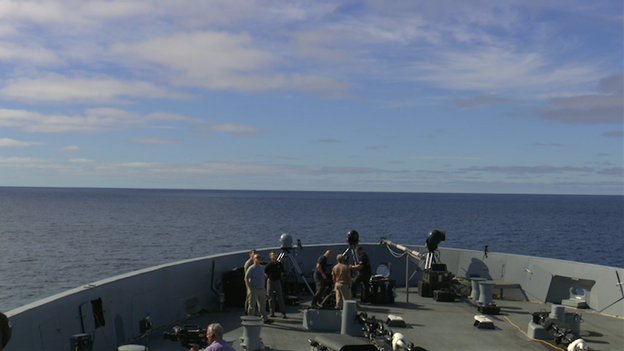
USS John P. Murtha standing by for recovery options in the Pacific Ocean near San Diego, California.
The flight deck of the USS John P. Murtha is now alive with the roar of engines as the recovery helicopters begin their launch sequence.
Four MH-60S Sea Hawk helicopters from Squadron HSC-23 are taking to the Pacific skies, moving into their final staging positions to shadow the Orion capsule’s descent.
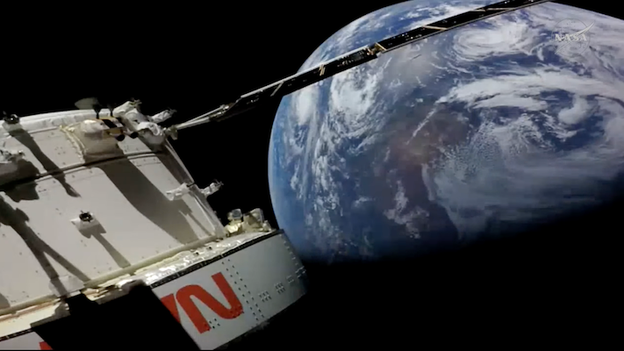
Integrity racing toward Earth right now (NASA)
The Orion spacecraft, Integrity, is officially in the home stretch, racing through space at more than 13,700 mph as it closes the gap toward Earth.
We are now exactly one hour away from the scheduled 8:07 p.m. ET splashdown in the Pacific Ocean.
Looking out the windows, the crew is witnessing the planet swell from a blue marble into a massive, detailed horizon, as the pull of home grows stronger with every passing second.
The next hour will be a whirlwind of critical milestones. In just 26 minutes, the capsule will separate from its Service Module, leaving the crew alone for the fireball phase of the mission.
By 7:53 p.m. ET, that speed will have nearly doubled to a staggering 24,661 mph as Orion slams into the upper atmosphere.
The world is now holding its breath as the four astronauts—Reid Wiseman, Victor Glover, Christina Koch, and Jeremy Hansen—prepare to trade the silence of deep space for the roaring heat and high G-forces of their historic return.
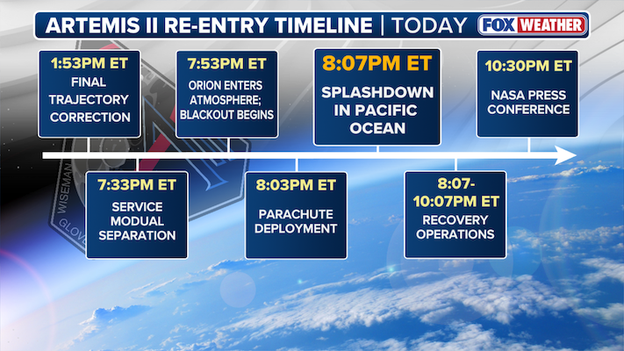
Artemis II Flight Day 10 timeline
With the Artemis II crew now suited up and the cabin fully configured for entry, the mission is entering its final, most dramatic phase. The next 90 minutes represent a masterclass in physics and precision engineering as Integrity transitions from a deep-space cruiser to a high-speed landing craft.
Here is the minute-by-minute roadmap for tonight’s homecoming:
7:33 p.m. ET | Service module separation: Roughly 34 minutes before splashdown, the Crew Module will officially part ways with the European Service Module. This jettison leaves the astronauts flying in the capsule alone, relying on internal batteries and the protective heat shield for the rest of the journey.
7:53 p.m. ET | Entry interface: Orion will hit the upper atmosphere at a blistering 24,661 mph. This marks the start of the "fireball" phase and the six-minute communications blackout, as superheated plasma envelopes the craft and cuts off radio signals to Mission Control.
8:03 p.m. ET | Parachute deployment: After the atmosphere does the heavy lifting of slowing the craft down, a sequence of 11 parachutes begins. Two drogue chutes will deploy at 22,000 feet to stabilize the capsule, followed by the three iconic orange-and-white main parachutes at 6,000 feet.
8:07 p.m. ET | Splashdown: The journey of 685,000 miles concludes as Integrity hits the Pacific waves at a gentle 17–20 mph, just southwest of San Diego.
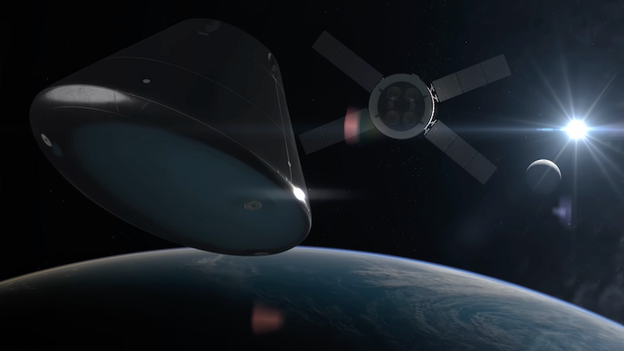
Simulation of the Orion Crew Module from its European Service Module. (NASA)
We are now just one hour away from one of the most critical milestones of the mission: the separation of the Orion Crew Module from its European Service Module.
At 7:33 p.m. ET, the two segments will part ways, leaving the four astronauts in their specialized command module—Integrity—for the high-stakes journey through the atmosphere.
From that moment on, the crew will be flying solo in the capsule, relying entirely on their own internal power and the protection of the massive heat shield.
Following the separation, the spacecraft will perform an 18-second "raise burn" to ensure it hits the atmosphere at the perfect angle for tonight's splashdown.
As the Orion capsule prepares to return home today, many people wonder why NASA still opts for an old-school ocean splashdown rather than landing on a runway like the Space Shuttle or on solid ground like a Soyuz capsule.
While it might look like a crash landing, dropping into the Pacific is a calculated choice that prioritizes both safety and spacecraft design.
The primary reason is weight. To land safely on solid ground, a spacecraft requires heavy equipment like landing legs, shock-absorbing airbags, or braking rockets that fire at the last second to cushion the impact.
By using the ocean as a natural landing pad, Orion can rely on the water's natural buoyancy to absorb the energy of the impact, allowing NASA to skip the extra hardware and use that weight for more scientific equipment and life support for the crew.
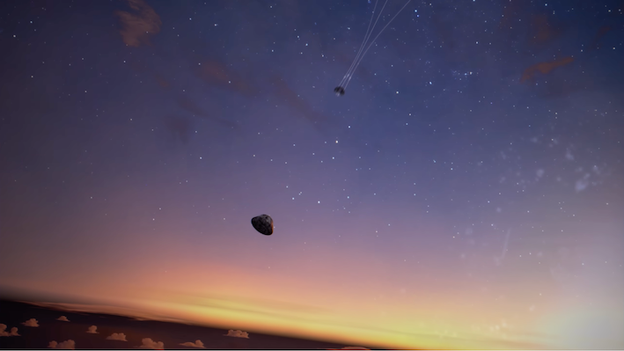
NASA
The benefits of the Pacific:
A massive runway: Unlike a narrow landing strip, the open ocean offers a huge target area. If Orion is slightly off-course, there are no buildings, mountains, or trees to worry about—just miles of open water.
Emergency readiness: Since Artemis launches from the coast of Florida, the capsule is already built to be waterproof and buoyant in case of an emergency during liftoff. Sticking with a water landing for the return means the craft doesn't need two different landing systems.
Proximity to support: The waters off San Diego are home to a massive naval presence. The USS John P. Murtha is already in position, essentially acting as a mobile landing base with specialized divers and doctors ready to assist the crew within minutes.
While land-based landings are becoming more common for commercial low-Earth orbit missions, for a deep-space vehicle returning at 25,000 mph, the Pacific remains the safest and most efficient way to bring our astronauts home.
As the Orion spacecraft prepares to slam into Earth’s atmosphere at 25,000 mph tonight, all eyes are on the 16.5-foot-wide protective heat shield.
While the capsule’s exterior will face staggering temperatures of up to 5,000°F (and as high as 7,000°F at the surface), NASA officials have expressed full confidence that the shield will keep the crew of four safe during their white-knuckle descent.
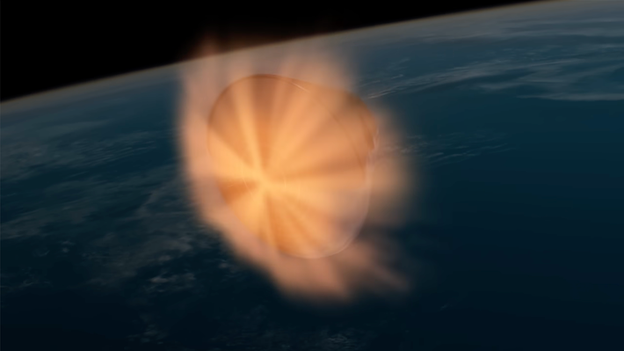
Orion's heat shield is built to withstand temperatures of up to 5,000°F as it reenters Earth's atmosphere. (NASA)
This confidence comes after an extensive investigation following the uncrewed Artemis I mission in 2022. During that flight, the heat shield experienced "unexpected char loss," where chunks of the protective material—a substance called Avcoat—cracked and shed unevenly.
Engineers discovered that the issue was actually caused by the mission being too successful; the heating rates during re-entry were less severe than predicted, which caused gases to build up inside the Avcoat rather than venting out. This internal pressure led to the surface cracking seen on the first mission.
To ensure the safety of the Artemis II crew, NASA teams removed and analyzed over 200 samples of the material and ran exhaustive simulations to replicate the environment.
They found that while the charred layer shed unexpectedly in 2022, the underlying material remained intact and protected the structure perfectly.
For today’s mission, NASA has refined its understanding of how the Avcoat behaves during the skip re-entry maneuver. Because the shield is an ablator—meaning it is designed to burn off and carry heat away from the craft—some charring is expected.
However, thanks to the years of rigorous testing following Artemis I, Mission Control is ready for a smooth, safe ride through the wall of fire and into the Pacific.
As the Orion spacecraft slices into Earth’s atmosphere at nearly 25,000 mph tonight, Southern California residents should keep an ear out for a potential sonic boom.
This cosmic thunder occurs when the capsule travels faster than the speed of sound—in this case, roughly Mach 32—creating a powerful shockwave.
While Orion’s path is largely offshore, the resulting thunder-like crack may be audible along the San Diego coast between 5:00 p.m. and 5:15 p.m. local time.
Whether you hear a window-rattling thud or a faint rumble depends on atmospheric conditions like temperature and wind, which can bend or muffle the sound.
Because these events are so rare, the U.S. Geological Survey is interested in mapping how the sound travels from such a high altitude.
If you do catch the sound of history coming home, you can contribute to the science by reporting your experience to the USGS "Did You Feel It?" survey.
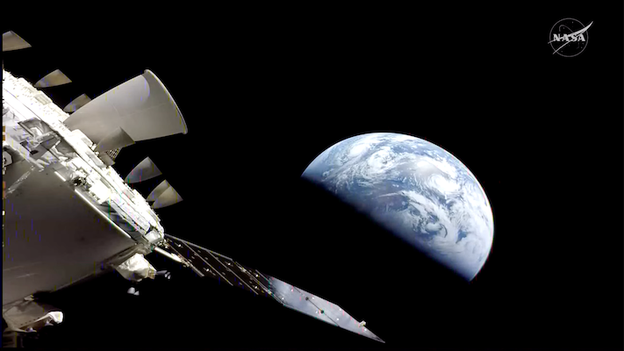
The view from the capsule is becoming more breathtaking by the minute as the blue marble of Earth swells to fill the windows. (NASA)
The Orion spacecraft, Integrity, is approaching the 10,000 mph threshold as it continues its rapid descent toward Earth. This landmark speed highlights the increasing power of our planet's gravitational pull, which is now drawing the four astronauts home with significantly more force than it was just an hour ago.
A major safety hurdle has just been cleared as all four astronauts—Reid Wiseman, Victor Glover, Christina Koch, and Jeremy Hansen—have successfully completed their suit leak checks.
After donning their bright orange Orion Crew Survival System (OCSS) suits, the crew will work through a series of pressure tests to ensure that each suit is perfectly sealed and capable of protecting them in the event of a cabin depressurization during re-entry.
With the all-clear on the suits, the team is now fully prepared for the physical rigors of the skip re-entry.
These suits aren't just for show; they are designed to regulate body temperature and provide a self-contained life support environment during the 3.9 Gs of deceleration they will face tonight.
The flight dynamics team has just released the official projections for tonight’s peak velocity, and Integrity is on track to become one of the fastest human-carrying vehicles in history.
According to the latest data, the spacecraft will reach a maximum speed of 24,661 mph at 7:54 p.m. ET, just seconds before it begins to feel the first wisps of Earth’s atmosphere.
While this is a staggering velocity—fast enough to circle the Earth in about an hour—it will officially fall just 130 mph short of the all-time crewed speed record set by the Apollo 10 mission in 1969.
Since the mid-1960s, the Christopher C. Kraft, Jr. Mission Control Center (MCC) at NASA’s Johnson Space Center has served as the pulsing heart of America’s journey into the stars.
From the historic triumphs of the Apollo Moon landings to the decades of continuous operation of the International Space Station, this facility has been the maestro of human spaceflight.
Today, that legacy continues with a high-tech evolution; the MCC now utilizes twin control rooms to simultaneously manage the safe return of Artemis II and the 24/7 operations of the ISS.
As Orion—the spacecraft named Integrity—accelerates toward Earth, the room is filled with a specialized team of flight controllers, including the Flight Dynamics Officer (FDO) monitoring the precise 25,000 mph re-entry path and the Capsule Communicator (CAPCOM), who remains the sole voice linking the four astronauts to their home planet.
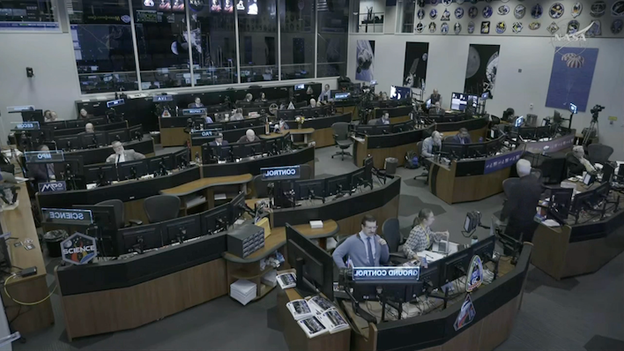
Christopher C. Kraft, Jr. Mission Control Center at NASA’s Johnson Space Center in Houston ahead of Artemis II's splashdown. (NASA)
Currently, the atmosphere inside Mission Control is one of disciplined intensity. With splashdown just hours away, the Flight Activities Officer (FAO) is managing a rapid-fire timeline of checklists as the crew prepares for the skip re-entry maneuver.
Meanwhile, the Environmental and Thermal Flight Control (ETHOS) team is closely watching the cabin's life support systems, ensuring the internal temperature remains stable even as the outer heat shield reaches a staggering 5,000°F.
Every console in the room represents years of simulation and planning, all converging on this final afternoon to ensure that the "First Contact" team in the Pacific receives the crew exactly on schedule at 8:07 p.m. ET.
The geology science team for the Artemis IV has already been chosen, and their work is already starting a year before the planned mission to land on the Moon.
Dr. Gordon Osinski, professor with Western University Earth Sciences, is part of that team and tells FOX Weather about what he'll be doing.
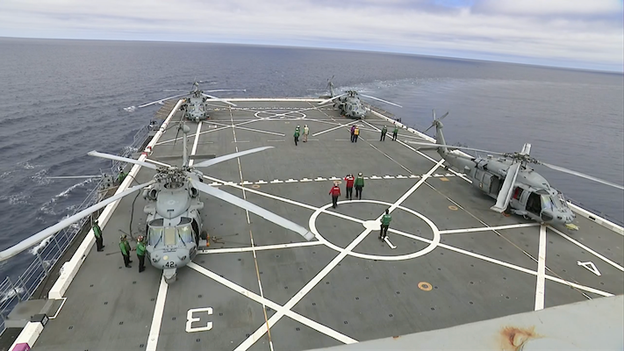
USS John P. Murtha flight deck this afternoon as crews prepare for splashdown.
The USS John P. Murtha is currently steaming toward the primary splashdown zone, where it will hold position approximately five miles away to provide a safe buffer for the capsule’s arrival.
As seen from a camera on deck, a fleet of MH-60S Sea Hawk helicopters is prepped and ready to launch before Integrity hits the water.
These aircraft will be the first to reach the spacecraft, hovering nearby to perform a visual assessment of the hull and the condition of the uprighting bags.
Once the "all clear" is given, the specialized dive medical team will be deployed to the capsule to begin the delicate process of opening the hatch and welcoming the Artemis II crew back to Earth.
Right now, the Orion spacecraft, Integrity, is entering its most dynamic and high-stakes phase of the mission.
We are now roughly three hours away from splashdown, and the crew is currently transitioning from deep-space explorers to re-entry pilots.
Having completed their final trajectory burn, the astronauts are now focused on their formal entry checklist and donning their specialized pressure suits.
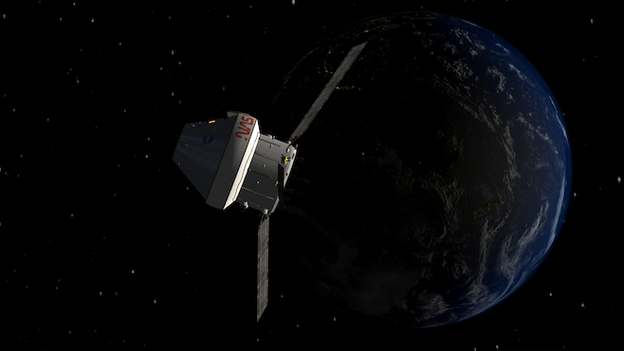
NASA's Artemis Real-Time Orbit Website showing Integrity speeding toward Earth. (NASA)
Inside the cabin, the atmosphere is focused and professional as they secure the flight deck and prepare for the massive physical transition from 10 days of weightlessness to the crushing G-forces of Earth’s gravity.
Outside the capsule, the physics of "the fall" are taking over. Integrity is currently screaming toward Earth at over 8,100 mph, a speed that will continue to climb until it nears 25,000 mph at the edge of the atmosphere.
Meanwhile, aboard the USS John P. Murtha, recovery teams are in their final "go" positions. Navy Sea Hawk helicopters are fueled and ready on the flight deck, and the specialized dive medical team is standing by to be the first faces the crew sees in over a week.
The next major milestone occurs at 7:33 p.m. ET, when the Service Module will jettison, leaving the crew alone in the heat shield-protected Command Module for the fiery plunge home.
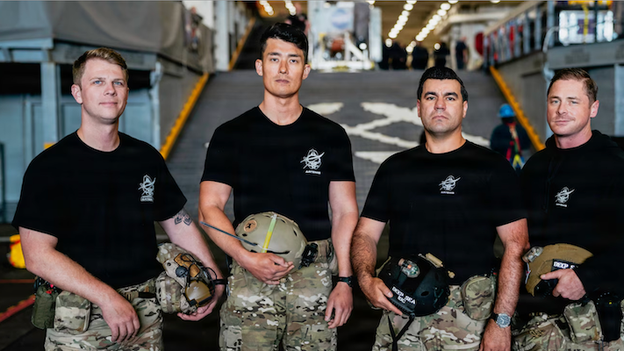
The U.S. Navy dive medical team with Explosive Ordnance Disposal Group ONE (EODGRU-1) pose for a group photo while underway on Amphibious transport dock ship USS John P. Murtha (LPD 26) in the Pacific Ocean, April 9, 2026. (U.S. Navy photo by Mass Communication Specialist 2nd Class August Clawson)
The first faces the Artemis II crew will see upon their return to Earth won't be from NASA, but from a specialized four-man U.S. Navy dive medical team.
This "First Contact" team, led by Lt. Cmdr. Jesse Wang and comprised of elite members from Explosive Ordnance Disposal Group One (EODGRU-1), is stationed aboard the USS John P. Murtha.
These experts are specifically trained in undersea medicine and decompression, making them the ideal first responders to open the Orion capsule, conduct initial medical assessments, and assist the astronauts—Christina Koch, Jeremy Hansen, Reid Wiseman, and Victor Glover—safely into recovery rafts.
The team represents a multi-generational legacy of military service and years of specialized training focused on the unique physiological challenges of returning from deep space.
Senior Chief Hospital Corpsman Laddy Aldridge will have the historic distinction of being the very first person to reach inside the capsule.
After their initial triage, the medical team will oversee the crew’s transition to Sea Hawk helicopters for transport back to the ship for more comprehensive evaluations.
For these Navy Sailors, the mission is the "honor of a lifetime," serving as the critical bridge between the weightlessness of the moon and a safe homecoming on Earth.
Visible satellite imagery currently shows a layer of broken and scattered clouds drifting near the San Diego coast, but NASA meteorologists have confirmed these will not interfere with tonight's mission.

Visible satellite image showing some clouds near San Diego this afternoon.
The primary splashdown zone remains well within safety parameters, with favorable winds and sea states ensuring a clear path for the recovery teams.
Because the clouds are high and sparse, they shouldn't block the spectacular view of Integrity as it streaks through the atmosphere or the deployment of its massive parachutes.
With the mission now officially committed to this landing site, the recovery fleet is moving into final positions under a sky that—while not perfectly clear—is exactly what the Spaceflight Meteorology Group was hoping for.
The Orion spacecraft, Integrity, is currently picking up speed as it falls deeper into Earth's gravity well, with its velocity now climbing past 7,100 mph.
This is a dramatic increase from earlier this morning, as the irresistible pull of our planet’s gravity accelerates the crew toward home at an ever-increasing rate.
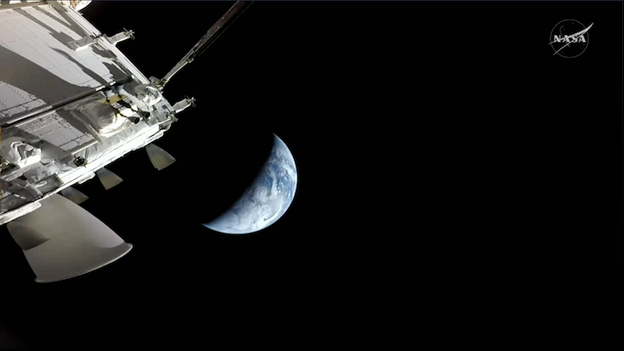
Camera aboard Integrity showing Earth growing larger by the second. (NASA)
Looking out the windows, the astronauts can see Earth growing larger and more detailed by the second, shifting from a distant marble to a massive, blue horizon.
This rapid acceleration will continue for the next few hours until the spacecraft reaches its peak speed of nearly 25,000 mph just before hitting the upper atmosphere tonight.
The most iconic image of any space return is the moment those massive orange-and-white parachutes unfurl against the blue sky. Tonight, that sequence begins at 8:03 p.m. ET, and it is far more complex than just opening an umbrella.
Because Orion is returning from the Moon at speeds that would shred ordinary fabric, it uses a sophisticated, 11-parachute orchestra to slow down from a terminal velocity of 325 mph to a gentle 20 mph splashdown.
The deployment sequence
The process happens in a rapid-fire chain reaction over the final four minutes of flight:
- The cover jettison: First, pyrotechnic thrusters blow away the "forward bay cover" (the top cap of the capsule) to reveal the parachute bay.
- The drogues (8:03 p.m.): Two 23-foot-wide drogue parachutes deploy at 22,000 feet. These act as "anchors" to stabilize the capsule and pull it into a vertical position.
- The pilots: Once the drogues are cut away, three small pilot chutes pop out. Their only job is to provide enough "tug" to pull the massive main parachutes out of their packing bags.
- The mains (8:04 p.m.): Finally, the three giant main parachutes—each 116 feet in diameter—unfurl at roughly 6,000 feet.
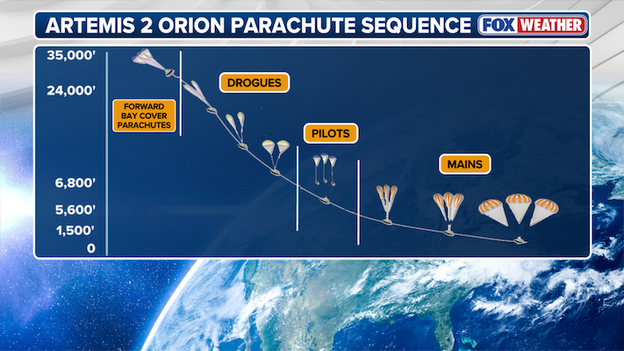
Artemis II parachute sequence
A football field of fabric
To put the scale into perspective, if you laid all three main parachutes flat on the ground, they would cover almost an entire football field. Despite their size, they are remarkably light, made of a high-tech blend of Kevlar and Nylon to withstand the massive snap of opening at high speeds.
These chutes don't just open all at once; they use a process called reefing, where they open in stages (first 3%, then 11%, then 100%) to ensure the astronauts aren't hit with a sudden, bone-jarring jolt of deceleration.
When you see those three "flowers" bloom over the Pacific tonight, you’re watching the final safety net for the Artemis II crew.
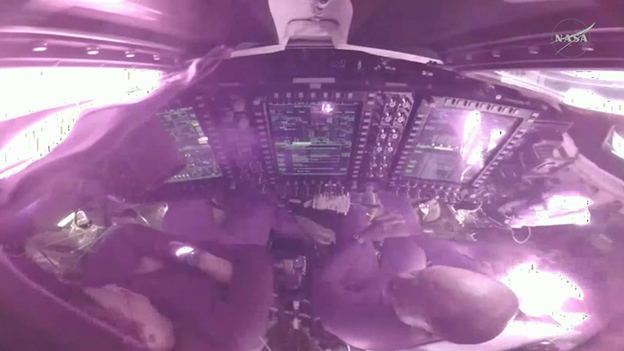
Camera inside the Orion spacecraft during RTC-3 burn. (NASA)
Mission Control has just confirmed that the Artemis II crew successfully completed their third and final Return Trajectory Correction (RTC-3) burn at 2:53 p.m. ET.
This critical firing of the Orion thrusters lasted only 8 seconds, but it was the final nudge needed to align the spacecraft perfectly with its entry corridor.
With this maneuver finished, the capsule's path is now firmly locked in for tonight’s splashdown in the Pacific Ocean.
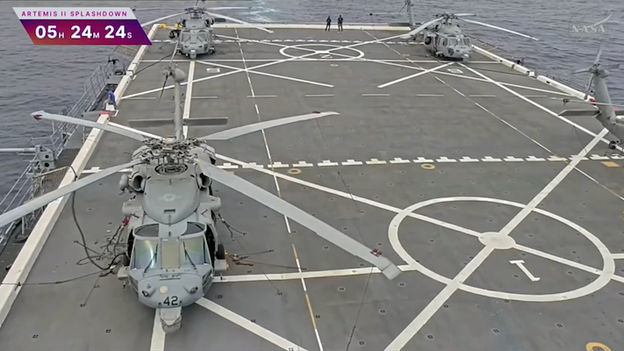
Deck of the USS Murtha this afternoon ahead of Orion's recovery. (NASA)
The flight deck of the USS John P. Murtha is a hive of activity this afternoon as the recovery team prepares for the 8:07 p.m. ET splashdown.
Live camera shots show a fleet of MH-60S Sea Hawk helicopters from Squadron HSC-23 stationed on the deck, their rotors ready to spin up for the mission’s final phase.
These helicopters will serve as the eyes in the sky, providing live imagery of Orion’s descent through the atmosphere before acting as the primary transport for the astronauts.
Once the capsule is secured by Navy divers, these aircraft will hoist Commander Reid Wiseman and his crew from the water, whisking them back to the ship’s deck for their first medical evaluations in Earth's gravity.
During the most intense phase of tonight's re-entry, the crew of Integrity will go silent for a nerve-wracking 6-minute communications blackout.
This occurs because the spacecraft, traveling at 25,000 mph, compresses the air in front of it so violently that it creates a layer of superheated plasma. This plasma envelope acts as a physical barrier to radio waves, temporarily severing the link between the capsule and Mission Control.
While the blackout is a normal and expected part of the physics of re-entry, it remains the most suspenseful window of the mission, as the world waits for the plasma to dissipate and for the voice of Commander Reid Wiseman to confirm that the heat shield has held and the crew is safe.
As the Orion spacecraft accelerates toward its 8:07 p.m. ET splashdown, it does so with a proud new identity.
During the mission, the crew—Reid Wiseman, Victor Glover, Christina Koch, and Jeremy Hansen—officially revealed they have named their spacecraft Integrity.
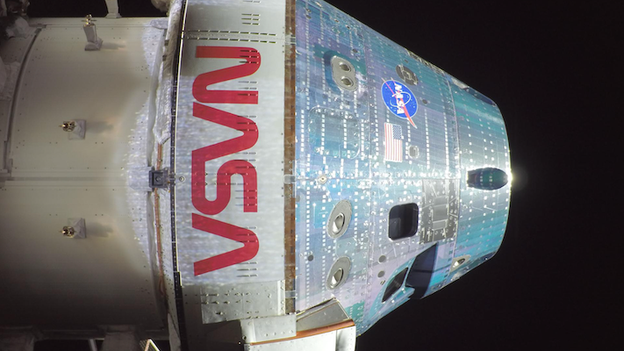
Integrity snapped this high-resolution selfie in space with a camera mounted on one of its solar array wings during a routine external inspection of the spacecraft on the second day into the Artemis II mission.
The name was chosen to reflect not only the structural strength of the vehicle that has protected them across 685,000 miles of deep space but also the core values of the thousands of people who worked to make this historic lunar journey a reality.
Naming the capsule is a storied tradition in NASA history, dating back to the days of Freedom 7 and the Apollo 11 Columbia.
For the Artemis II crew, Integrity serves as a tribute to the "steadfastness and honesty" of the global team behind the mission.
As the capsule faces its final and most grueling test—the 5,000°F heat of re-entry—the name feels especially fitting for a shield and structure that must hold firm to bring its crew safely home to the Pacific.
The Spaceflight Meteorology Group at Johnson Space Center has just provided its latest update on the conditions waiting for the Orion spacecraft, and the news remains overwhelmingly positive.
While the forecast calls for a mix of broken and scattered clouds over the Pacific splashdown site, meteorologists have confirmed that these will not be a factor for tonight’s return. With wave heights holding steady at a manageable 3 to 5 feet and light winds, the landing zone southwest of San Diego is officially clear for arrival.
The U.S. Navy and First Air Force are ready to help with extraction and recovery of the crew this evening.
Master Chief Navy Diver Ryan Crider and Major Tyler Wright, Artemis Program Director/First Air Force, Detachment 3, joined FOX Weather to talk about their roles in the mission.
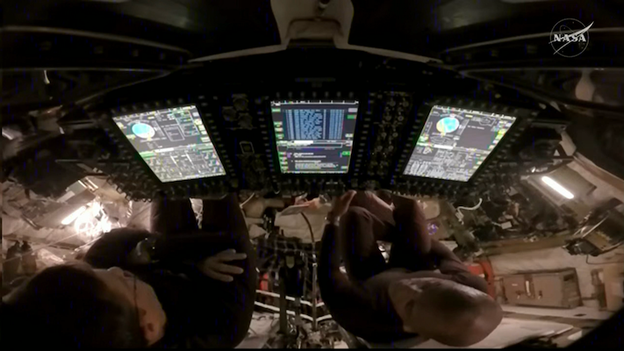
Artemis II crew preparing to return to Earth inside the Orion spacecraft. (NASA)
At precisely 2:53 p.m. ET, the Orion spacecraft—named Integrity by its crew—will execute its third and final Return Trajectory Correction (RTC-3) burn.
This brief but vital firing of the thrusters represents the last steering maneuver before the capsule hits the atmosphere, ensuring the spacecraft is aimed perfectly for its targeted splashdown southwest of San Diego.
By locking in this precise re-entry angle, Mission Control will clear the final navigational hurdle for tonight’s 8:07 p.m. ET homecoming, allowing the crew to focus on stowing gear and suiting up for the high-G journey home.

Christopher C. Kraft, Jr. Mission Control Center at NASA’s Johnson Space Center in Houston, Texas (NASA)
Following their 11:35 a.m. ET wake-up call, the Artemis II crew is now working closely with Mission Control to finalize the configuration of the Orion cabin for its high-speed entry.
This critical phase involves stowing loose gear, preparing the flight deck, and reviewing the morning messages from Houston as they move through a precise checklist for the journey ahead.
By 3:20 p.m. ET, the cabin is expected to be fully configured for entry, marking a major milestone in the countdown to tonight's splashdown.
With the astronauts now transitioning from the quiet of deep space to the intense preparations for Earth's gravity, every stowage bin and restraint is being double-checked to ensure the capsule is ready for the high-G forces and the final ride to Earth.
As the Orion capsule hits the atmosphere tonight at nearly 25,000 mph, it won’t just drop straight down. Instead, it will perform a sophisticated maneuver called a skip re-entry.
Think of it like a flat stone skipping across the surface of a still pond—except the "pond" is Earth's atmosphere, and the "stone" is a 20,000-pound spacecraft carrying four human beings.
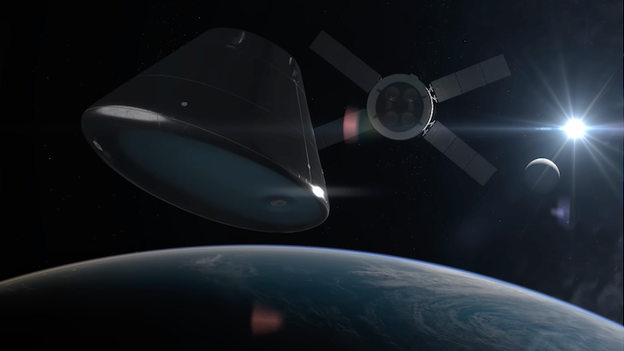
NASA
How the skip works
Orion will first dip into the upper layers of the atmosphere to bleed off a significant amount of speed and heat. After this initial "dip," the capsule’s thrusters and its own aerodynamic lift will push it back up, briefly "skipping" out of the thickest part of the atmosphere. After a short period of cooling down in the thinner air, it will perform its second and final descent toward the Pacific.
Why NASA "skips" the descent
This isn't just a flashy trick; it’s a critical piece of science that makes deep-space travel safer for the crew. By skipping, NASA achieves two major goals:
Reducing G-forces: A direct descent from lunar speeds would subject the astronauts to crushing physical forces. The skip breaks the deceleration into two smaller events, making the ride much more "gentle" on the human body.
Pinpoint accuracy: The skip allows Orion to travel much further downrange. This gives Mission Control more flexibility to choose a specific landing site, ensuring the capsule splashes down exactly where the USS John P. Murtha is waiting, regardless of where they initially hit the atmosphere.
The heat management
The most dangerous part of re-entry is the heat generated by friction. By skipping back up, the capsule allows its heat shield to breathe for a moment, shedding some of the initial thermal energy before the final plunge. Tonight, this maneuver will be the difference between a bumpy ride and a precision homecoming.

FOX Weather is providing LIVE team coverage of Artemis II: Return to Earth starting at 6 p.m. ET.
For a front-row seat to tonight's historic return, FOX Weather is providing comprehensive, live coverage of the Artemis II: Return to Earth all day long.
Our team is tracking everything from the spacecraft's 25,000 mph re-entry to the specific marine conditions in the Pacific landing zone.
The excitement hits a new level this evening as special, non-stop coverage kicks off at 6:00 p.m. ET. This lead-in will feature expert analysis and real-time updates as Orion approaches its 8:07 p.m. splashdown, ensuring you don't miss a single moment of the mission's dramatic conclusion.
The Orion spacecraft is currently falling deeper into Earth's gravity well, causing its velocity to climb steadily as it approaches the atmosphere.
While it crossed the 5,660 mph mark just minutes ago, this is only the beginning of a massive acceleration phase; by the time the capsule hits the "entry interface" tonight at 7:53 p.m. ET, it will be screaming along at nearly 25,000 mph.
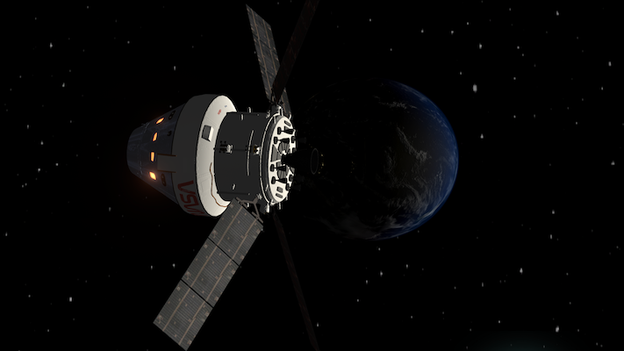
NASA Real-Time Orbit Website (AROW)
This rapid pickup in speed is essentially the spacecraft falling back home after being flung around the Moon. Because Earth’s gravitational pull grows stronger as Orion gets closer, the craft will gain thousands of miles per hour over the next few hours.
This sets the stage for the most violent part of the mission, where the atmosphere will have to do the hard work of braking, shedding nearly 99% of that velocity in just 14 minutes to ensure a safe, 20-mph splashdown.
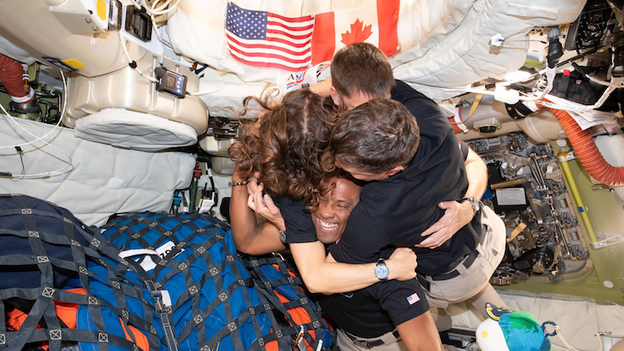
The Artemis II crew – (clockwise from left) Mission Specialist Christina Koch, Mission Specialist Jeremy Hansen, Commander Reid Wiseman, and Pilot Victor Glover – take time out for a group hug inside the Orion spacecraft on their way home. (NASA)
While the technical achievements of Artemis II are making history, it’s the human moments inside the cabin that are winning over the internet.
A clip that went viral shows a humble jar of Nutella performing a slow-motion ballet through the Orion capsule, pursued by a laughing Jeremy Hansen. The footage has become a symbol of the crew’s relatable and high-spirited personality throughout their ten days in deep space.
Beyond the floating snacks, the crew has used their limited downtime to give us a glimpse of life in a four-person "studio apartment" traveling at thousands of miles per hour.
Whether it's Victor Glover showing off his zero-G workout routine or Christina Koch sharing breathtaking views of the lunar far side, the team has maintained a sense of humor and camaraderie that has become a hallmark of this mission.
Jeremy Hansen: Often seen as the mission's unofficial videographer, capturing the candid moments that make space feel accessible.
Victor Glover: Known for his infectious energy and the "mission DJ" who keeps the cabin mood upbeat.
Christina Koch: The expert at navigating the tight quarters, often spotted gracefully flying from the cockpit to the storage lockers.
Reid Wiseman: The steady hand at the helm who still finds time to join in on the cabin’s weightless fun.
As they prepare for the high-intensity return tonight, these moments serve as a reminder that behind the massive rockets and complex math are four people simply enjoying the ride of a lifetime.
At precisely 2:53 p.m. ET, the Orion spacecraft will execut its third and final trajectory correction burn, a critical maneuver designed to fine-tune its high-speed approach to Earth.
This short but essential firing of the thrusters refined Orion's path to ensure it hits the "entry interface" at the exact angle required—not too steep, which would cause excessive heat and G-forces, and not too shallow, which could cause the capsule to skip off the atmosphere back into space.
NASA's Spaceflight Meteorology Group in Houston has issued an encouraging update: weather conditions southwest of San Diego are officially "go" for tonight’s return.
Forecasters are currently tracking light winds and manageable wave heights, which are holding steady between 5 and 6 feet.
While a weak system could bring a stray light shower to the open waters, the area remains well within NASA's strict safety parameters at this time.
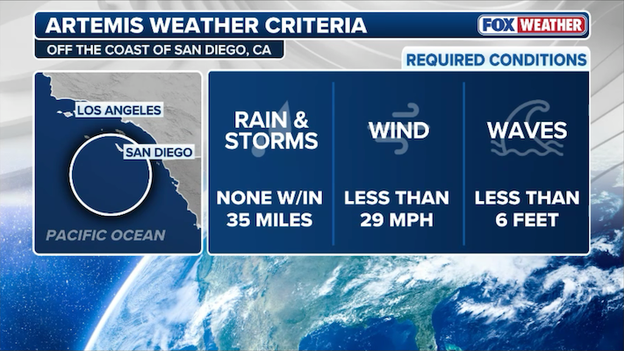
NASA's splashdown recovery zone weather criteria for Artemis II.
To ensure a safe recovery, NASA requires wave heights to stay under 6 feet and wind speeds to remain below 29 mph.
Most importantly, there is currently no threat of lightning within the 30-nautical-mile radius of the primary splashdown site.
With the forecast looking near-ideal, the recovery teams aboard the USS John P. Murtha are proceeding with full confidence for the 8:07 p.m. ET arrival.
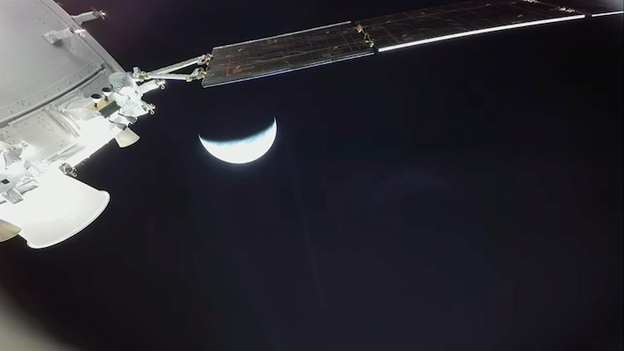
Orion spacecraft speeding toward Earth as the Artemis II crew wakes up for their final day in space. (NASA)
It’s time—the wake-up songs just sounded for Commander Reid Wiseman, Victor Glover, Christina Koch, and Jeremy Hansen.
To kick off their final 15 hours in space, Mission Control in Houston beamed up "Run to the Water" by LIVE and "Free" by the Zac Brown Band, with a personal message to the crew from Zac Brown himself.
The mood in the cabin is likely electric as the astronauts transition from their final sleep period to high-stakes re-entry prep.
Over the next hour, the crew will begin fluid loading, a critical protocol where they consume specific amounts of water and salt to help their bodies adjust to the return of Earth's gravity.
After 685,000 miles of weightlessness, the heavy feeling of 1g will be a major physical adjustment, and this morning's routine is designed to keep their cardiovascular systems stable for tonight’s Pacific splashdown.
As we celebrate the imminent return of the Artemis II crew, it's important to remember that this mission is just the beginning of a long-term plan to establish a permanent human presence in deep space.
NASA’s roadmap has evolved significantly over the last few months, shifting from "flags and footprints" toward building a sustainable lunar economy.
Artemis III: A final test flight (2027)
While originally intended to be the landing mission, NASA recently revised the plan for Artemis III, now targeted for mid-2027. Instead of touching down on the lunar surface, this mission will serve as a high-stakes dress rehearsal in orbit.
The crew will test the docking procedures between the Orion capsule and the new commercial Human Landing Systems (HLS) being developed by SpaceX and Blue Origin.
They will also debut the next-generation Axiom space suits, ensuring everything is ready for a safe return to the lunar soil.
Artemis IV & V: The return to the surface (2028)
The historic "boots on the ground" moment is now slated for Artemis IV in early 2028. This will be the first time humans have walked on the Moon since 1972.
It will quickly be followed by Artemis V later that same year, which will mark the beginning of construction on the Artemis Base Camp.
Building a lunar base
NASA has officially pivoted from the Gateway lunar space station to focus directly on a $20 billion surface base near the Lunar South Pole. This region is vital because it contains "water ice"—a resource that can be processed into oxygen for breathing and hydrogen for rocket fuel.
Future missions will deliver:
- Habitats: Pressurized modules where astronauts can live for months at a time.
- Lunar rovers: Both open and pressurized vehicles to allow for long-range exploration.
- Nuclear power: To provide a steady energy source during the 14-day-long lunar nights.
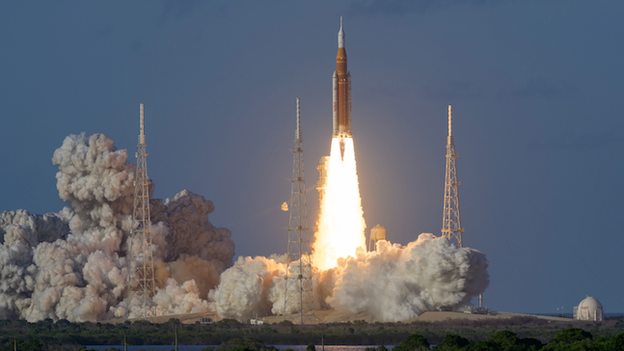
NASA’s Space Launch System rocket launches carrying the Orion spacecraft from Operations and Support Building II at NASA’s Kennedy Space Center in Florida. (NASA/Bill Ingalls)
Ultimately, the Moon is our training ground. Everything we learn about living and working on the lunar surface over the next decade will be the blueprint for the first human mission to Mars in the 2030s.
We are officially one hour away from the 11:35 a.m. ET wake-up call for the Artemis II crew. After a final eight-hour rest period in the quiet of deep space, Commander Reid Wiseman, Victor Glover, Christina Koch, and Jeremy Hansen will soon begin their most demanding day yet.
Once the alarm sounds, the crew will hit the ground running—or rather, floating—to prepare for the high-stakes journey through Earth's atmosphere.
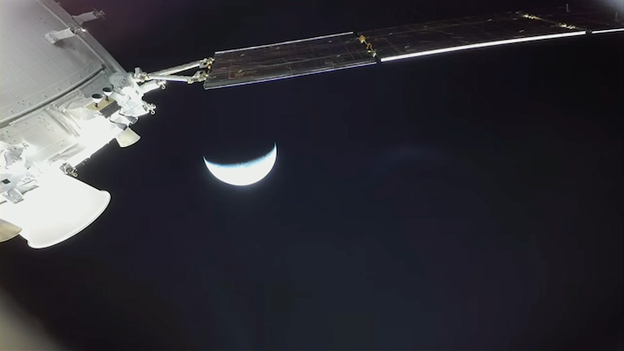
Orion and Earth as seen from a camera aboard the spacecraft this morning. (NASA)
Their first tasks include a high-protein breakfast and essential fluid loading, a medical requirement that helps their cardiovascular systems transition from the weightlessness of orbit back to the 1g environment of Earth.
With the final trajectory correction burn scheduled for 1:53 p.m. ET, these last moments of rest are the calm before a very fast-moving storm.
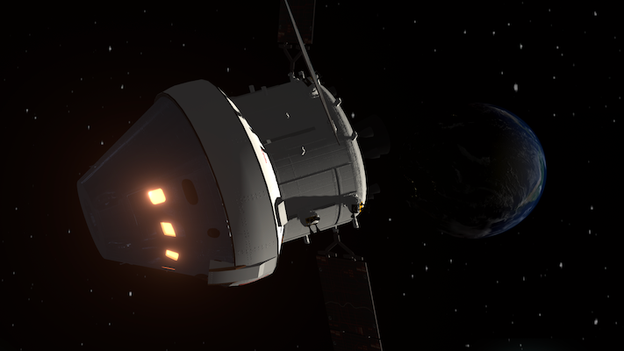
Artemis Real-Time Orbit Website - AROW (NASA)
Right now, the Orion spacecraft is currently barreling toward home at a staggering 5,100 mph. To put that into perspective, if you could maintain that speed on a cross-country flight, you would travel from New York City to Los Angeles in just under 30 minutes.
While that sounds like the ultimate travel hack, it isn't possible within our atmosphere due to aerodynamic drag. In the vacuum of space, there is no air to slow Orion down, allowing it to reach these incredible velocities.
However, once the capsule hits Earth’s thick atmosphere tonight, that same air will act like a brick wall, creating intense friction that generates temperatures of 5,000°F and slows the craft down from thousands of miles per hour to a gentle splashdown speed in mere minutes.
Once the Orion capsule safely splashes down in the Pacific, the mission transitions from a high-speed flight to a complex maritime recovery.
Even though the flying is over, the work for the crew and the USS John P. Murtha is just beginning. Here is the play-by-play for the astronauts' first hours back on Earth:
Securing the capsule
First, the capsule will deploy an uprighting system—five bright orange airbags that ensure Orion floats heat-shield-down in the waves. Once the craft is stable, Navy divers in small inflatable boats will approach to inspect the exterior and install a sea anchor to keep the capsule from drifting.
The crew extraction
Safety is the priority. NASA and the Navy use an open water recovery method:
- The hatch: Divers will open the side hatch while the capsule is still in the water.
- The helicopter: One by one, the four astronauts will be assisted into a rescue basket and hoisted into an MH-60S Sea Hawk helicopter.
- The ship: The helicopter will fly them directly to the flight deck of the USS John P. Murtha for their first medical check-ups in Earth's gravity.

US Navy crews have trained for years on the recovery of the Artemis II crew and Orion spacecraft. (NASA)
Bringing Orion Home
While the crew is being cared for, the ship will perform a well deck recovery. The back of the USS John P. Murtha will be flooded, allowing the ship to submerge its floor. The Orion capsule is then towed into the back of the ship, the water is drained, and the spacecraft is secured on a specialized cradle for the journey back to San Diego.
The return to Earth is a choreographed sequence of high-stakes events where precision is everything. As Orion approaches the atmosphere, the spacecraft must transition from a deep-space cruiser to a high-speed glider and, finally, a gentle boat.
The drama begins at 7:33 p.m. ET with "service module separation." The crew capsule will detach from the European Service Module, which has provided power and propulsion throughout the mission.
Once separated, the Crew Module—carrying Wiseman, Glover, Koch, and Hansen—will use its own small thrusters to orient its heat shield toward Earth.
At 7:53 p.m. ET, the craft hits "entry interface" at 25,000 mph, beginning a "skip re-entry" that uses the atmosphere to bleed off speed like a stone skipping across water.
During this phase, temperatures outside the capsule will soar to a staggering 5,000°F.
The descent by the numbers:
- Parachute deployment: Around 22,000 feet, two drogue parachutes will fire to stabilize the craft.
- The main event: At 6,000 feet, three massive main parachutes—each the size of a football field—will unfurl to slow Orion to a manageable 20 mph.
- Splashdown: Targeted for 8:07 p.m. ET, the capsule will hit the Pacific waves, where it will remain powered on until recovery teams from the USS John P. Murtha arrive to extract the crew.
As the Artemis II crew nears splashdown tonight, they are returning to Earth as history-makers. During their journey around the Moon, the crew reached a maximum distance of approximately 252,756 miles from Earth—setting a new record for the farthest humans have ever traveled into deep space.
This milestone officially surpasses the long-standing record held by the legendary Apollo 13 mission in 1970, which reached 248,655 miles.
While Apollo 13’s distance was the result of a modified flight path following an onboard emergency, the Artemis II trajectory was specifically designed to push the Orion spacecraft further out into the lunar far side than any human-rated vehicle in history.

Earthset captured through the Orion spacecraft window at 6:41 p.m. EDT, April 6, 2026, during the Artemis II crew’s flyby of the Moon. (NASA)
Why the extra distance matters:
Traveling this deep into space isn't just about the numbers; it allowed NASA to test Orion's communication and life-support systems in a true high-radiation, deep-space environment.
By successfully navigating more than 4,000 miles further than any previous crew, Wiseman, Glover, Koch, and Hansen have paved the way for even longer-duration missions to the lunar South Pole with Artemis III and eventually toward Mars.
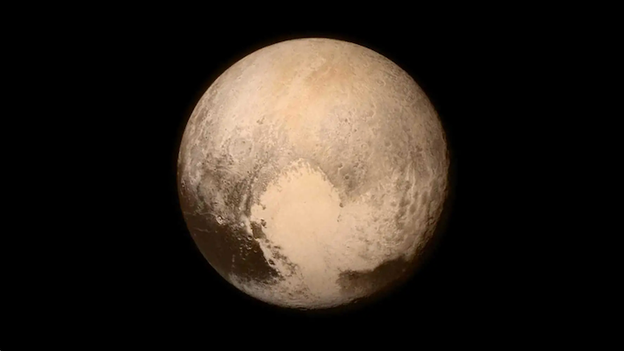
This image showing Pluto's "heart" was taken by NASA’s New Horizons spacecraft on July 13, 2015, when the spacecraft was 476,000 miles (768,000 kilometers) from the surface. (NASA/JHUAPL/SwRI / NASA)
It's been 20 years since Pluto was declassified as the ninth planet in our solar system, and many people wish it had never lost its status.
A recent comment from NASA Administrator Jared Isaacman alludes to the possibility of NASA looking into making Pluto a planet once again.
On Thursday afternoon, Isaacman replied to a post by Mike's Weather Page on X , of a letter from 10-year-old Kaela writing to NASA to tell them how much she loves Pluto and asking them to make it a planet again.
She went on to explain the reasons why Pluto should be a planet and let NASA know her knowledge of Pluto.
Isaacman replied to the post saying, "Kaela — We are looking into this."

Inside Mission Control at the Johnson Space Center in Houston, teams are laser-focused on Orion’s telemetry as the spacecraft barrels toward Earth at nearly 25,000 mph.
Flight controllers are meticulously tracking every mile of the 685,000-mile journey’s final leg, ensuring the capsule’s trajectory remains perfectly aligned for tonight's high-speed encounter with the atmosphere.
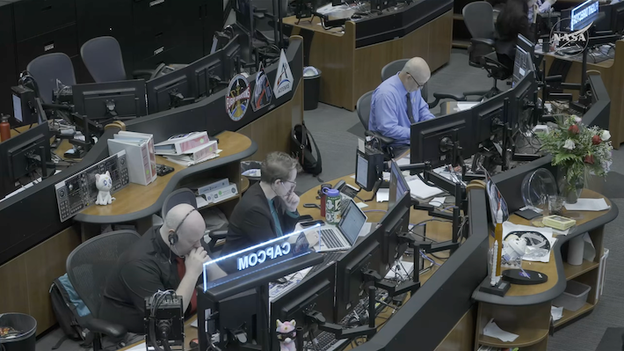
Christopher C. Kraft, Jr. Mission Control Center at NASA's Johnson Space Center in Houston, Texas. (NASA)
While the astronauts finish their final rest period, the ground team is working through the "Go/No-Go" checklists for the afternoon’s trajectory correction burn.
Every sensor reading is being scrutinized to confirm that all systems—from propulsion to life support—are ready for the 5,000°F heat and intense g-forces of re-entry.
As of early this morning, the Pacific Ocean is cooperating beautifully for Orion’s return. Current marine observations off the coast of San Diego show favorable conditions, with seas holding steady at a manageable 3 feet—well below NASA’s 6-foot safety limit for recovery operations.
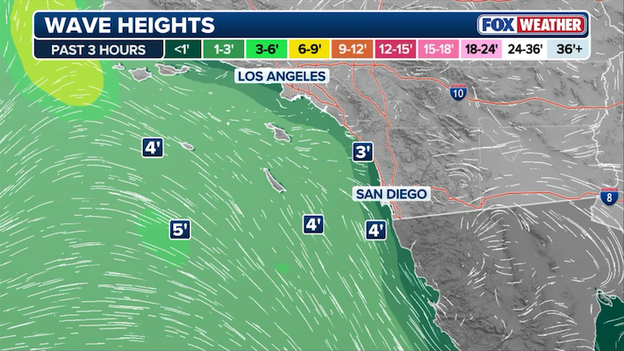
Friday morning observations show wave heights below the safety limits for Orion's splashdown and recovery.
Winds are also remaining light, clocked at less than 10 knots, which is ideal for the U.S. Navy and NASA teams as they stage the USS John P. Murtha in the primary splashdown zone.
While meteorologists are keeping a close watch on a Pacific storm system that could bring a slight chance of showers or increased swells by late tonight, the 8:07 p.m. ET window looks clear for a safe and smooth arrival.
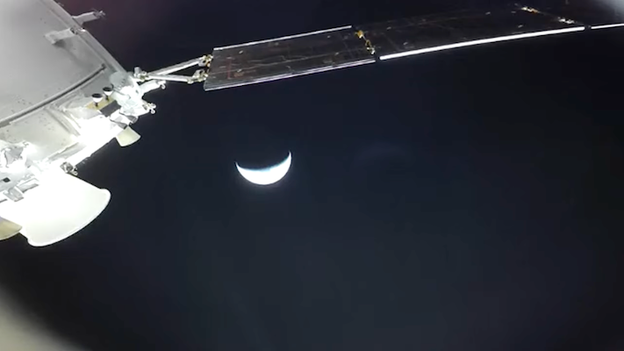
Orion spacecraft eyes Earth as the Artemis II crew sleeps this morning. (NASA)
While the world watches the countdown to splashdown, the Artemis II crew is currently getting some much-needed rest. Commander Reid Wiseman, Victor Glover, Christina Koch, and Jeremy Hansen are in their final scheduled sleep period of the mission, resting ahead of an intense day that culminates in tonight's Pacific recovery.
Mission Control in Houston is keeping things quiet on the comms to ensure the crew is fully recharged for the physical demands of re-entry.
Once they wake up at 11:35 a.m. ET, they will immediately begin their de-orbit prep, which includes consuming high-protein meals and performing fluid loading to help their bodies adjust to the return of Earth's gravity after 10 days in weightlessness.
The USS John P. Murtha (LPD 26) is the centerpiece of tonight’s recovery operations, serving as the mobile command hub for the Artemis II homecoming.
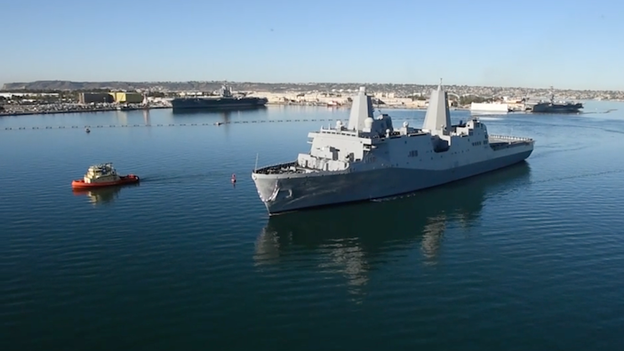
USS John P. Murtha (U.S. Navy)
A San Antonio-class amphibious transport dock based in San Diego, the ship is uniquely equipped for this mission with a well deck—a large internal docking area that can be flooded to allow the Orion capsule to be floated directly into the ship's belly.
Onboard, a specialized team of Navy divers and NASA engineers has spent years drilling for this moment.
Once splashdown occurs, MH-60S Sea Hawk helicopters will launch from the Murtha’s flight deck to track the capsule, while a dedicated dive medical team will be the first to reach the astronauts, providing initial health assessments before the crew is airlifted back to the ship’s advanced medical facilities.
The stage is set for a historic evening. After 10 days in space and a journey of more than 600,000 miles, the Artemis II crew is entering the final, most critical phases of their mission.
Following their wake-up call later this morning, Commander Reid Wiseman and his crew will be busy with stowage management—securing loose gear and configuring the cabin for the intense forces of re-entry.
Here is the play-by-play for the rest of today’s flight plan as Orion targets a splashdown off the coast of San Diego.
2:53 p.m. ET | Final trajectory correction: The crew will execute their third and final return trajectory correction burn. This brief thruster firing ensures Orion hits the Earth's atmosphere at the precise angle required for a safe descent.
7:33 p.m. ET | Service module separation: About 34 minutes before splashdown, the Orion Crew Module will officially part ways with the European Service Module. From this point on, the astronauts are flying in the capsule alone.
7:53 p.m. ET | Entry interface: Orion hits the upper atmosphere at roughly 25,000 mph. This begins the blackout period, where the intense heat of re-entry creates a sheath of plasma around the capsule, temporarily cutting off all radio communication with mission control.
8:03 p.m. ET | Parachute deployment: Once the craft has slowed sufficiently, two drogue parachutes will deploy at 22,000 feet to stabilize the capsule, followed quickly by the three massive main parachutes at 6,000 feet.
8:07 p.m. ET | Splashdown: Orion is scheduled to hit the Pacific waves at a gentle 17–20 mph.
The Artemis II crew is officially on the home stretch. NASA confirmed that at 10:53 p.m. ET last night, the Orion spacecraft successfully executed a nine-second thruster ignition.
This maneuver added a crucial 5.3 feet-per-second to its velocity, refining the path toward Earth and putting the crew more than halfway back from the Moon.
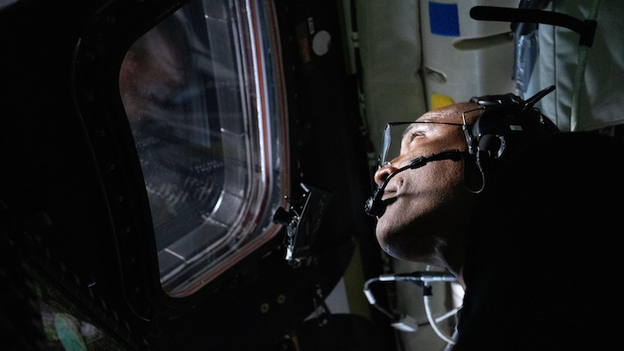
NASA astronaut and Artemis II Pilot Victor Glover pictured here in the Orion spacecraft during the Artemis II lunar flyby. Glover and his fellow crewmates spent approximately seven hours taking turns at the Orion windows capturing science data to share with their team back on Earth. (NASA)
The lead-up to the burn wasn't without a bit of tension. About two hours before the thrusters fired, flight controllers experienced an unexpected loss of signal while attempting to change data rates. This temporarily cut off telemetry and communication between Orion and Mission Control.
Fortunately, the team re-established two-way communications quickly, allowing the crew—Wiseman, Glover, Koch, and Hansen—to proceed with the burn as planned.
While the Orion capsule is built to withstand the vacuum of space and the intense heat of re-entry, the final few miles are all about the weather.
NASA’s Recovery Director has the final "Go/No-Go" authority based on real-time data from the USS John P. Murtha, which is currently stationed in the recovery zone.
The criteria aren't just for the capsule's safety—they are primarily to ensure that Navy divers and recovery boats can safely reach the crew.
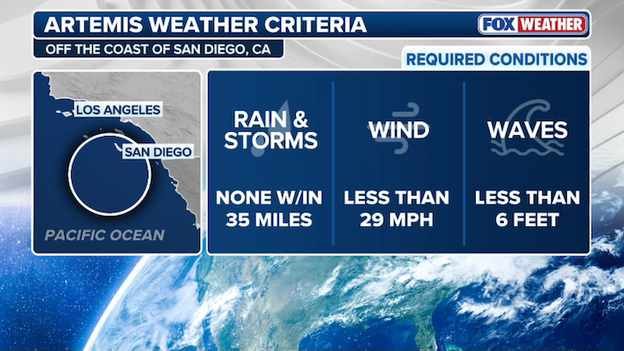
NASA's recovery weather criteria for Orion's splashdown
The "No-Go" thresholds
To proceed with a splashdown in the primary target zone off San Diego, the following conditions must be met:
- Wind speed: Sustained winds must be under 25 knots (approx. 29 mph). High winds can cause the capsule to drift significantly during its parachute descent or flip the capsule over once it hits the water.
- Wave height: Significant wave height must be 6 feet or less. If the swells are too high, it becomes dangerous for the small inflatable boats (CRRCs) to pull alongside the capsule to assist the astronauts.
- Lightning & rain: There can be no precipitation or lightning within a 30-nautical-mile radius of the splashdown site. Thunderstorms create unpredictable wind gusts and electrical hazards for the recovery teams.
- Visibility & clouds: Recovery teams need a minimum visibility of at least 3 miles and a cloud ceiling of no less than 1,000 feet. This ensures that the recovery helicopters can maintain a visual on the capsule from the moment the parachutes deploy.
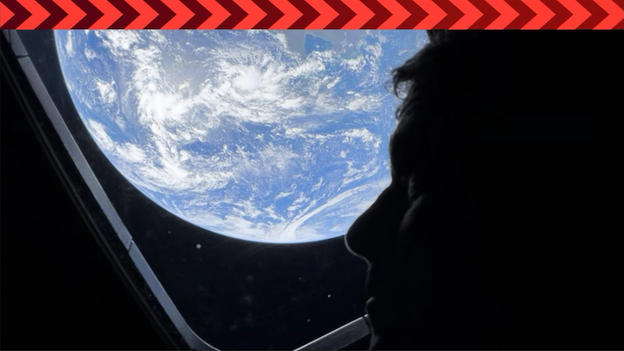
NASA astronaut and Artemis II Commander Reid Wiseman peers out of one of the Orion spacecraft's main cabin windows, looking back at Earth, as the crew travels towards the Moon. (NASA)
It is a momentous day for space exploration as we track the final hours of NASA’s Artemis II mission.
After launching ten days ago on April 1, the four-person crew—Commander Reid Wiseman, Pilot Victor Glover, and Mission Specialists Christina Koch and Jeremy Hansen—is officially on the "homeward bound" leg of their journey.
The mission has been a spectacular success so far, highlighted by a breathtaking lunar flyby on April 6. While rounding the far side of the Moon, the crew not only captured high-definition views of the lunar surface but also experienced a rare, perspective-shifting view of a total solar eclipse from deep space. In a moving tribute during their transit, the crew also honored the memory of Commander Wiseman's late wife, Carroll, by naming a lunar crater in her honor.
The final descent: All eyes are now on the Pacific Ocean.
The Orion spacecraft is currently barreling toward Earth at speeds approaching 25,000 mph. If conditions remain favorable, splashdown is scheduled for approximately 8:07 p.m. ET tonight off the coast of San Diego.
FOX Weather is closely monitoring the recovery zone. Current forecasts show favorable sea states and visibility for the U.S. Navy and NASA recovery teams.
Stay with us throughout the day as we provide live updates on the weather and Orion’s path back to Earth.
You’ve reached the beginning of this live coverage.