

Live: Total lunar eclipse turns the Moon blood-red, visible to billions across the world
Live: Total lunar eclipse turns the Moon blood-red, visible to billions across the world
Download the AppCoverage for this event has ended.
As of 7:02 a.m. ET, the Moon has officially exited Earth’s umbra, marking the end of totality.
The deep, coppery red of the Blood Moon is now fading as the lunar disk slowly returns to its familiar white glow, though the event remains in its final partial phases for another hour.
Across the Eastern Time Zone, the timing was bittersweet: just as the red hue reached its peak, the Moon began to slip below the horizon.
While the East Coast is now seeing the sun rise, skywatchers farther west in the Pacific and Alaska time zones still have a front-row seat to the Moon's gradual exit from the Earth's shadow.
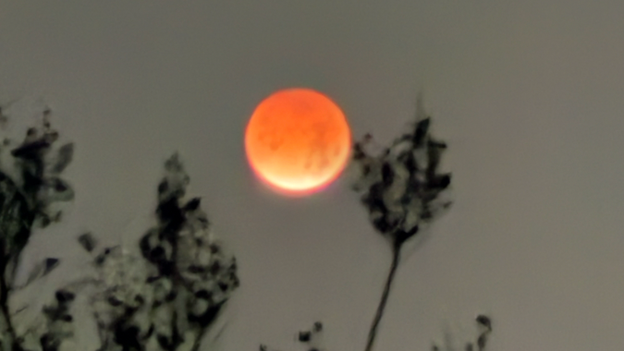
Courtesy: Miranda Miles in Dothan, Alabama
FOX Weather viewer Miranda Miles successfully captured the eclipse on camera in Dothan, Alabama this morning.
Her stunning imagery provided a perfect look at the Moon’s deep red transformation before it set at 6:08 a.m. local time.
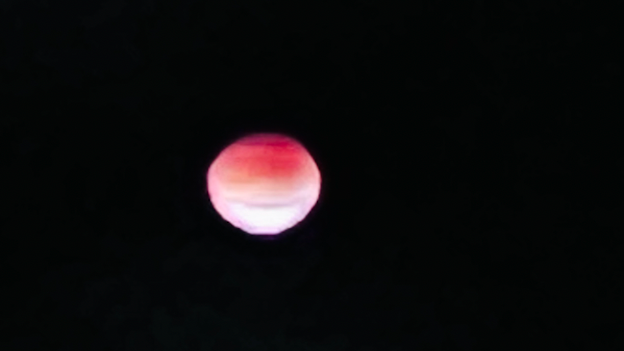
Courtesy: Rebecca in Texas
In a state as large as Texas, catching the eclipse was all about finding the right gap in the clouds.
FOX Weather viewer Rebecca managed to do just that, capturing a stunning image of the Blood Moon as it peered through a break in the overcast skies.
Her quick camera work serves as a reminder that even on a cloudy morning, a little persistence can lead to a spectacular view of the lunar transition.
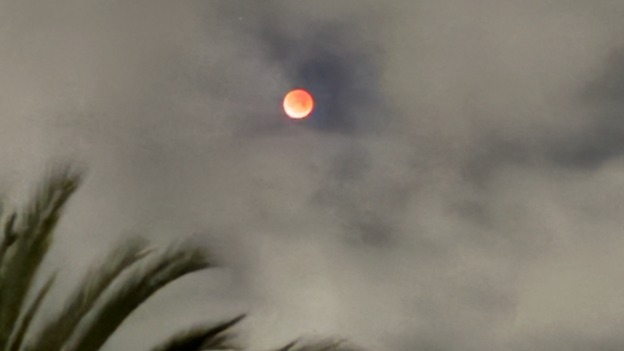
Courtesy: Marie Patriss in Vista, California
While the marine layer gave many coastal Californians a run for their money, FOX Weather viewer Marie Patriss found a perfect window of opportunity in Vista, California.
She managed to snap a crisp shot of the moon through the shifting clouds, proving that a little patience pays off when you're chasing a celestial "peek-a-boo" act.
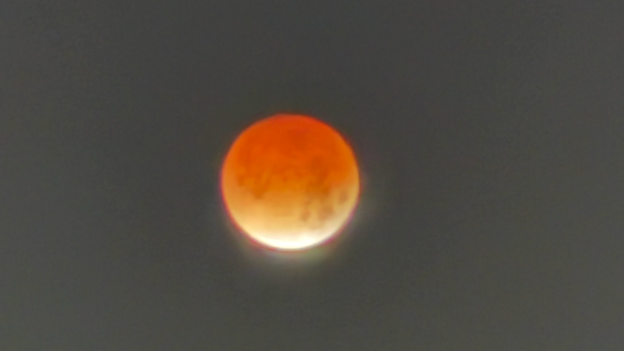
Courtesy: Jennifer Watts in Wynne, Arkansas
While many across the country were staring at a blank wall of grey thanks to too many clouds, FOX Weather viewer Jennifer Watts managed to beat the odds in Wynne, Arkansas.
She captured a stunning series of photos as the Moon slipped into totality, providing a rare and brilliant look at the "Blood Moon" glowing over the Natural State.
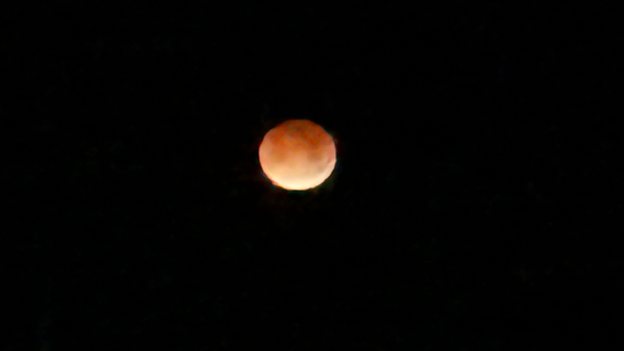
Courtesy: Jackie in Roland, Oklahoma
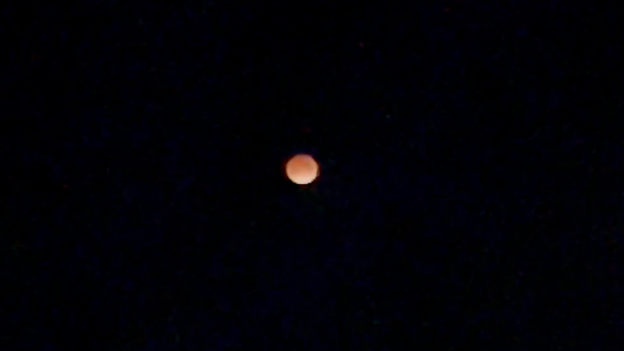
Courtesy: Dylan Patters in Bozeman, Montana
FOX Weather viewer Dylan Patters captured the Blood Moon in Bozeman, Montana this morning.
Billions of people around the world are now able to see the total lunar eclipse as the Moon passes in Earth's shadow.
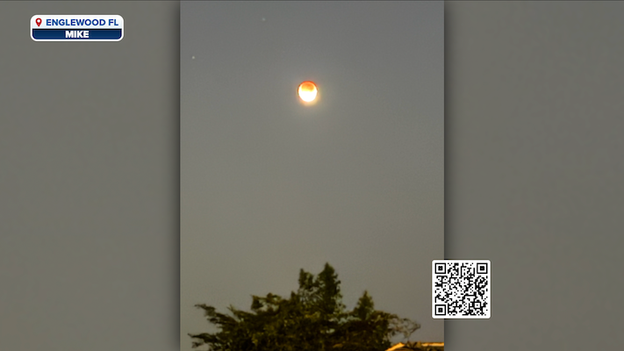
Courtesy: Mike in Englewood, Florida
FOX Weather viewers are sending in their views of this morning's total lunar eclipse.
You can upload your photo to foxweather.com/connect to be featured on FOX Weaather.
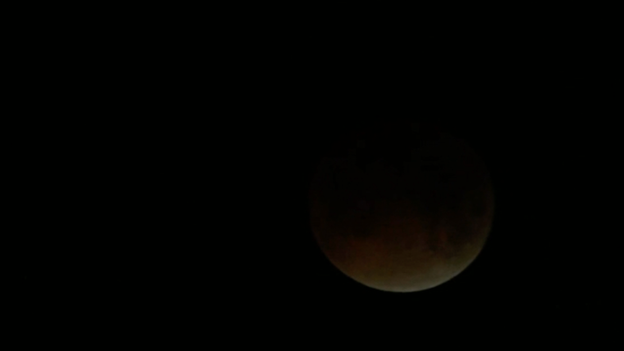
View of the total lunar eclipse from Los Angeles, California.
As of 6:04 a.m. ET, the celestial clock has struck the hour: totality is officially underway.
The Moon has now fully immersed itself in the deepest part of Earth’s shadow, the umbra, where it will remain for the next 58 minutes.
While direct sunlight is now completely blocked, the Moon doesn't simply vanish.
Instead, it begins to glow with a haunting, coppery-red light.
This "Blood Moon" effect happens because Earth’s atmosphere acts like a lens, bending and filtering sunlight so that only the long, red wavelengths reach the lunar surface.
It’s a stunning sight—essentially the light of every sunrise and sunset on Earth being projected onto the Moon all at once—though for those under the morning clouds in D.C. and NYC, you'll have to rely on our imaginations.
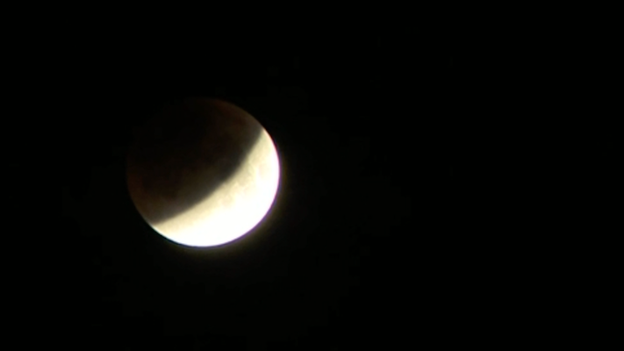
Partial eclipse as seen from Los Angeles, California this morning.
As the clock ticks toward 6:04 a.m. ET, we are officially inching closer to totality as the Moon passes deeper into Earth's dark inner shadow, the umbra.
This is the "crunch time" of the eclipse, where the lunar disk begins its dramatic transformation into a deep, coppery red.
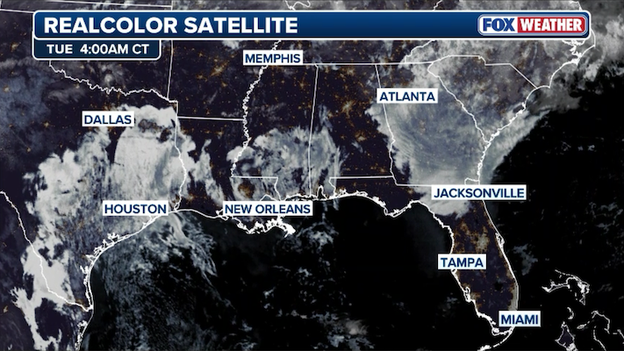
Real-color satellite image showing where clouds and fog are covering the sky in the South.
While the Blood Moon is technically hanging over the southern United States this morning, for many, it’s a total ghost.
Fog and low-hanging clouds are stretching across the South, turning what should have been a celestial spectacle into a simple Tuesday morning of grey.
Right now, the best viewing is in Central and South Florida.
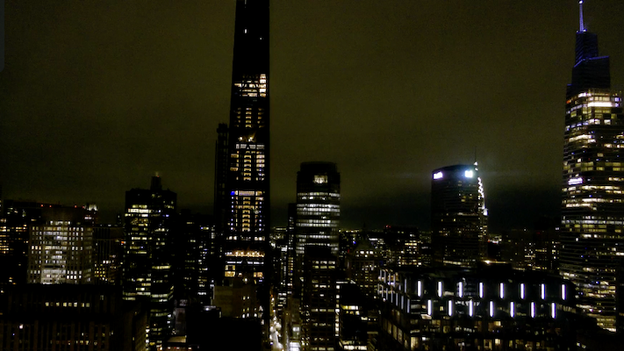
New York City skyline camera showing dense clouds covering the city.
It was going to be the highlight of the morning commute, but New York City's sky had other plans.
While a rare total lunar eclipse—the famous "Blood Moon"—is scheduled to paint the sky red, a thick blanket of clouds will leave New Yorkers looking at a wall of grey instead.
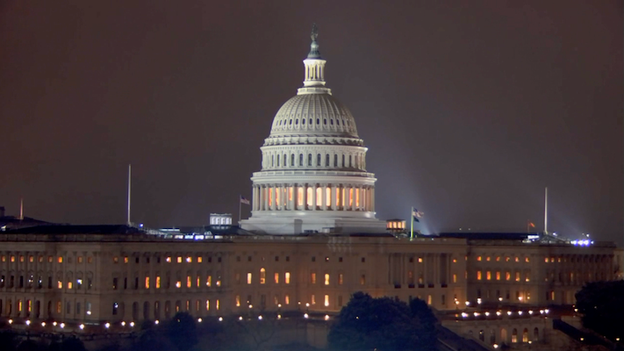
Camera showing thick clouds and light rain falling on the U.S. Capitol in Washington.
It’s a gloomy morning for skywatchers in the nation's capital. While the rest of the country is looking west to catch today's rare "Blood Moon," Washington D.C. is strictly monochrome.
Right now, light rain is falling on the Capitol with overcast skies that will prevent a clear view of the eclipse.
While the mechanics of the universe are perfectly aligned, Mother Nature is being a bit less cooperative.
As you can see from FOX Weather's latest cloud cover forecast, the "where" is just as important as the "when" today.
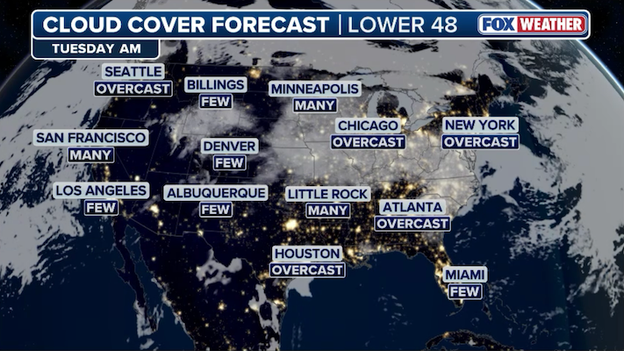
Cloudy skies will prevent millions from seeing the eclipse in New York, Chicago, and Seattle this morning.
The moon may be turning a dramatic coppery red, but for many, it will be hidden behind a stubborn curtain of grey.
If you are in Seattle, Chicago, New York, or Houston, the forecast is looking grim. Thick cloud cover in these regions means you'll likely be watching our livestream rather than the sky.
In San Francisco, Minneapolis, and Little Rock, the sky is cluttered. You might catch a glimpse of the moon through a lucky break in the clouds, but don't count on a clear view of the entire 58-minute totality.
Clearer skies are currently hugging the Rockies and the Southeast coast. Billings, Denver, Albuquerque, Los Angeles, and Miami should only see a few clouds, creating prime viewing spots for the blood-red transformation.
Are you capturing this rare celestial event on your phone or camera? If you See It, Share It with us!
- How to share: If you’re watching FOX Weather on TV, just scan the QR code on your screen.
- On the go: You can also navigate directly to foxweather.com/connect to upload your eclipse shots.
- Join the story: Your images could be featured instantly on-air to help us tell the story of this morning's eclipse.

'See It, Share It' on FOX Weather
To catch this morning's spectacular Blood Moon, you simply need to step outside and look toward the west-southwest sky.
Because a lunar eclipse is just the Moon passing into Earth’s shadow, it is perfectly safe to view with the naked eye—no special filters or "eclipse glasses" required.
For the best experience, try to find a spot away from tall buildings or bright city lights to help the deep red colors pop against the dark sky.
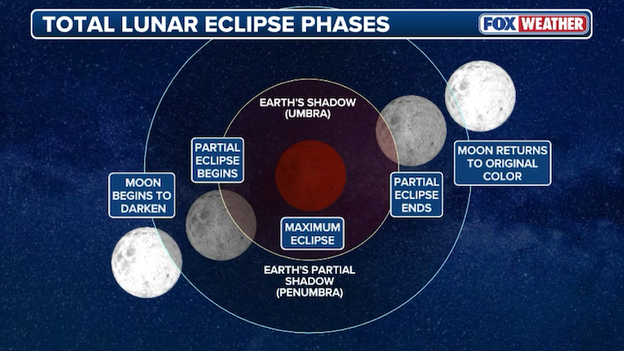
Phases of this morning's total lunar eclipse as the Moon passes within Earth's shadow.
While your eyes are enough to enjoy the show, using binoculars or a small telescope will reveal much more detail, such as the curved edge of Earth's shadow as it slowly bites into the lunar surface.
If you are on the East Coast, the Moon will be sitting very low on the horizon during the peak of totality—the phase where the Moon is completely covered by the darkest part of Earth's shadow—so a clear view of the western horizon is a must.
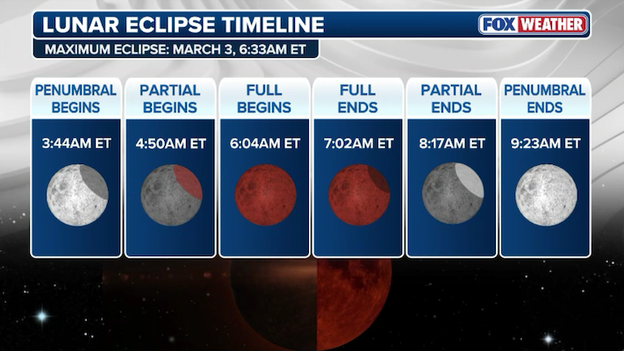
2026's total lunar eclipse begins before sunrise along the East Coast of the United States.
The final total lunar eclipse until 2028 is unfolding this morning, and you won't want to miss the moment the Moon enters the umbra—the darkest part of Earth's shadow that creates that iconic blood-red glow.
For viewers on the East Coast, the partial eclipse begins around 4:00 a.m. ET, with the peak of totality—the period when the Moon is completely shaded—occurring between 6:04 a.m. and 7:03 a.m. ET.
If you are watching from the West Coast, you have a front-row seat to the entire show before moonset, while early risers in the East may even witness a selenelion, a rare event where you can see the eclipsed Moon and the rising Sun at the same time.
You’ve reached the beginning of this live coverage.